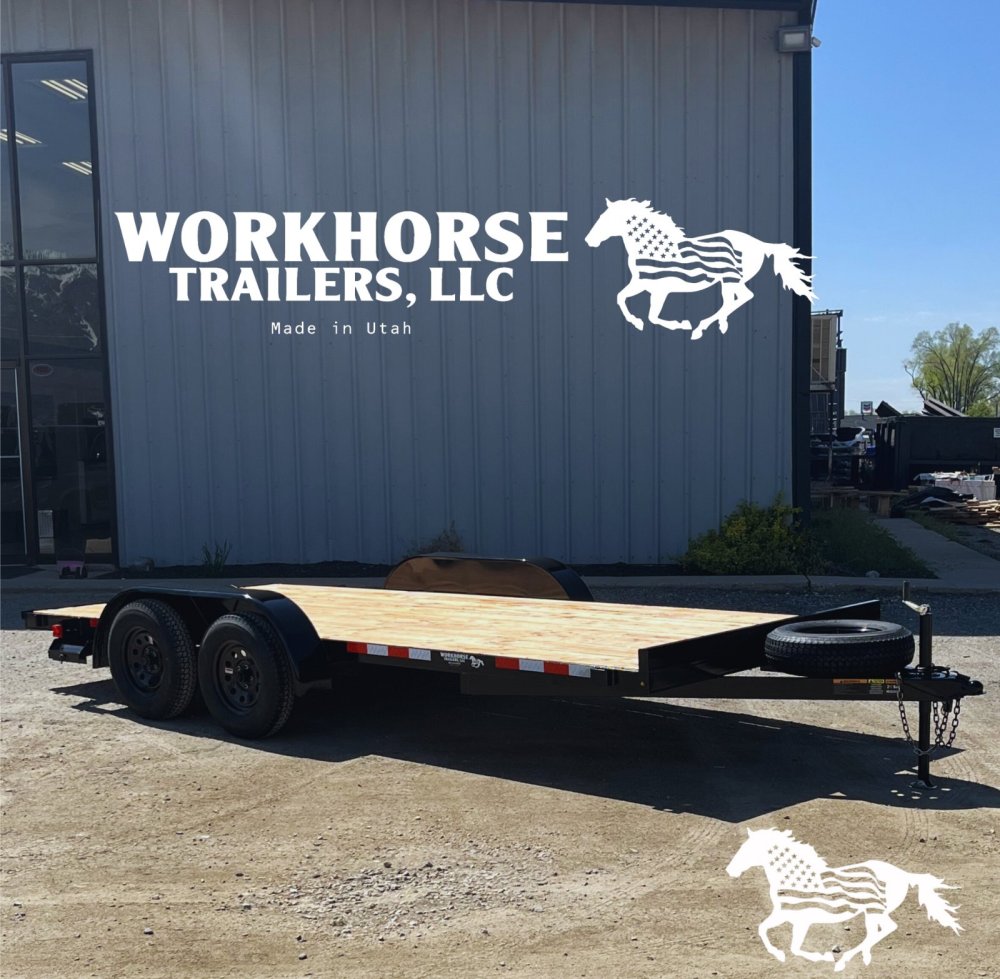
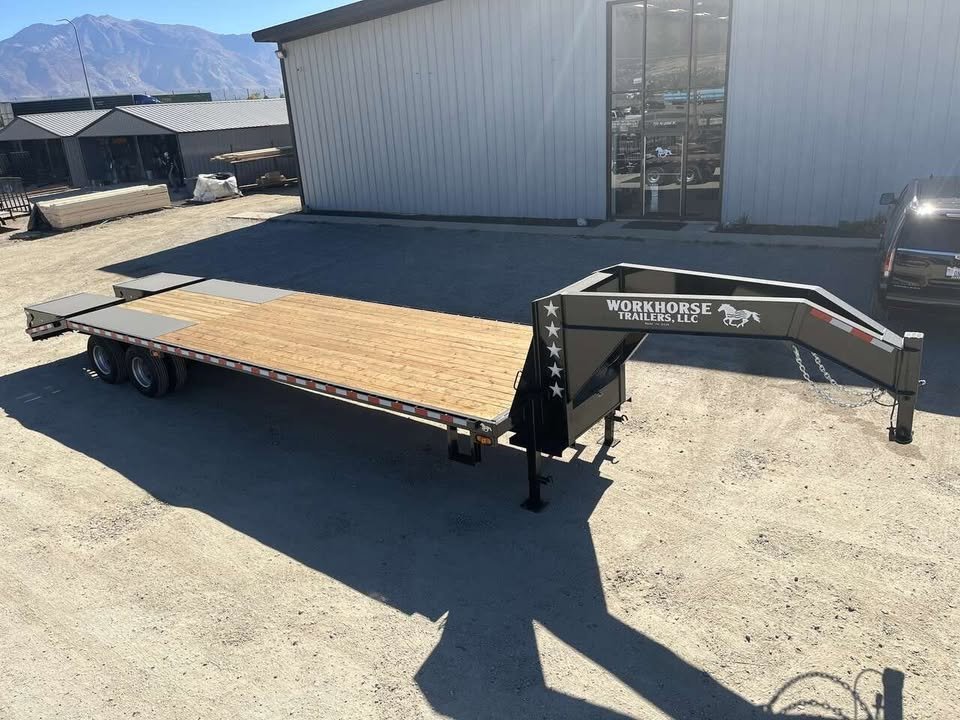
Cheyenne Gooseneck Trailers
All locationsCheyenne operates at a scale that catches newcomers off guard. The city itself is compact, but the economic territory it serves radiates outward across southeastern Wyoming and into the northern Colorado border zone in a pattern that stretches hauling routes across enormous distances and through conditions that test every connection between truck and trailer. When the loads being transported through this territory grow beyond what a rear-mounted receiver hitch can manage safely, the gooseneck trailer steps in as the proven solution that relocates the towing connection from behind the rear axle to directly above it. That single change in hitch geometry transforms the towing experience from a negotiation with physics into a partnership with it, giving Cheyenne operators the load capacity, directional stability, and braking confidence they need to haul heavy cargo across a landscape that forgives nothing. Workhorse Trailers LLC serves Cheyenne’s professional haulers and working ranchers with gooseneck trailers selected for the weight classes, platform configurations, and build quality that daily life in the capital city demands.
The hauling requirements generated by Cheyenne’s economy span a weight range that begins where bumper-pull trailers reach their limit and extends upward into territory that only a properly rated gooseneck connection can handle legally and safely. Structural steel bound for commercial construction along the Frontier Mall expansion corridor, breeding bulls traveling to spring turnout on ranch leases south of town, heavy equipment bound for energy infrastructure projects along the I-80 corridor, and hay loads headed to feeding operations across Laramie County all ride behind gooseneck hitches because the combined weight of trailer and cargo exceeds the rating of any bumper-pull receiver available on the market. Workhorse Trailers LLC providesCheyenne Gooseneck Trailers matched to these specific load profiles, giving operators the rated capacity they require without overbuilding into weight classes that demand larger tow vehicles than the job warrants.
Cheyenne Operations That Depend on Gooseneck Towing
The gooseneck format serves Cheyenne’s economy across multiple sectors simultaneously. Its combination of high capacity, long platform options, and superior handling under load makes it the default choice for operators whose cargo regularly exceeds the bumper-pull threshold.
Livestock Auction and Sale Barn Traffic
Cheyenne Livestock Auction and the sale barns accessible from the capital serve as commercial hubs where cattle, horses, and small ruminants change hands in transactions that require immediate transport. A rancher who purchases 30 head of mixed yearlings at a Tuesday sale needs those animals on the trailer and headed toward home pasture before nightfall. A horse buyer who wins a bid on a team of matched draft horses needs a trailer with the interior height, floor space, and weight rating to carry animals that may exceed 4,000 pounds combined.
Gooseneck stock trailers ranging from 20 to 28 feet handle the volume and weight generated by sale barn activity with capacity that bumper-pull livestock trailers cannot approach. The gooseneck connection keeps the loaded trailer tracking straight behind the truck as the animals shift their weight in response to turns, stops, and road surface changes. This stability matters particularly on the rural highways connecting Cheyenne to the ranch communities where purchased livestock will ultimately arrive, where the combination of narrow lanes, open range crossings, and minimal shoulders leaves no room for a trailer that wanders under shifting live loads.
Construction Material Staging for Government Projects
Cheyenne’s status as the state capital means that government building construction, renovation, and maintenance projects operate on a continuous cycle. New state office buildings, courthouse expansions, correctional facility upgrades, and university campus improvements at Laramie County Community College all generate material deliveries that involve structural steel, precast concrete panels, mechanical equipment units, and bulk insulation shipments weighing well beyond bumper-pull limits.
Gooseneck flatbed trailers deliver these materials from regional distribution points in Denver, Fort Collins, and Cheyenne’s own commercial supply district to active project staging areas throughout the city. The gooseneck platform accommodates the long, heavy loads that structural steel and precast concrete represent while providing the hitch stability needed to navigate the tight access roads and construction zone entrances that characterize active government building sites in Cheyenne’s downtown and Capitol complex area.
Hay Brokerage and Feed Distribution
Cheyenne sits within a hay production and consumption zone that extends from the irrigated meadows along the North Platte River system to the dryland range pastures of eastern Laramie County. Hay brokers operating from Cheyenne purchase standing crops from growers, arrange custom harvesting, and distribute baled forage to livestock operations across the region. The tonnage involved in a single season of hay brokerage dwarfs what any light-duty towing setup can handle.
Gooseneck flatbed trailers stacked with large square bales commonly reach gross weights of 20,000 to 25,000 pounds per load. At these weights, the gooseneck hitch’s position directly over the truck’s rear axle is not a preference but a physical necessity. The concentrated vertical load at the hitch point would overwhelm a bumper-pull receiver’s structural capacity and leverage any truck’s rear suspension beyond its designed operating range. Cheyenne hay brokers run their gooseneck trailers through the harvest months on schedules that put thousands of miles on each unit between July and October, and the trailers must endure that pace without mechanical interruption.
Hotshot and Expedited Freight
Cheyenne’s position at the I-25 and I-80 interchange makes it a natural staging point for hotshot freight operators who haul time-sensitive loads across the western states. These independent owner-operators use gooseneck flatbed trailers in the 35-to-40-foot range to carry oilfield equipment, manufacturing components, and emergency replacement parts on schedules that standard commercial carriers cannot match.
The hotshot business model demands a trailer that is always ready to load and roll. A dispatcher call at 4 PM for a next-morning delivery 500 miles away leaves no time for trailer maintenance or mechanical troubleshooting. Cheyenne-based hotshot operators invest in gooseneck trailers with the build quality to maintain constant readiness because their income depends on the ability to accept loads on short notice and deliver them without delay or damage.
Gooseneck Towing Through Cheyenne’s Signature Wind
Every discussion of towing in Cheyenne eventually arrives at wind, and for good reason. The city’s exposure on the open plains at the convergence of multiple atmospheric flow patterns produces sustained wind events that would qualify as storm warnings in most other locations but register as ordinary conditions in Cheyenne. The gooseneck hitch format offers specific advantages in this environment that bumper-pull alternatives cannot replicate.
Reduced Oscillation Amplitude During Gusts
A sudden crosswind gust striking a loaded trailer initiates a lateral oscillation that propagates through the hitch connection to the tow vehicle. The amplitude of that oscillation depends in part on the distance between the hitch pivot point and the truck’s rear axle. A bumper-pull hitch positions the pivot point 18 to 24 inches behind the rear axle, creating a lever arm that amplifies lateral inputs. A gooseneck hitch positions the pivot directly above the rear axle, eliminating the lever arm entirely and reducing oscillation amplitude to a fraction of what the same input would produce through a bumper connection.
Cheyenne operators who have towed the same trailer type in both bumper-pull and gooseneck configurations describe the difference as transformative. What felt like a white-knuckle wrestling match with a bumper-pull rig in a 40-mile-per-hour crosswind becomes a manageable, controlled towing experience with the gooseneck connection absorbing the same wind forces through a more favorable geometric relationship with the truck.
Improved Lane Tracking on Exposed Highway Segments
The I-80 corridor west of Cheyenne toward Laramie and the I-25 corridor north toward Wheatland both cross open terrain where crosswinds strike without warning and without the speed reduction that trees, buildings, or terrain features provide in more sheltered landscapes. Maintaining lane position with a loaded trailer on these exposed segments requires a hitch connection that keeps the trailer tracking directly behind the tow vehicle rather than wandering laterally under wind pressure.
The gooseneck’s centered pivot point produces trailer tracking behavior that follows the truck’s path with minimal lateral offset during steady crosswinds. This tracking fidelity reduces the constant steering corrections that fatigue a driver over long exposed runs and decreases the risk of encroaching into adjacent lanes during gust events. For Cheyenne operators who travel these corridors daily, the accumulated fatigue reduction over a week of towing justifies the gooseneck investment on ergonomic grounds alone.
Truck Preparation for Gooseneck Service in Cheyenne
The tow vehicle in a Cheyenne gooseneck combination must be prepared both mechanically and structurally for the demands the hitch system and the local environment impose. Overlooking preparation details that seem minor individually can combine into performance shortfalls that compromise safety and productivity.
Rear Axle and Suspension Readiness
The tongue weight of a loaded gooseneck trailer applies a sustained vertical force to the tow vehicle’s rear axle that can range from 2,000 to 5,000 pounds depending on the trailer and load. This force compresses the truck’s rear suspension and increases the load on the rear axle bearings, brakes, and tires throughout every towing mile.
Cheyenne operators should verify that their tow vehicle’s rear suspension is rated for the tongue weight their typical loads produce. Adding supplemental air bags or helper springs to the rear suspension prevents the excessive sag that reduces headlight aim, diminishes front axle traction, and degrades ride quality when the trailer is connected. Trucks that tow gooseneck loads daily in Cheyenne benefit from suspension upgrades that maintain level ride height regardless of tongue weight variation between loads.
Exhaust Heat Management Near the Coupler
The gooseneck coupler extends into the truck bed and positions the connection hardware directly above the truck’s frame, exhaust system, and in some configurations the catalytic converter and exhaust pipes that generate significant radiant heat during sustained towing. Diesel trucks working hard on the I-80 grade west of Cheyenne or pulling loaded trailers up the I-25 incline toward Horse Creek produce exhaust temperatures high enough to soften truck bed liners and warp thin metal heat shields in the vicinity of the gooseneck ball mount.
Installing a heat shield plate between the exhaust system and the truck bed floor in the area surrounding the gooseneck ball protects the bed surface and any wiring or accessories routed through that zone. Cheyenne operators who tow heavy loads through sustained grade climbs should inspect this area periodically for heat discoloration or material degradation that signals inadequate thermal protection.
Electrical System Capacity for Trailer Brakes and Lighting
A gooseneck trailer’s electrical demands exceed those of a bumper-pull trailer because the longer wiring runs and higher brake current draws associated with larger, heavier trailers stress the tow vehicle’s charging system and wiring harness. A truck that handles a light bumper-pull trailer’s electrical load without difficulty may experience voltage drops that cause dim lighting and sluggish brake response when connected to a large gooseneck with six or eight brake magnets drawing current simultaneously.
Verifying that the tow vehicle’s alternator output, battery capacity, and wiring gauge support the combined electrical load of the planned gooseneck trailer prevents the intermittent electrical issues that frustrate operators and create safety hazards on the road. Cheyenne operators stepping up from bumper-pull to gooseneck towing for the first time should have their truck’s electrical system evaluated by a qualified shop before connecting the larger trailer.
Registration and Road Compliance for Cheyenne Gooseneck Operators
Gooseneck trailers operated on Wyoming highways must carry current registration issued through the Laramie County Clerk’s office for Cheyenne residents. The registration process requires a manufacturer’s certificate of origin for new units or a properly assigned title for used purchases, and annual renewal fees apply based on weight classification.
Brake requirements under Wyoming law mandate functional independent brakes on trailers exceeding 3,000 pounds gross vehicle weight. Every loaded gooseneck trailer exceeds this threshold by a substantial margin, making brake system maintenance a legal obligation and a practical priority. The brake controller in the tow vehicle must be calibrated to deliver appropriate braking force to the specific trailer connected, as a controller setting tuned for a light trailer will under-brake a heavy gooseneck load and a setting tuned for maximum output will lock the wheels on a lightly loaded return trip.
Safety chains crossed beneath the gooseneck coupler and a functional breakaway brake system with a charged battery complete the basic compliance package. Testing all safety systems before each departure from the yard takes minutes and confirms that the combination meets both legal requirements and the common-sense safety standard that Cheyenne’s demanding towing environment demands.
Workhorse Trailers LLC Anchors Cheyenne’s Gooseneck Market
Heavy hauling is woven into the daily rhythm of Cheyenne’s economy, and the gooseneck trailer is the tool that makes it possible. Workhorse Trailers LLC serves every segment of this market with product knowledge and honest recommendations that reflect the real operating conditions Cheyenne operators face on every trip. Buyers come from Burns, Carpenter, Pine Bluffs, Hillsdale, Federal, Granite, Horse Creek, and the ranch properties that bracket the capital in every direction, confident that the Workhorse team will identify the gooseneck trailer that handles their cargo, fits their truck, and performs through the wind, cold, and distance that define towing from Wyoming’s capital city. For Cheyenne operators ready to move beyond the limitations of bumper-pull towing, Workhorse Trailers LLC delivers the gooseneck solutions that open up every heavy hauling possibility this market presents.