Billings Utility Trailers
All locationsBillings runs on trucks. As Montana’s largest city and the economic center of the Yellowstone Valley, it supports a dense concentration of tradespeople, property owners, small business operators, and weekend project warriors who all share one recurring need: a reliable way to move stuff from one place to another. Utility trailers are the workhorses behind that daily hauling, and Workhorse Trailers LLC has become a preferred source for Billings area buyers looking for utility trailers that perform without pretense. Whether you’re a homeowner hauling landscaping materials from a Billings supply yard to your property in the Heights, or a contractor running job site deliveries across Yellowstone County, the right utility trailer turns your truck into a significantly more capable tool.
Utility trailers occupy the practical middle ground of the trailer market. They’re not specialized for livestock, not enclosed for weather protection, and not engineered for 20,000-pound equipment loads. What they do is handle the everyday hauling that keeps Billings moving: lumber, gravel, furniture, appliances, lawn equipment, ATVs, motorcycles, fencing supplies, and the thousand other loads that accumulate when you own property, run a business, or simply refuse to pay a delivery fee for things you can move yourself.
Their simplicity is their strength. A well-built utility trailer gives you decades of service with minimal fuss.
What Defines a Utility Trailer
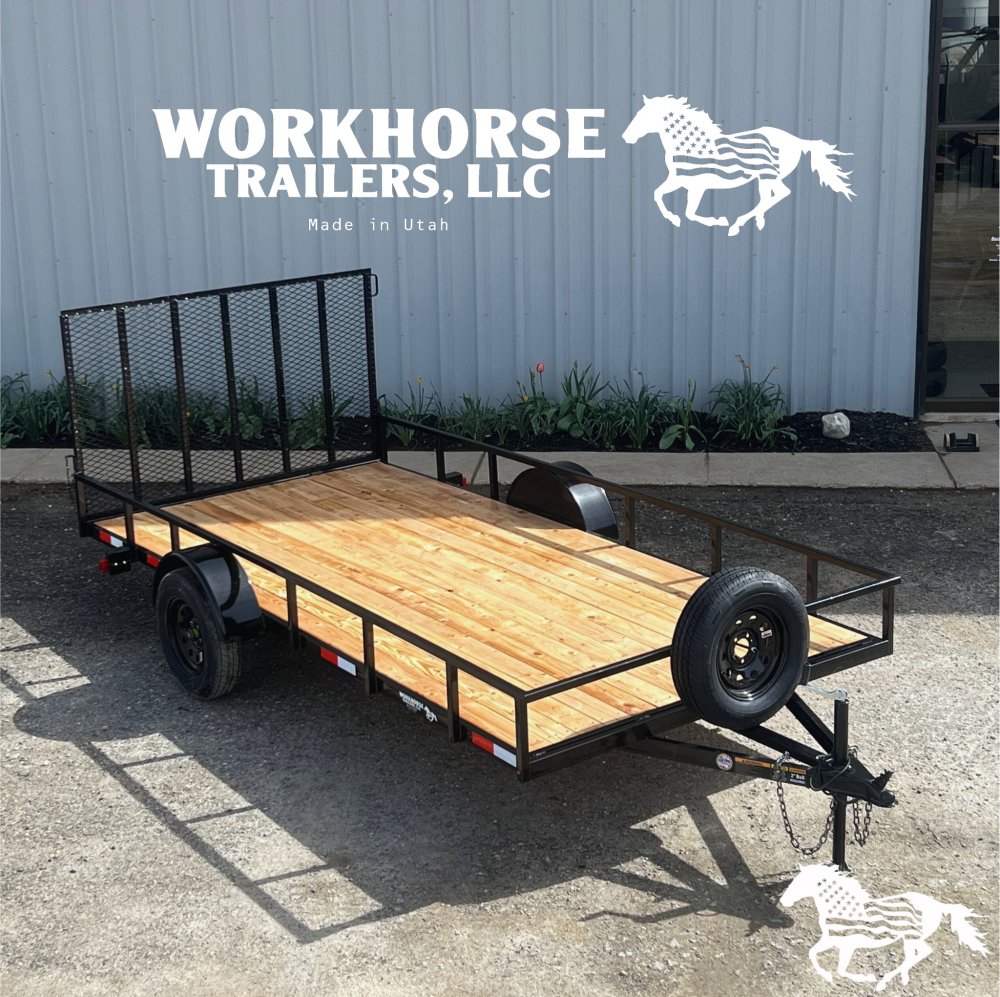
The term “utility trailer” covers a broad category, so it helps to define the boundaries. A utility trailer is an open, non-powered trailer with a flat bed, low side rails or mesh sides, and a rear gate or ramp for loading. They range from compact 4×6-foot single-axle units that weigh a few hundred pounds empty to larger 7×16-foot tandem-axle models capable of carrying several thousand pounds of payload.
What separates a utility trailer from a flatbed or equipment trailer is generally the scale and intended use. Utility trailers are designed for versatility across lighter to moderate loads rather than for hauling a specific type of heavy machinery. Their deck heights sit lower to the ground than deck over trailers, which makes hand-loading easier. Their side rails contain loose materials that would slide off an open flatbed. And their price points reflect the fact that most buyers need a dependable hauling platform without the specialized features that drive up cost on purpose-built trailer types.
In Billings, utility trailers are probably the single most common trailer type you’ll see behind pickups on any given Saturday morning.
Choosing the Right Size for Billings Area Use
Buying a utility trailer that’s too small guarantees you’ll wish you’d gone bigger within the first month. Buying one that’s too large means you’re storing, maneuvering, and towing more trailer than the job requires. Billings buyers tend to land on a size based on their most frequent hauling scenario, with a modest buffer for the occasional larger load.
Small Single Axle (4×6 to 5×8)
These compact trailers handle loads that don’t justify a full-size unit. A 4×6 is enough for yard debris runs to the Billings landfill on Molt Road, hauling a push mower and trimmer to a side job, or picking up a few sheets of plywood from one of the lumber yards along King Avenue. Most SUVs and even some larger sedans with a hitch receiver can tow these legally. They store easily in a garage or alongside a house, which matters in Billings neighborhoods where lot sizes don’t always accommodate large equipment.
Mid-Size Single Axle (5×10 to 6×12)
This is the sweet spot for Billings homeowners and light-duty commercial users. A 5×10 or 6×12 single-axle trailer carries enough for a meaningful load of landscaping rock, a riding mower with attachments, a pair of dirt bikes, or a weekend’s worth of furniture from an estate sale. These trailers tow comfortably behind half-ton and three-quarter-ton pickups, and their footprint remains manageable for parking and backing into residential driveways.
GVWRs in this range typically fall between 2,500 and 3,500 pounds, which keeps many of them below the threshold where Montana requires brakes on the trailer’s wheels. That said, adding brakes even when not legally required is worth considering for anyone who tows regularly on Billings’ hilly terrain, particularly the steep grades in the West End and along the Rims.
Tandem Axle (6×12 to 7×16)
Stepping up to tandem axles opens the door to heavier payloads and greater stability at highway speeds. A 7×14 tandem-axle utility trailer rated at 7,000 pounds GVWR handles loads that would overwhelm a single-axle unit: a full pallet of concrete mix, a loaded landscape trailer’s worth of sod, or a side-by-side UTV with room for coolers and gear. Contractors working in the Billings metro area who need a general-purpose trailer for material deliveries frequently land in this category.
Tandem axles also provide tire redundancy. A flat tire on a single-axle trailer at rush hour on 24th Street West is a roadside emergency. A flat on a tandem axle is an inconvenience you can nurse to the nearest tire shop at low speed.
Steel vs. Aluminum Construction
Billings buyers face a climate that tests trailer materials across extremes. Summers push into triple digits, winters drop well below zero, and the road treatment chemicals applied during Montana’s long cold season accelerate corrosion on exposed metal surfaces. The choice between a steel frame utility trailer and an aluminum one involves trade-offs that matter in this environment.
Steel Frame Trailers
Steel is the default material for most utility trailers in the Billings market, and for good reason. It’s strong, relatively inexpensive, and easy to repair or modify. A steel utility trailer with a quality powder coat or paint finish resists corrosion well enough for years of service, provided the owner addresses chips and scratches before rust takes hold.
The weight of a steel trailer is higher than its aluminum equivalent, which slightly reduces payload capacity for any given GVWR. For most utility trailer applications, this trade-off is negligible. A steel 6×12 might weigh 300 to 400 pounds more than a comparable aluminum model, which rarely matters when the total payload is measured in tons.
Steel trailers also weld easily, which means adding a D-ring, reinforcing a section of rail, or patching damage from a dropped load can be handled by any competent welder in Billings. There is no shortage of welding shops along South Billings Boulevard and in the industrial corridor near Lockwood for this kind of work.
Aluminum Frame Trailers
Aluminum utility trailers cost more upfront but eliminate the corrosion concern almost entirely. Aluminum doesn’t rust, which means bare scratches and chips don’t trigger the progressive deterioration that steel experiences. For buyers who store their trailer outdoors year-round and don’t want to think about touch-up paint or surface maintenance, aluminum is appealing.
The lighter weight of an aluminum trailer also means slightly better fuel economy when towing and a lower starting weight against the GVWR, which translates to marginally more available payload. These differences are modest in the utility trailer category but can matter for buyers towing with smaller vehicles at or near their rated capacity.
The disadvantage of aluminum is repairability. Aluminum welding requires specialized equipment and technique that not every shop offers. A cracked rail or bent frame member on an aluminum trailer is a more involved repair than the same damage on a steel unit.
Features That Matter for Billings Buyers
Utility trailers can be equipped with a range of features, and not all of them deliver equal value. Focusing on the features that align with how Billings area residents actually use their trailers helps avoid spending money on options that sound useful in a brochure but don’t improve the ownership experience.
Gate Style
A solid drop-down tailgate provides a loading ramp when lowered and a cargo barrier when raised. Mesh gates offer the same function while allowing water and debris to pass through, which is convenient for yard waste and landscaping loads. Spring-assisted gates reduce the effort needed to raise and lower a heavy tailgate, and they’re worth the small upcharge for anyone who opens and closes the gate multiple times per day.
Tie-Down Points
D-rings welded to the frame or bed, stake pockets along the side rails, and integrated anchor points in the deck give you options for securing loads. More tie-down points provide more flexibility. A trailer with four D-rings spaced evenly is adequate. One with eight or more positions lets you secure irregularly shaped loads without improvising attachment points.
Flooring
Expanded metal mesh floors are common on lighter utility trailers. They drain water and debris, reduce trailer weight, and work well for most general hauling. Solid steel or wood plank floors suit buyers who haul loose materials like gravel, soil, or mulch that would fall through a mesh surface. Some buyers start with a mesh floor and add removable plywood panels when they need a solid surface, giving them both options from a single trailer.
Lighting and Electrical
LED lights have largely replaced incandescent trailer lighting, and for Billings buyers who tow in winter darkness, rain, and snow, the visibility difference is meaningful. LEDs are brighter, respond faster, and last years longer than traditional bulbs. Sealed wiring connections prevent the corrosion-related failures that plague cheap trailer electrical systems after a few Montana winters.
Where Billings Residents Buy Utility Trailers
Billings offers several avenues for purchasing a utility trailer, and each has characteristics worth understanding.
Big-box retailers and farm supply stores carry a limited selection of light-duty utility trailers, typically at competitive prices. The trade-off is limited model variety, minimal customization options, and sales staff who may not have deep knowledge of towing specifications or trailer construction quality. For a basic single-axle trailer used occasionally, these outlets serve the purpose.
Private party sales through classified listings and online marketplaces offer the lowest prices but carry the most risk. Rust hidden by fresh paint, worn bearings, corroded wiring, and bent frames are all common issues on used utility trailers that an inexperienced buyer can miss during a quick parking lot inspection. Montana’s lack of a mandatory trailer inspection program means there’s no state-required safety check before a used trailer changes hands.
Dedicated trailer dealers provide the broadest selection, product knowledge, and warranty coverage. Workhorse Trailers LLC serves Billings area buyers with a consultative approach that starts with how the trailer will be used rather than what happens to be in inventory. Buyers who want to compare specifications and pricing on utility trailers suited to Billings area hauling needs can visitBillings Utility Trailers to explore available options. The company’s familiarity with the loads, terrain, and conditions specific to the Yellowstone Valley means recommendations are grounded in local knowledge rather than generic sales scripts.
Registration, Insurance, and Road Use in Billings
Registering a utility trailer in Yellowstone County follows Montana’s statewide process through the county treasurer’s office at the Yellowstone County courthouse downtown. Montana charges no sales tax on trailer purchases, which provides a real cost advantage that Billings buyers benefit from whether buying new or used.
Registration fees are calculated based on the trailer’s age and declared gross vehicle weight. For lightweight utility trailers, annual registration costs are minimal. The registration plate must be displayed on the rear of the trailer, and the trailer must carry functioning tail lights, brake lights, turn signals, and reflective markers.
Insurance for utility trailers is optional in Montana but worth considering, particularly for tandem-axle models with higher replacement costs. Many auto insurance policies can add trailer coverage as an endorsement for a modest annual premium. This covers theft, collision damage, and liability if the trailer detaches and causes property damage or injury.
Within Billings city limits, parking a utility trailer on residential streets for extended periods may be subject to local ordinances. Buyers who plan to store their trailer at home should verify any HOA restrictions or city regulations that apply to their neighborhood. The Billings municipal code addresses vehicle and trailer storage in residential zones, and violations can result in notices and fines.
Maintaining a Utility Trailer Through Billings Seasons
A utility trailer asks very little in terms of maintenance, but what it asks for is not optional.
Wheel bearings are the highest-maintenance component on any trailer. Bearings should be inspected and repacked with grease annually for trailers used regularly, or every two years for occasional-use trailers. Bearing failure on a loaded trailer creates a dangerous situation and an expensive roadside repair. This is the single most important maintenance task for any Billings trailer owner, and ignoring it is the most common cause of preventable trailer breakdowns.
Tire pressure should be checked before every towing trip. Trailer tires sitting unused for weeks or months can develop slow leaks and lose enough pressure to overheat and fail at highway speed. Tires also age out regardless of tread depth. Trailer tires older than five to seven years should be replaced even if they appear visually sound, because the rubber compounds degrade with UV exposure and temperature cycling.
Electrical connections deserve a quick check each time you hitch up. Plug in the connector, walk behind the trailer, and verify that brake lights, turn signals, and running lights all function. A burned-out light on Billings streets at night creates a real collision risk, and it’s an easy citation during a routine traffic stop.
Treating surface rust early on steel trailers prevents it from progressing into structural deterioration. A wire brush, rust converter, and a can of matching spray paint take twenty minutes and save hundreds in future repair costs.
Getting Started With Workhorse Trailers LLC
Billings residents shopping for a utility trailer deserve a buying experience that respects their time and their intelligence. Workhorse Trailers LLC provides exactly that: clear answers about which trailer fits your needs, transparent pricing, and a product selection curated for the kind of hauling that Yellowstone Valley residents actually do. Whether you need a compact single-axle unit for weekend projects or a tandem-axle workhorse for daily commercial use, the process starts with a simple conversation about what you’re hauling and ends with a trailer matched to that purpose. Reach out to the team to get that conversation started.