
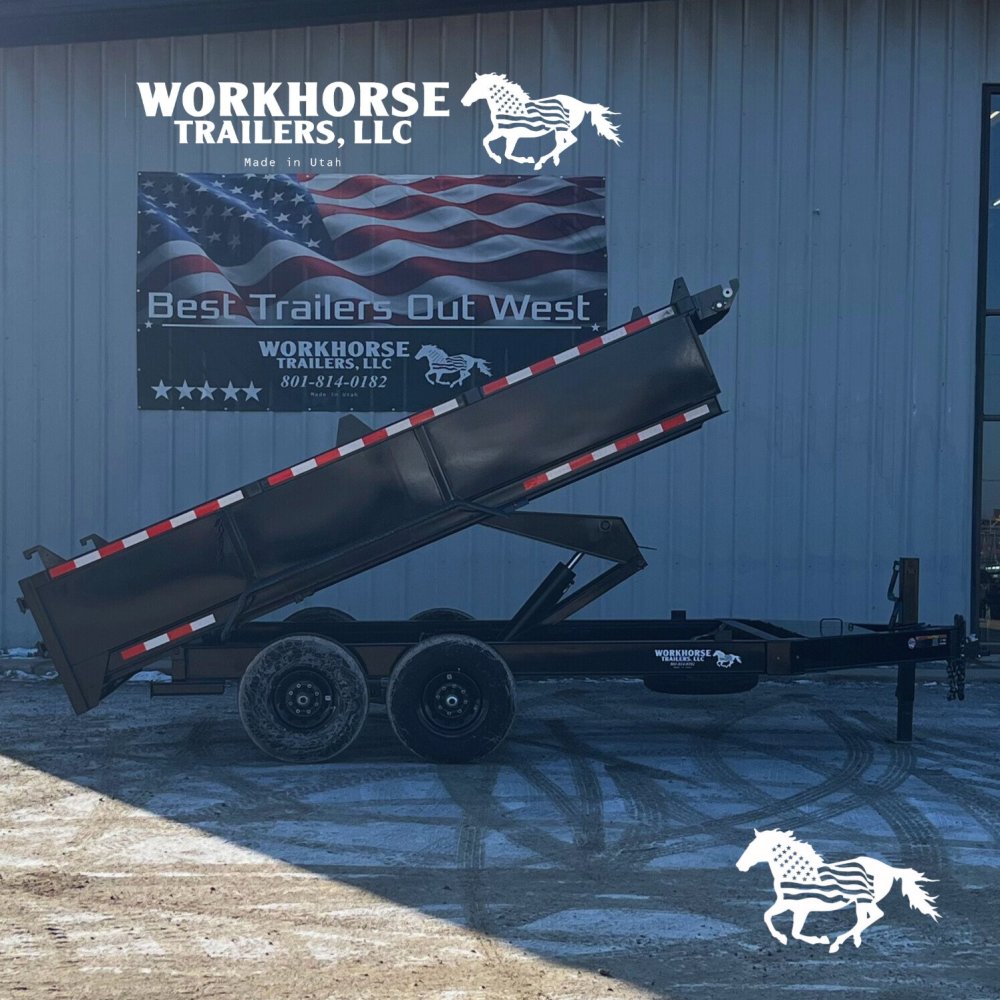
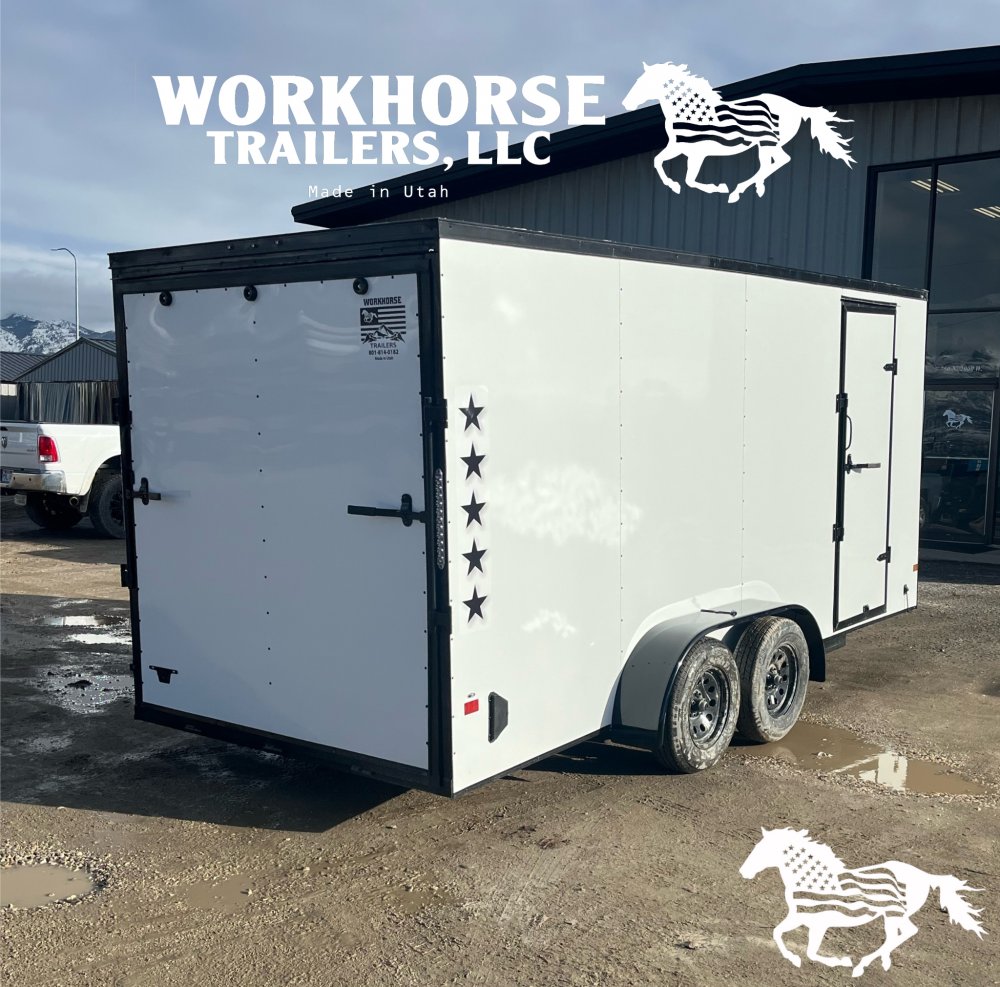
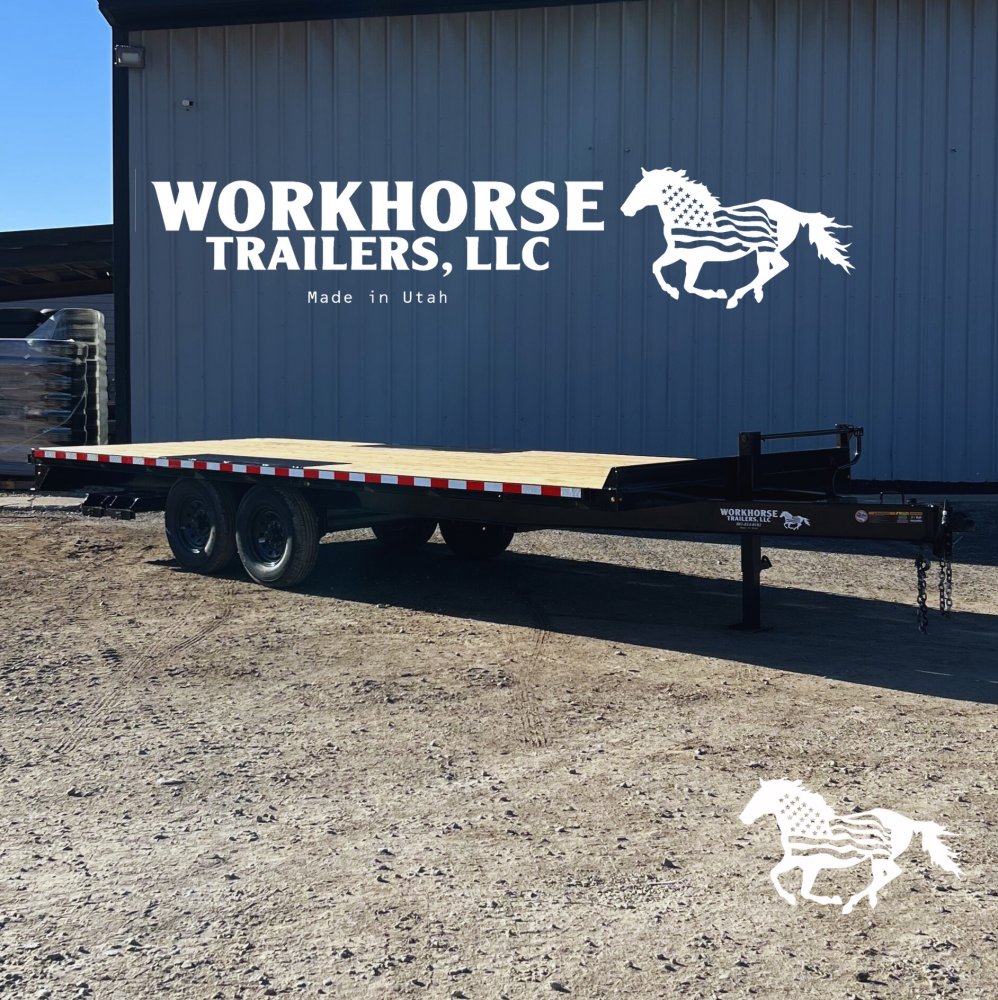
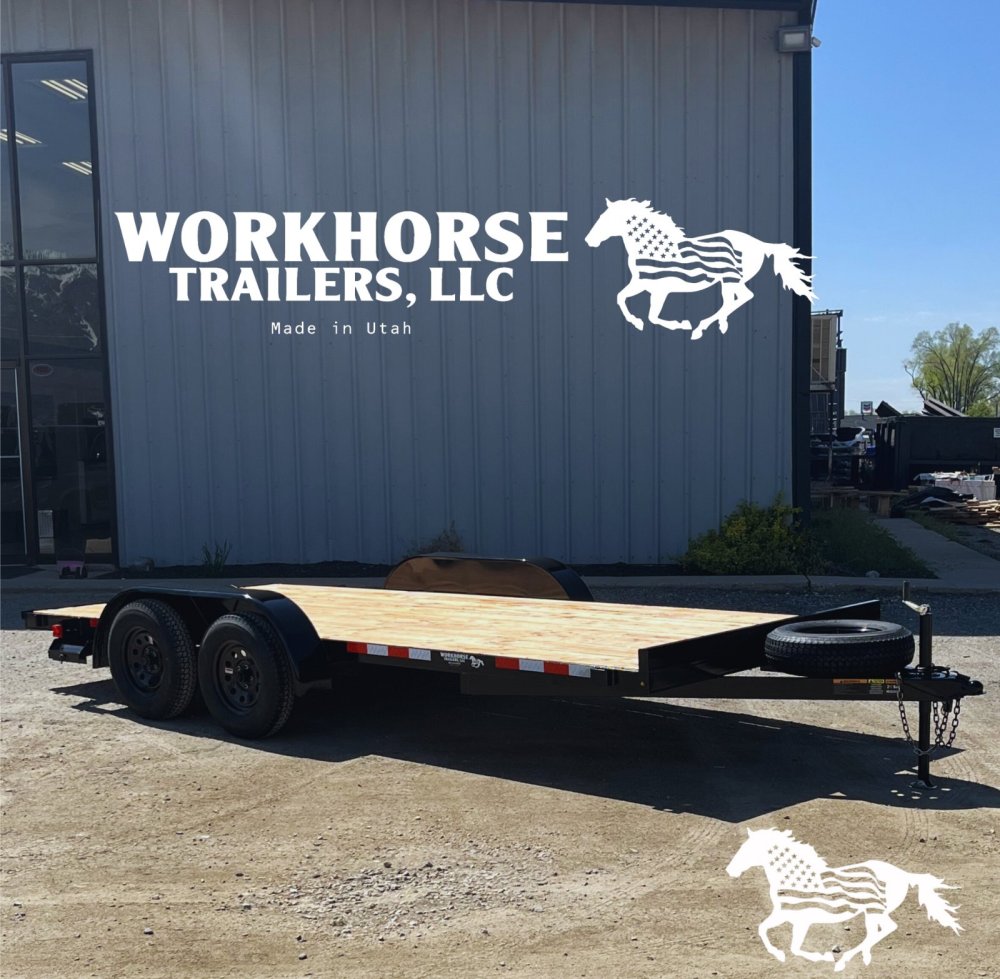
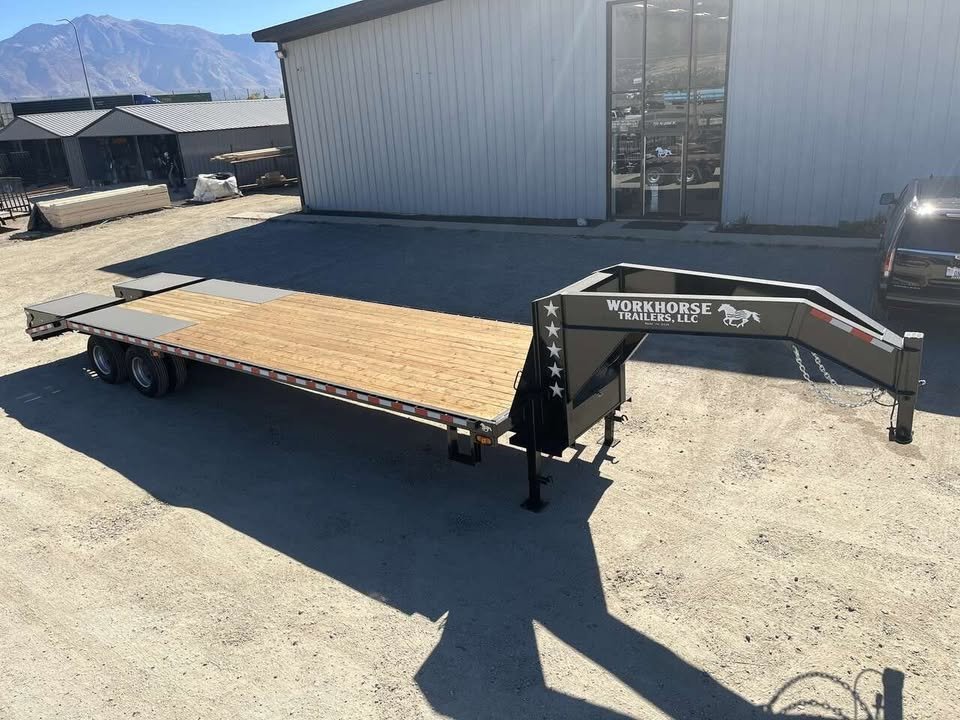
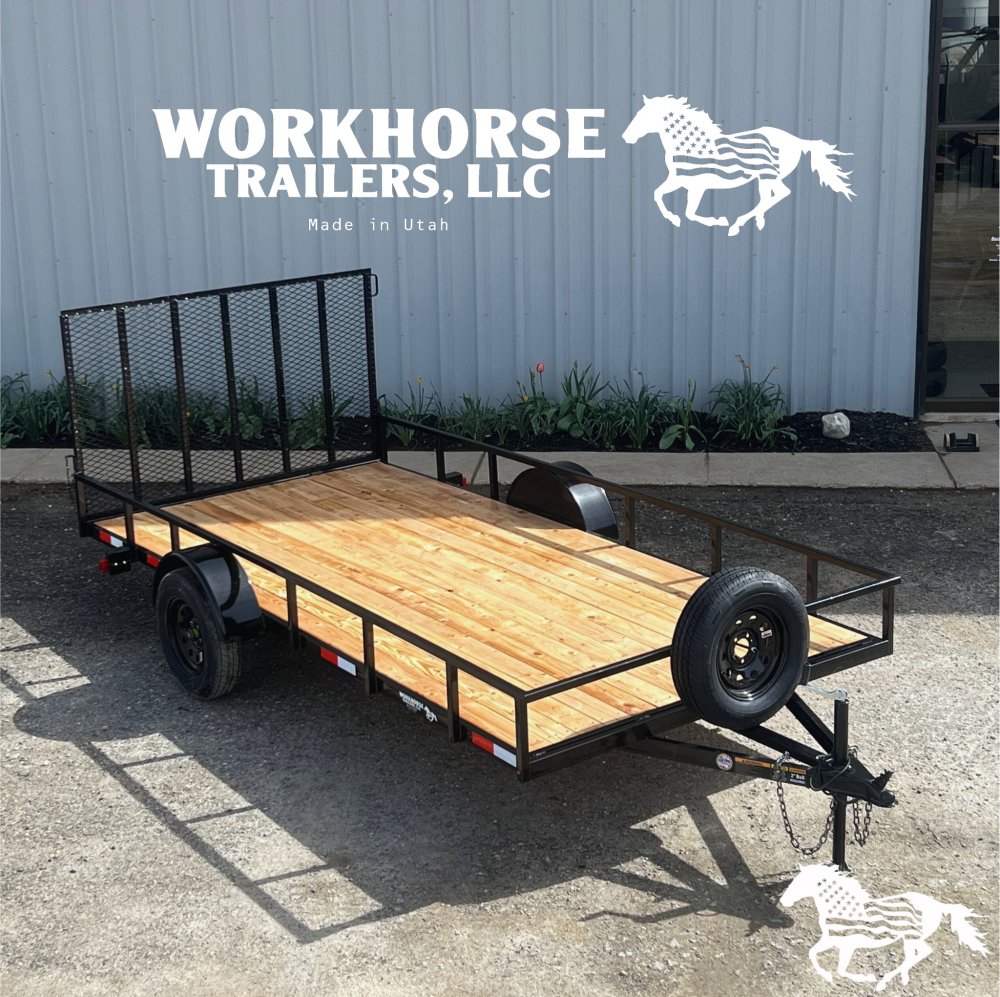
Colorado Springs Equipment Hauler Trailers
All locationsConstruction cranes rise above new subdivisions in Banning Lewis Ranch. Utility crews string fiber optic cable through established neighborhoods along Woodmen Road. Road resurfacing projects slow traffic on North Academy Boulevard while heavy rollers compress fresh asphalt into place. Each of these scenes, repeated daily across Colorado Springs, depends on heavy machinery arriving at the right location at the right time aboard a trailer capable of bearing its weight. Equipment hauler trailers keep the engines of progress turning throughout El Paso County by providing the critical link between the yard where machines are stored and the active job site where they earn their keep. Workhorse Trailers LLC supplies Colorado Springs operators with equipment hauler trailers that meet the elevated demands placed on hauling gear in a city experiencing one of the fastest growth spurts in the Mountain West.
The pace of development in Colorado Springs has accelerated sharply over the past several years, driven by military expansion, tech sector relocation, and a steady influx of new residents drawn to the region’s quality of life. That growth translates directly into construction volume, infrastructure upgrades, and commercial development that collectively require thousands of individual equipment moves every week across the metro area. Workhorse Trailers LLC offersColorado Springs Equipment Hauler Trailers engineered to handle the cycle of constant loading, highway travel, and job site delivery that defines daily life for equipment operators along the Front Range.
Sectors Fueling Equipment Hauler Demand Across Colorado Springs
The variety of industries relying on equipment hauler trailers in El Paso County reflects the diversified economic base that has made Colorado Springs resilient through multiple business cycles. Each sector brings distinct machinery profiles and transport frequencies that influence which trailer specifications matter most.
Residential and Commercial Site Development
The sheer volume of ground being broken for new housing, retail centers, medical facilities, and mixed-use developments across Colorado Springs creates relentless demand for earthmoving and grading equipment. Excavators, dozers, motor graders, and loader backhoes cycle between active sites as phases complete and new parcels open up. A site developer managing concurrent projects in Cimarron Hills, Briargate, and along the Highway 83 corridor may need to reposition three or four machines in a single day to keep crews productive at every location.
Equipment hauler trailers used in site development face punishing conditions. They load and unload on unprepared surfaces covered in loose soil, fractured rock, and construction debris. Ramps absorb the impact of tracked machines weighing 15,000 pounds or more rolling across them multiple times daily. Frames flex under concentrated loads applied at different points with each new piece of equipment. Only trailers built with reinforced structural members, heavy-gauge ramp surfaces, and fatigue-resistant weld joints survive this intensity of use for more than a few seasons.
Underground Utility Installation
Water main extensions, sewer line replacements, stormwater management systems, and telecommunications conduit installations require specialized compact machinery that operates in trenches and confined spaces. Mini excavators, vacuum excavation trucks, horizontal directional drills, and vibratory plows all travel to installation sites on equipment hauler trailers sized to accommodate their specific dimensions and weight.
Colorado Springs Utilities and the private contractors it works with maintain aggressive schedules to extend services into newly annexed areas and to replace aging infrastructure in older neighborhoods near downtown and along the Fountain Creek corridor. The trailer fleet supporting these operations must be available every working day without downtime caused by maintenance backlogs or structural failures that could have been prevented by choosing a higher quality unit from the start.
Wildfire Mitigation and Forestry
The wildland-urban interface surrounding Colorado Springs on its western and northern edges places the city in direct contact with forested terrain that carries significant wildfire risk. The Waldo Canyon and Black Forest fires remain powerful reminders of the destruction that can occur when fire meets development. Mitigation crews working to thin vegetation, create defensible space, and maintain fuel breaks depend on equipment hauler trailers to deliver chippers, stump grinders, compact track loaders, and brush mowing attachments to remote hillside work zones accessible only by narrow, winding roads.
These operations often require maneuvering loaded trailers on steep grades with limited turnaround space. The equipment hauler trailer used in wildfire mitigation work must be short enough to negotiate tight switchbacks, light enough for the available tow vehicle, and strong enough to carry a fully loaded chipper or compact machine without exceeding its rated capacity. Workhorse Trailers LLC helps Colorado Springs mitigation contractors find that precise balance.
Snow Removal and Seasonal Maintenance
Winter in Colorado Springs brings an average of nearly 60 inches of snowfall, distributed across storms that can drop a foot or more in a single event. Property management companies, commercial plowing services, and municipal maintenance crews deploy loaders, skid steers with snow pusher attachments, and salt spreading equipment across the city whenever significant accumulation occurs.
Moving this equipment from storage locations to designated routes and commercial properties before the first flakes fall requires equipment hauler trailers that are ready to roll on short notice. A late-night storm watch that turns into a declared event by dawn leaves no time for dealing with a trailer that has a flat tire, a dead battery on the breakaway system, or a seized ramp hinge. Reliability under urgent deployment conditions is a non-negotiable requirement for snow removal fleets operating in the Colorado Springs market.
Selecting the Correct Weight Class
Equipment hauler trailers are categorized broadly by their gross vehicle weight rating, and choosing the right weight class prevents both unsafe overloading and wasteful over-specification. Colorado Springs buyers should evaluate their heaviest anticipated load and select a trailer that carries that load within roughly 80 percent of its maximum rating, leaving a safety margin that accounts for fuel, fluids, and attachments that add weight to machines beyond their published dry specifications.
Light Duty Equipment Haulers
Trailers rated between 7,000 and 10,000 pounds serve operators who primarily transport compact equipment like mini skid steers, plate compactors, walk-behind rollers, portable generators, and light tower units. These models tow comfortably behind half-ton and three-quarter-ton trucks, which makes them accessible to a broad range of Colorado Springs contractors and property maintenance providers.
The lighter frame construction keeps the empty trailer weight low, preserving more of the tow vehicle’s payload capacity for the machine being carried. For operators who tow daily but rarely carry machines heavier than 4,000 pounds, a light duty equipment hauler provides the right capacity without the fuel penalty and parking challenges associated with larger trailers.
Medium Duty Equipment Haulers
Ratings between 12,000 and 16,000 pounds define the medium duty segment, which covers the majority of compact and mid-size construction equipment used on Colorado Springs job sites. Standard skid steers, compact track loaders, mini excavators in the 8,000 to 12,000 pound class, and trenching machines all fall within this capacity range.
Medium duty equipment haulers typically ride on tandem axles with independent electric brakes on each wheel position. The dual-axle configuration distributes the load more evenly across the trailer’s footprint, improving road manners and reducing stress on individual tires and bearings. Colorado Springs contractors who manage fleets of compact construction equipment view medium duty haulers as the core of their transport operations.
Heavy Duty Equipment Haulers
Trailers rated at 20,000 pounds and above handle the largest machines commonly transported within the Colorado Springs metro area. Full-size excavators, rubber-tire loaders, motor graders, and large compaction rollers demand the structural reinforcement, multi-axle suspension systems, and high-capacity braking that only heavy duty equipment haulers provide.
Operating a heavy duty equipment hauler on Colorado Springs roads requires a tow vehicle with a matching heavy-duty rating, typically a one-ton dually pickup or a medium-duty commercial truck. The combined length and weight of these rigs limits maneuverability in congested areas and requires advance planning for route selection, turning radii at intersections, and access clearances at destination job sites.
Frame and Structural Considerations for Front Range Operations
The physical stresses placed on an equipment hauler trailer operating in the Colorado Springs area go beyond the weight of the cargo. Road conditions, climate effects, and loading environments all contribute forces that the trailer’s structure must absorb without developing fatigue-related failures.
Impact of Freeze-Thaw Road Surfaces
Colorado Springs roads experience significant freeze-thaw cycling from October through April. Water seeps into pavement cracks during the day, freezes overnight, and expands the cracks into potholes that grow progressively larger as the cycle repeats. Equipment hauler trailers traveling these deteriorating road surfaces absorb repeated impacts through their axles, suspension, and frame that accumulate over thousands of miles.
A frame constructed from high-tensile steel with properly engineered crossmember spacing distributes these impact forces across the full structure rather than concentrating them at a few vulnerable points. Colorado Springs operators should inspect frame welds and crossmember connections at the start and end of every winter season to catch hairline cracks before they propagate into structural compromises.
Loading Surface Durability
Equipment hauler trailer decks take a beating from steel tracks, rubber tires carrying concentrated loads, and the abrasive dirt and gravel that machines bring aboard from unpaved job sites. Deck materials must resist gouging, denting, and accelerated wear from these forces while maintaining enough surface texture to provide traction for machines driving on and off under their own power.
Open steel grating decks allow dirt, water, and debris to fall through rather than accumulating on the surface, which reduces the additional weight carried by the trailer and prevents the slippery mud layer that forms on solid decks during wet conditions. Solid steel plate decks provide a continuous surface that supports concentrated point loads better but require more frequent cleaning to maintain safe traction. Colorado Springs buyers should choose their deck material based on whether their primary equipment uses tracks, tires, or outrigger pads for contact with the deck surface.
Ramp Engineering for Repeated Cycling
Every load and unload event subjects the ramps to the full weight of the equipment passing over them. Spring-assist mechanisms that help lift heavy ramps into the stowed position reduce operator fatigue but add mechanical components that require periodic lubrication and adjustment. Ramp attachment pins and hinge hardware endure shearing forces with every cycle and should be inspected regularly for elongation of pin holes and wear on bushing surfaces.
Colorado Springs contractors who load equipment three or four times daily accumulate over a thousand ramp cycles in a single year. At that frequency, the difference between a ramp built with hardened pins and reinforced hinge plates and one assembled with standard hardware becomes apparent within the first twelve months of ownership.
Electrical and Braking System Requirements
Colorado law requires trailers above specified weight thresholds to operate with independent braking systems. For equipment hauler trailers carrying loaded machines through Colorado Springs traffic and along the graded highways of El Paso County, adequate braking is both a legal obligation and a critical safety necessity.
Electric brake systems remain the standard for most equipment hauler trailers in the consumer and light commercial market. Electromagnets mounted inside each brake drum activate when the brake controller in the tow vehicle sends a signal through the trailer’s wiring harness. The driver adjusts gain settings on the controller to match the braking force to the weight of the current load, which changes with each different machine being hauled.
Hydraulic surge brakes offer an alternative that does not require an in-cab controller. A surge actuator at the coupler senses deceleration as the tow vehicle slows and applies hydraulic pressure to the trailer’s brake calipers or drums proportionally. This system works well for trailers that are frequently towed behind different vehicles because it does not require controller installation in each truck.
Breakaway systems provide a final safety net by activating the trailer’s brakes automatically if the trailer separates from the tow vehicle during travel. A cable connected to the tow vehicle pulls a pin on the breakaway battery box if separation occurs, energizing the brakes and bringing the unattached trailer to a controlled stop. Testing the breakaway system before every trip takes only a moment and confirms that the battery holds sufficient charge to activate the brakes in an emergency.
Workhorse Trailers LLC Supports Colorado Springs Equipment Operators
The equipment hauler trailer market in Colorado Springs serves professionals whose livelihoods depend on getting machines where they need to be without delay, damage, or disruption. Workhorse Trailers LLC recognizes the stakes involved and approaches every customer relationship with the seriousness that those stakes deserve. Buyers travel from Fountain, Manitou Springs, Green Mountain Falls, Teller County, and throughout the Tri-Lakes communities of Monument, Palmer Lake, and Larkspur because the advisory process at Workhorse consistently produces well-matched recommendations grounded in operational reality. From light duty haulers supporting a solo landscaper’s compact equipment to heavy duty rigs moving earthmovers between major development sites along Powers Boulevard, Workhorse Trailers LLC equips Colorado Springs operators with the transport capability that keeps their businesses productive and their equipment protected on every trip across the Front Range.