Colorado Springs Deck Over Trailers
All locationsCargo that refuses to conform to the narrow channel between a standard trailer’s wheel wells demands a platform built without those restrictions. Deck over trailers answer that demand by positioning the entire hauling surface above the tire line, delivering an unbroken expanse of usable space from one side rail to the other. In a city like Colorado Springs, where construction materials, military logistics, industrial supplies, and oversized recreational gear all move through the same road network on any given day, the deck over format has proven itself as an indispensable hauling configuration. Workhorse Trailers LLC provides Colorado Springs buyers with deck over trailers selected for their ability to carry the widest, heaviest, and most awkwardly shaped loads that Front Range operators encounter in their daily work.
El Paso County’s growth trajectory has placed enormous pressure on the supply chains that feed construction sites, equip businesses, and stock warehouses across the metro area. Flatbed trucks handle a share of that freight, but their limited availability, high hourly rates, and scheduling constraints leave many operators searching for an alternative they can control on their own terms. Workhorse Trailers LLC stocksColorado Springs Deck Over Trailers that put full-width hauling capacity in the hands of independent contractors, facility managers, and business owners who need to move bulky cargo without waiting on outside carriers or paying premium delivery surcharges.
The Full-Width Advantage Explained
The defining characteristic of a deck over trailer is the relationship between its platform and its running gear. On a conventional trailer, the axles sit beneath the deck and the tires protrude upward into the cargo area, creating fender wells that consume valuable inches on both sides. The resulting cargo zone is narrower than the trailer’s overall width, and the fender intrusions create obstacles that interfere with load placement and forklift access.
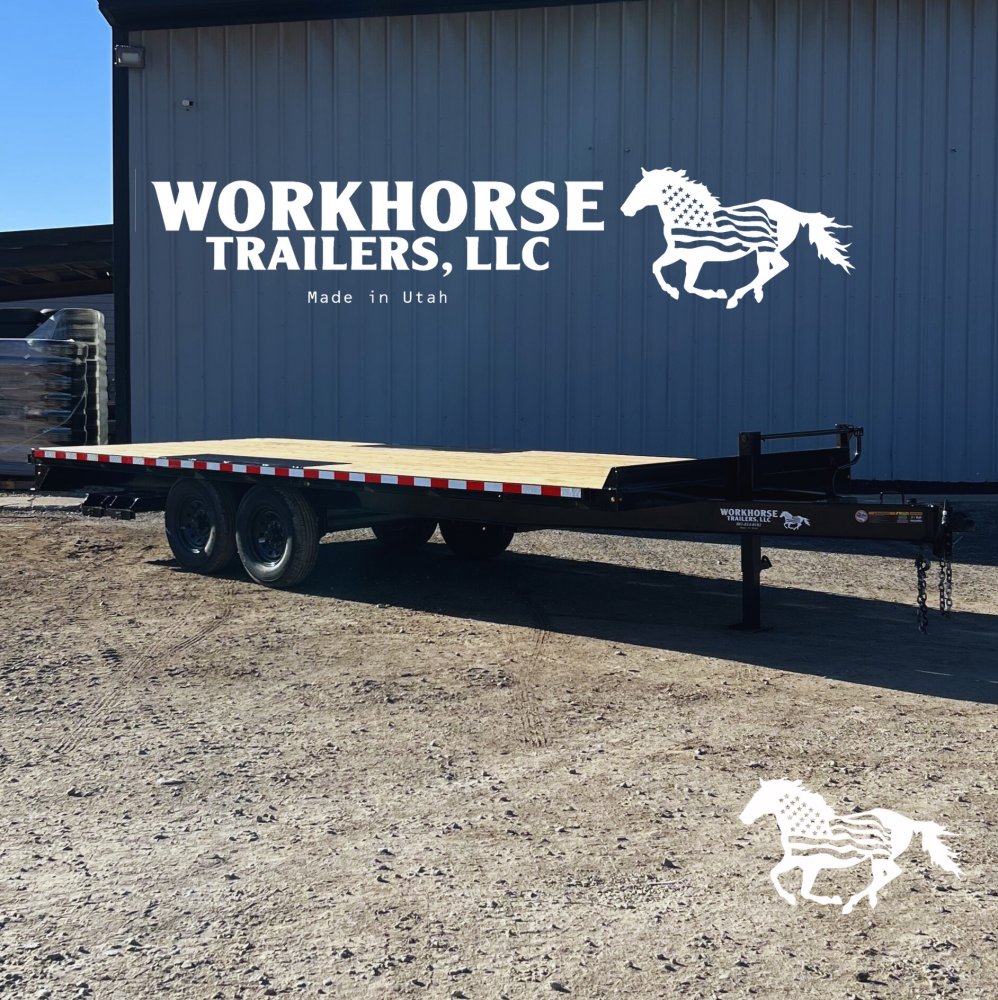
A deck over trailer mounts the platform on top of the axle and tire assembly. The wheels spin beneath the deck surface entirely, and the platform extends outward to the full legal width of the trailer. This arrangement produces a flat, obstacle-free loading area where pallets can sit side by side, wide equipment can rest without hanging over the edges, and irregularly shaped cargo can be positioned at whatever angle best utilizes the available space.
For Colorado Springs operators who have struggled to fit two pallets across a standard trailer bed or who have been forced to send half-empty loads because wheel wells prevented efficient stacking, the transition to a deck over model eliminates those constraints immediately. The difference is not subtle. It changes what a single trip can accomplish and how many loads per day an operation can realistically complete.
Colorado Springs Operations That Benefit from Deck Over Design
The deck over platform finds its way into an unusually broad range of professional settings across the Colorado Springs market. The common thread linking these applications is cargo that either exceeds standard trailer width between the fenders or benefits from the unrestricted access that a flat, full-width surface provides.
Steel and Metal Fabrication Delivery
Structural steel beams, plate stock, ornamental iron work, and prefabricated metal assemblies produced by fabrication shops throughout the Colorado Springs industrial corridors travel to installation sites on deck over trailers. Wide flange beams, tube steel bundles, and welded subassemblies often exceed the usable width available between conventional fender wells, making a deck over the only practical transport option short of hiring a commercial flatbed truck.
Fabricators operating out of facilities along Metalcraft Drive, in the Voyager Parkway industrial area, and near the municipal airport load their deck over trailers with overhead cranes or yard forklifts that approach from the side. The absence of protruding fender structures gives the forklift operator a clean edge to work against, reducing the risk of snagging a fork tip on a wheel well and dropping a multi-thousand-pound load during placement.
Solar Panel and Mechanical System Transport
Colorado Springs has seen a surge in both residential and commercial solar installations driven by the region’s abundant sunshine and favorable incentive programs. Solar panel arrays, racking systems, inverter cabinets, and battery storage units all need to travel from distribution warehouses to installation addresses across the city. Panels arrive from suppliers packaged on wide pallets that sit most securely when laid flat across a full-width deck surface without fender obstructions beneath them.
HVAC contractors face similar challenges when transporting rooftop units, ductwork sections, and large-format air handling equipment to commercial buildings. These components are manufactured in dimensions that prioritize function over transportability, and they frequently present footprints that only a deck over platform can accommodate without overhang or precarious stacking.
Military Support and Government Logistics
The dense concentration of military installations in Colorado Springs generates a steady flow of equipment, supplies, and material that moves between bases, training areas, and support facilities. Deck over trailers serve military support contractors who deliver temporary structures, communication equipment, field maintenance stations, and bulk supplies to locations like Fort Carson’s training ranges and the facilities clustered around Peterson Space Force Base.
Government procurement standards often specify transport methods that prevent cargo damage and ensure secure containment during transit. The flat, unobstructed surface of a deck over trailer simplifies compliance with these requirements because loads can be positioned precisely and strapped down at optimal points without working around fender well interference.
Large-Format Signage and Display Installation
The commercial growth happening along Powers Boulevard, Interquest Parkway, and throughout the Northgate corridor has created a busy market for sign companies that fabricate and install large-format retail signage, monument signs, and illuminated display structures. These finished products are often wide, fragile, and intolerant of the vibration and contact that comes from riding in a confined cargo space.
A deck over trailer lets sign installers lay finished panels flat across the full deck width, cushioned by foam pads or blankets, with nothing pressing against the display faces from either side. The open access from both edges of the trailer simplifies the process of lifting finished signs off the deck with a boom truck or crane at the installation site.
Evaluating Deck Height and Its Practical Implications
The elevated platform that defines the deck over design introduces a higher standing deck height compared to trailers where the cargo rides between the wheels. Colorado Springs buyers should understand how this additional height affects loading procedures, cargo stability, and compliance with vertical clearance limits.
Loading Method Compatibility
Deck over trailers are loaded using three primary methods, and the deck height influences how well each method works in practice. Drive-on loading using rear ramps requires a longer ramp to achieve a safe approach angle, since the deck sits higher off the ground than on a conventional trailer. Ramp length should produce an angle shallow enough for the equipment’s ground clearance and steep enough for traction under the driving wheels.
Forklift side-loading from a warehouse dock or yard surface works efficiently on deck over models because the elevated deck often aligns closely with standard loading dock heights. Colorado Springs warehouse operators receiving deliveries on deck over trailers can pull cargo directly off the platform without adjusting dock levelers or using ramp plates.
Crane loading from above is completely unaffected by deck height since the load descends vertically onto the platform. Contractors and fabricators who load with overhead cranes or boom trucks find deck over trailers equally functional regardless of the specific deck elevation.
Center of Gravity and Stability on Grades
Placing cargo on an elevated platform raises the center of gravity of the loaded trailer compared to a lower-riding conventional design. This higher center of gravity becomes a meaningful factor on the graded highways around Colorado Springs, where routes like the climb from Manitou Springs toward Cascade on Highway 24, the descent into Ute Pass on the way to Woodland Park, and the rolling terrain along Highway 105 between Monument and Palmer Lake all expose loaded trailers to lateral forces during turns and crosswind gusts.
Keeping heavy cargo positioned as low as possible on the deck surface, centering the load between the side rails, and reducing speed through curves on graded sections all help maintain stability with a loaded deck over trailer. Colorado Springs operators who regularly travel mountain routes west of the city should pay particular attention to load arrangement and driving technique to compensate for the elevated platform geometry.
Construction Attributes That Define Longevity
A deck over trailer purchased for professional use in Colorado Springs will accumulate thousands of loaded miles per year across road surfaces that range from freshly paved interstate to fractured county roads and unprepared job site access paths. The construction details that differentiate a long-lasting trailer from one that develops problems early are worth examining closely before making a purchase decision.
Main Rail and Crossmember Design
The main longitudinal rails running the length of a deck over trailer bear the primary structural load. I-beam or channel steel profiles in heavy gauges provide the stiffness needed to resist deflection when concentrated loads sit between support points. Crossmembers welded perpendicular to the main rails at close intervals create a grid pattern that distributes weight across the full frame area rather than channeling it all through two parallel beams.
Colorado Springs buyers hauling machines with narrow track footprints or loads that concentrate weight in a small area should look for trailers with crossmember spacing of 16 inches or less. Wider spacing may be adequate for uniformly distributed loads like lumber stacks or palletized goods, but concentrated loads can cause deck deflection between widely spaced crossmembers that stresses both the decking material and the equipment riding above it.
Deck Attachment and Replacement
The method used to secure the deck surface to the underlying frame affects both ride quality and long-term maintenance costs. Bolt-on deck planks or panels can be individually removed and replaced as wear accumulates, which extends the overall trailer lifespan without requiring a complete re-decking project. Welded deck panels create a more rigid and permanent surface but complicate replacement when sections eventually wear through.
For Colorado Springs operators who expect to keep their deck over trailer in service for ten years or more, a bolt-on decking system offers the most economical path to sustained performance. Individual boards or plates showing excessive wear, cracking, or corrosion can be swapped during scheduled downtime without taking the entire trailer out of service for an extended rebuild.
Protective Finish Systems
The Front Range climate delivers a punishing combination of UV radiation, hailstone impact, road salt exposure, and wide temperature swings that test every coating system applied to trailer surfaces. Powder coating provides a thick, resilient barrier that bonds electrostatically to steel surfaces and resists chipping from debris impact better than liquid paint. The curing process produces a uniform finish without drips or thin spots that create early failure points.
Zinc-based primer layers applied beneath the topcoat add sacrificial corrosion protection that continues working even if the outer finish is breached by a rock chip or abrasion. This dual-layer approach is particularly valuable for deck over trailers operating in Colorado Springs during winter months, when magnesium chloride and sand applied to icy roads coat every exposed surface of the trailer undercarriage.
Registration and Road Use Compliance
Deck over trailers operated on Colorado public roads must be registered with the state Division of Motor Vehicles and equipped with lighting and reflective markings that meet federal motor vehicle safety standards. Tail lamps, stop lamps, turn signals, side marker lights, and rear reflectors must all be functional and visible from the distances specified in Colorado Revised Statutes.
The wider profile of a deck over trailer may require additional side-mounted reflectors or clearance lamps depending on the overall width of the unit. Trailers exceeding 80 inches in width must display amber clearance lamps at the front and red clearance lamps at the rear, positioned at the outermost edges of the platform. Colorado Springs buyers should verify that any deck over trailer they purchase arrives fully equipped with the correct lighting package for its width class.
Overwidth loads extending beyond the trailer’s side rails require special permits from the Colorado Department of Transportation and must be marked with flags, lights, or escort vehicles depending on the degree of overhang. Understanding these requirements before hauling wide cargo prevents costly citations and delays for Colorado Springs operators transporting oversized items on public roadways.
Workhorse Trailers LLC Guides Colorado Springs Buyers to the Right Deck Over
Identifying the ideal deck over trailer requires balancing platform dimensions, weight capacity, deck material preferences, and hitch type against the specific cargo profiles and travel conditions each buyer faces. Workhorse Trailers LLC brings focused knowledge of these variables to every conversation with Colorado Springs customers. Buyers arrive from Falcon, Black Forest, Stratmoor, Broadmoor, Cheyenne Mountain, Fountain Valley, and across Teller and Fremont counties because the depth of consultation available through the Workhorse team consistently produces trailers that perform as expected from the first loaded mile onward. For Colorado Springs professionals whose operations demand the unrestricted hauling surface that only a deck over platform can deliver, Workhorse Trailers LLC provides the product selection and advisory support needed to make a confident, informed purchase.