
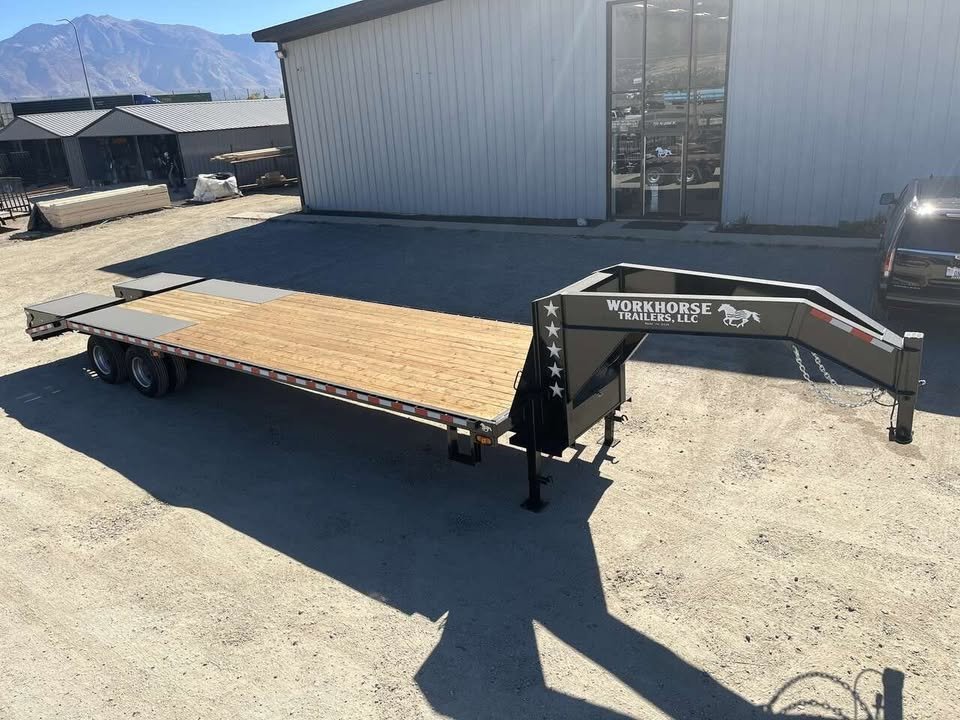
Provo Equipment Hauler Trailers
All locationsConstruction cranes punctuate the Provo skyline with increasing frequency as the city absorbs new apartment complexes, commercial developments, and infrastructure projects that reflect its status as one of the fastest-growing urban centers in the Mountain West. Beneath those cranes, dozens of machines perform the earthmoving, grading, lifting, and finishing tasks that transform blueprints into occupied buildings. Every one of those machines arrived at the work site on a trailer, and most will leave on one when their portion of the project concludes. The equipment hauler trailer is the logistical backbone of Provo's building boom, silently enabling the machinery deployments that keep projects advancing on schedule and within budget. Workhorse Trailers LLC provides Provo's contractors, municipal agencies, and equipment-dependent businesses with equipment hauler trailers built for the payload demands, terrain challenges, and relentless duty cycles that define heavy transport in this rapidly expanding city.
Provo's equipment hauler market reflects the city's dual identity as both an established community with aging infrastructure requiring constant maintenance and a growth magnet attracting new development at a pace that strains the capacity of every contractor in the region. This dual demand means equipment hauler trailers in Provo rarely sit idle. A trailer that delivers a trencher to a fiber optic installation on Monday repositions a paving machine for a parking lot overlay on Wednesday and shuttles a compactor to a subdivision rough-grade on Friday. The trailers that thrive in this rotation combine the payload capacity to handle diverse machinery with the mechanical resilience to sustain that pace week after week without breakdowns that pull equipment and operators off productive work. This page details how Provo's growth engine drives equipment hauler demand, what Workhorse Trailers LLC offers to meet that demand, and the knowledge that helps local buyers operate and maintain their trailers for maximum return.
Provo's Growth Sectors Fueling Equipment Transport Demand
The projects generating equipment hauler traffic across Provo fall into distinct categories, each placing specific demands on the trailers that serve them.
Mixed-Use Development Corridors
Freedom Boulevard, University Avenue, and the blocks surrounding the Provo Towne Centre have attracted mixed-use projects combining ground-floor retail with upper-story residential units. These vertical builds require a progression of heavy machinery that arrives in sequence as the project advances through phases. Excavators dig foundations, cranes erect structural steel, concrete pumpers pour elevated decks, and finish-grade equipment prepares surrounding landscapes. Each machine occupies the site temporarily before an equipment hauler trailer removes it and delivers the next piece in the construction sequence. The confined footprints of infill projects in these corridors leave minimal room for equipment staging, amplifying the importance of rapid trailer turnaround that keeps machines flowing through the site without accumulating into a gridlocked equipment yard.
Provo River and Lakefront Restoration
Environmental restoration efforts along the Provo River corridor and the western lakefront parcels deploy specialized equipment for channel reshaping, bank stabilization, wetland construction, and invasive species removal. Amphibious excavators, long-reach boom machines, and tracked mulchers that operate in soft terrain require equipment hauler trailers with payload ratings and deck configurations tailored to these non-standard machines. The remote access points along the river corridor and lakeshore add logistical complexity because the final approach to the work zone may involve unpaved roads, soft shoulders, and limited turnaround space that challenge both the trailer and the tow vehicle.
Educational and Institutional Expansion
BYU's ongoing campus development program and Utah Valley University's southern Utah County facilities generate periodic demand for heavy equipment transport to campus construction sites. These projects operate within institutional environments where noise restrictions, pedestrian safety protocols, and scheduling windows constrain equipment delivery timing. Contractors serving these campuses need equipment hauler trailers that can deliver machinery during narrow early-morning windows and retrieve it before campus activity peaks, placing a premium on loading speed and reliable mechanical performance that does not waste precious minutes of the permitted delivery window.
Residential Subdivision Buildout
New residential subdivisions expanding Provo's footprint to the west and southwest require mass grading, street construction, utility installation, and lot preparation before individual home construction begins. These large-scale earth-moving operations deploy fleets of scrapers, dozers, loaders, and motor graders that arrive on equipment hauler trailers at the project's start and redistribute among active phases as the work progresses across the subdivision's acreage. The volume of equipment moves on a single large subdivision project can justify dedicated trailer assignments where the trailer remains on site for the project's duration rather than returning to the contractor's yard between loads.
Equipment Hauler Inventory at Workhorse Trailers LLC
Workhorse Trailers LLC maintains an equipment hauler inventory calibrated to the machinery classes and transport intensities that Provo's market demands. Their selection spans from targeted single-machine carriers to heavy-duty platforms that handle the largest equipment common to regional construction.
Focused Application Equipment Haulers
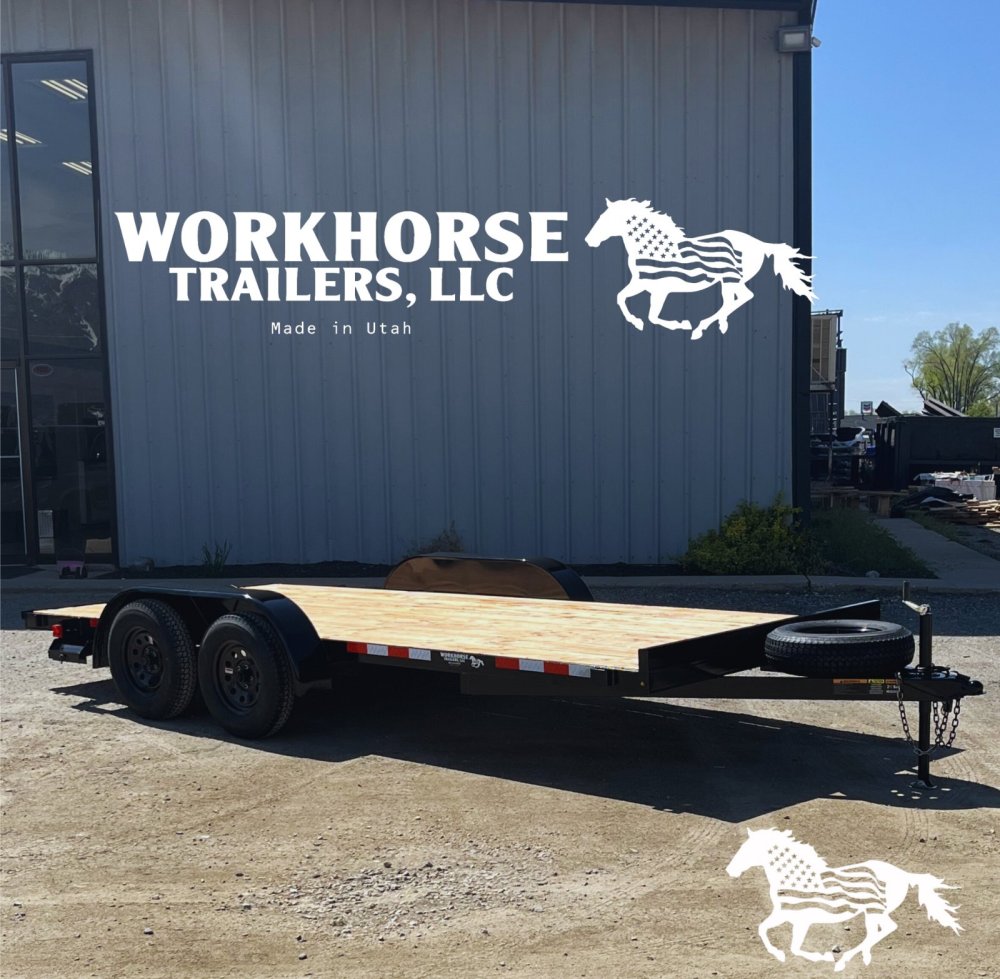
Focused application equipment haulers carry GVWR ratings between 7,000 and 9,900 pounds and deck lengths from 16 to 18 feet. These trailers serve Provo operators who transport a specific category of machinery rather than a rotating roster of diverse equipment. A concrete cutting company that hauls the same flat saw to every job. A tree service that transports one stump grinder between residential properties. A plumbing contractor whose mini excavator rides to and from the shop on the same trailer every workday. The focused application hauler optimizes its capacity, deck layout, and tie-down placement for the one or two machines it carries most frequently, creating an efficient match between trailer and cargo that minimizes wasted capacity and maximizes loading speed.
Workhorse Trailers LLC helps Provo buyers in this category identify the precise GVWR, deck dimensions, and ramp specifications their specific machine requires, avoiding the common mistake of purchasing more trailer than the operation actually needs and absorbing the unnecessary cost, weight, and storage footprint that accompanies an oversized rig.
Multi-Role Commercial Equipment Haulers
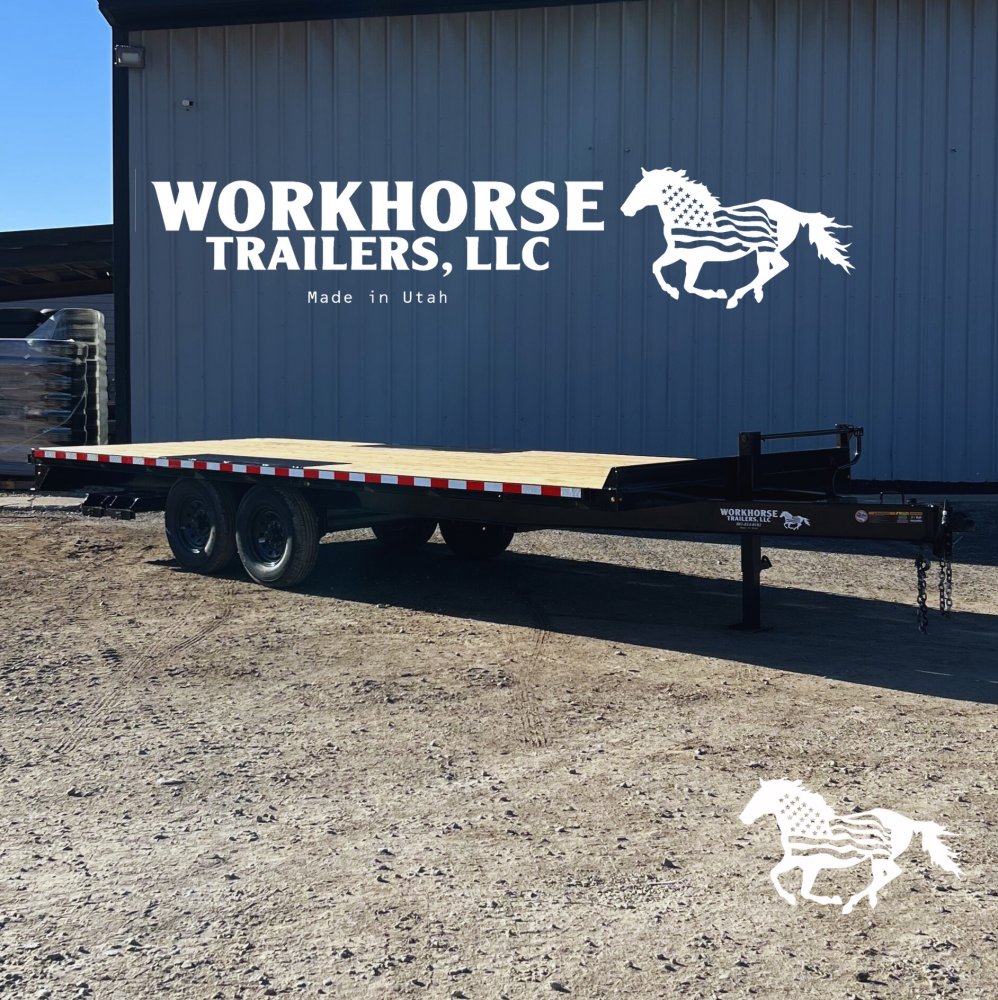
Multi-role commercial equipment haulers rated between 10,000 and 16,000 pounds represent the broadest utility tier for Provo's contractor community. These trailers accept a rotating mix of skid steers, compact excavators, aerial platforms, loaded material carts, and mid-weight specialty machines without requiring the operator to maintain separate trailers for each equipment type. Deck lengths from 18 to 22 feet and deck widths accommodating machines up to 84 inches across provide the dimensional flexibility that multi-equipment operations demand.
Provo contractors researchingProvo Equipment Hauler Trailers at Workhorse Trailers LLC will find multi-role models featuring adjustable tie-down track systems recessed into the deck frame, allowing anchor point positions to shift with each load rather than forcing the operator to secure dissimilar machines to fixed points that may not align with the cargo's optimal securement geometry. Tandem axle assemblies with independently actuated electric brakes, reinforced dovetail transitions, and heavy-duty spring-loaded ramps complete the package for a trailer that transitions between equipment types with no modification between loads.
Heavy Transport Equipment Haulers
Heavy transport equipment haulers rated from 16,000 to 25,000 pounds occupy the top of the Workhorse lineup for Provo buyers. Full-size excavators in the 30,000-pound operating weight class, rubber-tired backhoe loaders, motor graders, and loaded concrete delivery equipment all require platforms at this capacity level. Frame construction advances to structural I-beam main rails with gusseted crossmember connections capable of supporting the concentrated track loads that heavy tracked machines impose during the loading and positioning process.
Gooseneck hitch configurations dominate this tier because the payload weights involved demand the towing stability and tongue weight distribution that only an over-axle connection provides. Workhorse Trailers LLC equips their heavy transport models with hydraulic dovetail and ramp systems that lower the loading angle for machines whose ground clearance limits the approach grade they can negotiate, and air brake preparation packages for Provo operations that tow with medium-duty commercial trucks equipped with air brake systems.
Evaluating an Equipment Hauler for Provo Service
Selecting the right equipment hauler involves technical evaluation beyond weight ratings. The details that separate a well-engineered hauler from an adequate one become apparent under the specific stresses Provo's operating environment generates.
Suspension Travel and Ride Quality
Equipment hauler suspensions must balance two competing requirements: stiffness enough to control a heavy load during transit and compliance enough to absorb road irregularities without transmitting destructive jolts into the cargo and frame. Provo's road network includes stretches of deteriorated pavement on older residential streets, railroad crossings along the western industrial corridor, and construction zone surfaces with temporary patches and uneven transitions. A suspension that bottoms out on these obstacles transmits the full impact force into the frame welds and deck structure, accelerating fatigue. Adequate suspension travel absorbs these inputs within the spring or torsion arm's working range, protecting the trailer's structural longevity.
Workhorse Trailers LLC selects suspension components for each equipment hauler model based on the payload range the trailer serves, matching spring rates to loaded weights so the suspension operates in its effective zone rather than at its compression limit during typical Provo hauling conditions.
Deck Material and Wear Resistance
Equipment hauler decks endure abuse that no other trailer category matches. Steel tracks grind across the surface during loading. Outrigger pads concentrate thousands of pounds into footprints measured in square inches. Dropped chains, dragged buckets, and spilled hydraulic fluid all attack the deck with every loading cycle. Treated lumber decking absorbs impact well and replaces inexpensively when individual boards deteriorate, but it requires periodic treatment to resist moisture absorption that leads to rot in Provo's freeze-thaw climate. Steel decking resists abrasion and eliminates rot concerns but transmits more vibration to the cargo and costs more to repair when damaged.
Understanding this trade-off helps Provo buyers select the deck material that aligns with their primary equipment type and their tolerance for ongoing maintenance. Workhorse Trailers LLC stocks equipment haulers with both decking options and can explain how each performs under the specific machinery their Provo customers transport most frequently.
Wiring Protection in Harsh Environments
Equipment hauler wiring faces threats that lighter trailer categories rarely encounter. Mud spray from construction sites coats connectors and corrodes terminals. Falling debris during loading can sever exposed wires. Hydraulic fluid leaks from the transported equipment drip onto harness runs and degrade insulation over time. Trailers designed for genuine equipment hauling protect their wiring through enclosed conduit channels routed along the frame's interior surfaces, sealed junction boxes at every connection point, and connector housings rated for submersion rather than simple splash resistance.
Workhorse Trailers LLC inspects the wiring protection on every equipment hauler they stock, confirming that the harness routing and connector quality match the demanding conditions Provo's construction sites impose.
Loading Procedures That Prevent Damage and Injury
The loading and unloading phase concentrates the highest risk of the entire equipment transport process into a few critical minutes. Disciplined procedures reduce this risk to its practical minimum.
Site Assessment Before Ramp Deployment
Survey the loading area before committing the trailer to a position. Identify overhead obstructions like power lines, tree branches, and building overhangs that the equipment's boom, mast, or cab could contact during the loading approach. Locate underground hazards like unmarked utility vaults, drainage grates, and soft-covered trenches that could collapse under the trailer's stabilizer jacks or the equipment's weight during the transition from ground to ramp. Reposition the trailer if any hazard falls within the loading path, even if the new position adds inconvenience to the process. Five minutes spent finding a safe loading zone prevents the hours of damage assessment, reporting, and repair that a preventable incident creates.
Communication Protocol During Loading
If a spotter assists during loading, establish clear hand signals or radio commands before the process begins. The equipment operator's visibility from the cab is limited during ramp approach, and verbal communication can be garbled by engine noise, wind, and distance. A simple signal set covering stop, proceed slowly, steer left, steer right, and emergency halt gives the spotter authoritative control over the loading sequence. Both parties should agree that any ambiguous signal means full stop until communication clarity is restored.
Post-Loading Securement Sequence
Complete the securement sequence in a consistent order that becomes automatic through repetition. Position the machine at its final location on the deck. Lower all articulating components to their transport position. Engage the machine's parking brake and any hydraulic lockouts. Attach the front securement points first to prevent forward rolling during the rear attachment process. Attach the rear securement points next. Verify tension on all four points. Stow ramps and engage ramp retention hardware. Connect the trailer to the tow vehicle. Perform a final walk-around confirming every step before departing the Provo job site.
Towing Loaded Equipment Across Provo
Provo's road network challenges loaded equipment haulers with conditions that demand awareness and preparation beyond normal towing practice.
Speed Zone Transitions
Provo's speed limits shift frequently between 25 mph residential zones, 35 to 40 mph commercial corridors, and 65 to 70 mph freeway segments. Each transition requires the driver to recalibrate braking distances and following gaps for the loaded weight behind the truck. The deceleration from 65 mph to a 35 mph zone on the State Street exit off I-15 covers more distance with a loaded equipment hauler than most drivers estimate without experience. Begin slowing well before the posted zone change and use engine braking in combination with service brakes to manage the deceleration without overheating the trailer's brake drums or rotors.
Construction Zone Awareness
Provo's active building environment means that construction zones with lane shifts, uneven surfaces, temporary steel plates, and flagging operations appear on routes that were clear the previous week. A loaded equipment hauler has limited ability to change lanes quickly or stop abruptly when encountering an unexpected zone, making advance route planning and real-time navigation awareness important habits for operators who tow through Provo's evolving streetscape.
Residential Delivery Etiquette
Equipment deliveries to residential construction sites in Provo's established neighborhoods share the street with parked cars, playing children, and residents who may not anticipate a heavy rig rounding the corner. Announce your presence by traveling slowly, allowing residents time to clear the path. Avoid blocking driveways beyond the minimum time needed for loading and unloading. And restore any damage to curbs, turf, or street surfaces that the trailer or equipment causes during the delivery process, preserving the goodwill between the contractor and the neighborhood that future projects will depend on.
Seasonal Maintenance for Provo Equipment Haulers
Provo's climate generates predictable maintenance demands that responsible equipment hauler owners address on a seasonal calendar.
Spring Structural Audit
Winter takes a hidden toll on equipment hauler frames through freeze-thaw cycling that stresses welds, salt accumulation that initiates corrosion beneath paint, and pothole impacts that bend or crack components without obvious visual evidence. Begin each spring with a thorough structural audit that includes cleaning the entire undercarriage, inspecting every weld for paint cracking or rust staining that indicates subsurface damage, and checking axle alignment by measuring the track width at front and rear of each axle and comparing for deviation.
Summer Tire and Brake Monitoring
Hot pavement and sustained heavy loads combine during Provo's summer months to push tire temperatures and brake temperatures toward their upper operating limits. Check tire pressures at cold specification before each loaded trip and watch for signs of heat-related distress including sidewall blistering, tread separation at the edges, and unusual wear patterns that indicate an alignment or inflation problem. Inspect brake components for heat discoloration on drums or rotors that signals the system is absorbing more thermal energy than it can dissipate, which accelerates wear and reduces stopping performance.
Fall Preparation for Wet Season
Before autumn rains and early snow arrive, verify that all lighting circuits function at full brightness, confirm that the wiring harness shows no exposed conductors where insulation has cracked during summer heat, and apply a fresh coat of corrosion inhibitor to the frame, axle assemblies, and all exposed fasteners. This pre-winter preparation establishes a protective baseline that slows the corrosion acceleration winter road treatments cause.
Winter Operational Discipline
During active winter use, wash the trailer after every trip on salt-treated roads. Concentrate water pressure on the frame crevices, brake backing plates, axle spring perches, and hitch components where salt accumulates most persistently. This single habit, repeated consistently through the winter months, extends the structural and mechanical service life of a Provo equipment hauler by years compared to trailers whose owners defer washing until spring and discover that five months of unchecked salt exposure has already caused irreversible damage.
Why Provo's Equipment Haulers Come From Workhorse Trailers LLC
The machinery riding on Provo's equipment hauler trailers represents hundreds of thousands of dollars in capital investment, and the projects those machines serve operate on schedules where a single day of equipment downtime ripples through budgets and timelines. Workhorse Trailers LLC protects both the machinery and the schedule by providing Provo buyers with equipment hauler trailers whose frame construction, suspension engineering, and component quality match the intensity of genuine commercial service. Their inventory covers the full capacity spectrum from focused single-machine carriers to heavy transport platforms, their pre-sale consultation aligns each buyer with the right model for their specific fleet, and their maintenance guidance keeps those trailers performing reliably through every season Provo's climate delivers. For contractors and operators who cannot afford to wonder whether their trailer will perform when the next load needs to move, Workhorse Trailers LLC provides the equipment haulers and the confidence that eliminates that uncertainty.