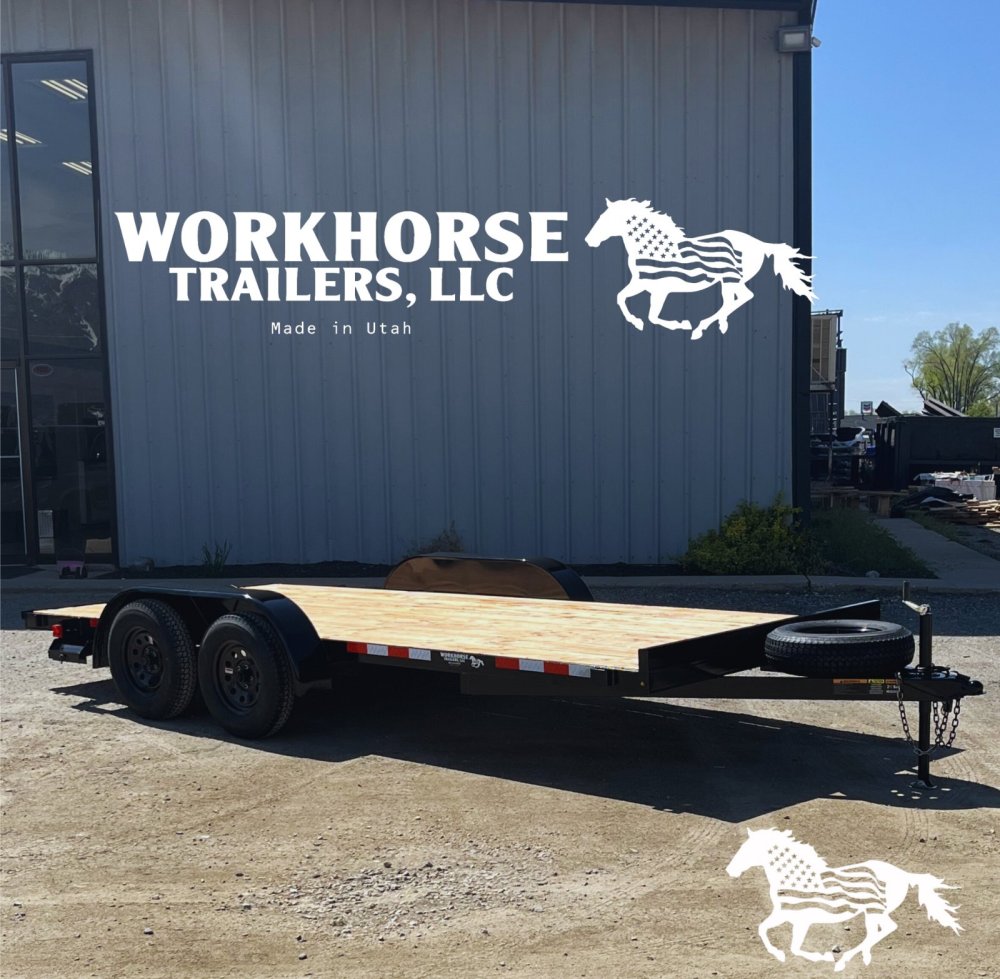
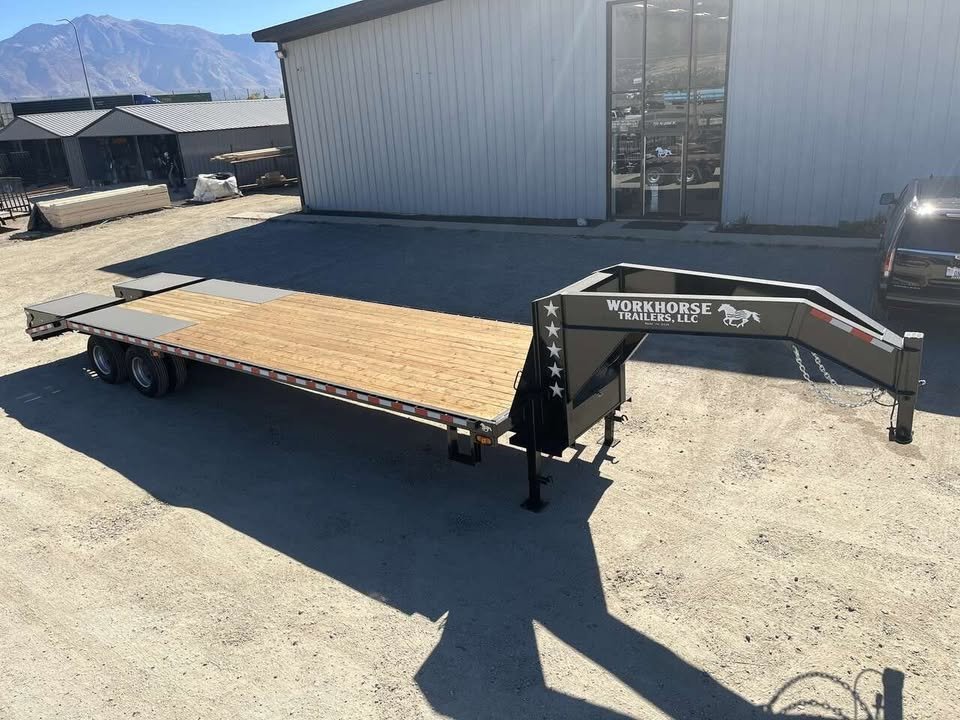
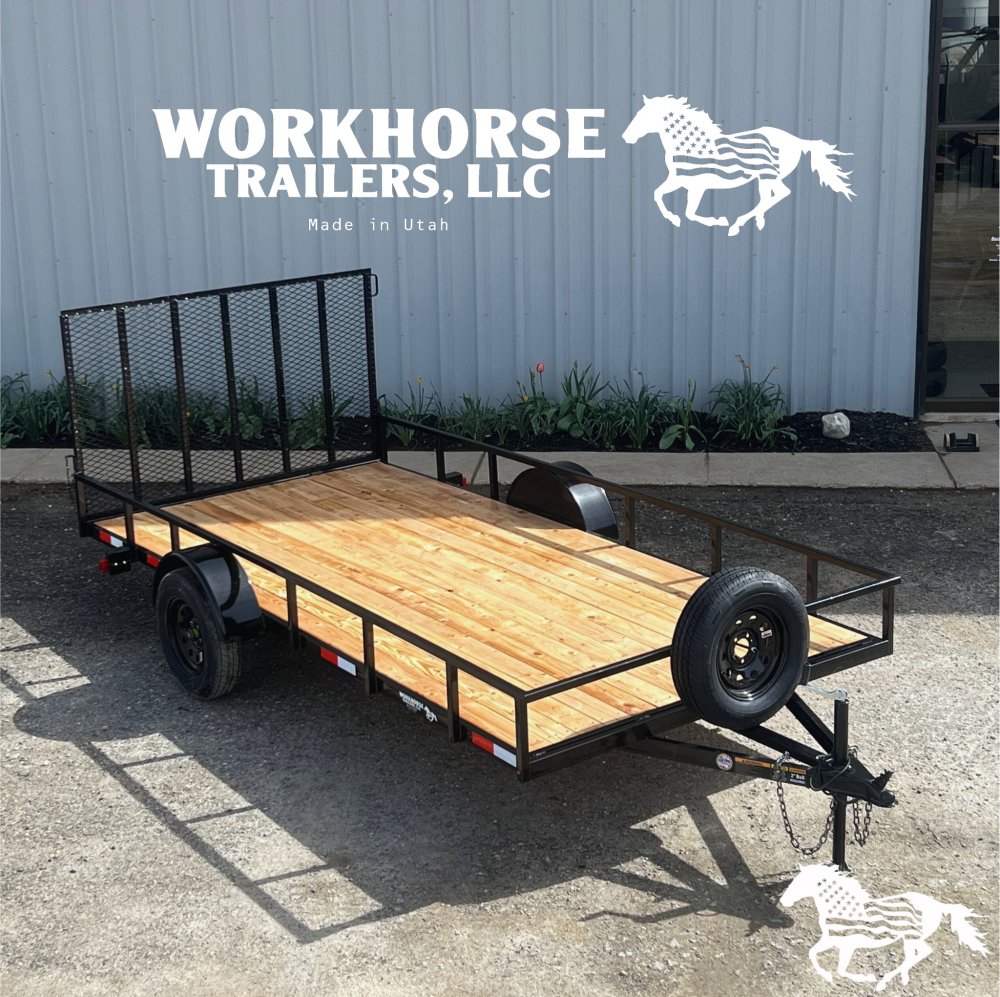
American Fork Equipment Hauler Trailers
All locationsAmerican Fork, Utah has never been a city content to sit still. Its streets are perpetually marked with utility cuts healing under fresh asphalt patches. Its skyline absorbs new commercial rooflines every quarter. Its established neighborhoods cycle through renovation waves that keep demolition bins and concrete trucks circulating through residential blocks year-round. Behind every one of these visible changes sits heavy machinery that arrived at the job aboard an equipment hauler trailer built to carry loads that would crush a lesser platform. Workhorse Trailers LLC supports American Fork's relentless building momentum with equipment hauler trailers engineered for the weight, the frequency, and the mixed-terrain demands that this community's contractors, municipal crews, and property owners encounter throughout every working season.
What Distinguishes an Equipment Hauler from Other Trailer Types
Buyers unfamiliar with the trailer market sometimes wonder what separates an equipment hauler from a standard flatbed or utility trailer carrying a heavy load. The differences are structural, and they exist because heavy machinery imposes forces that general-purpose trailers are not designed to absorb.
Equipment hauler trailers use thicker-gauge steel in their main frame rails and crossmembers, producing a chassis that resists the bending and twisting forces generated when a 12,000-pound excavator drives up one side of the ramp during loading. Their axles carry higher weight ratings and mount heavier-duty brake assemblies capable of stopping the combined mass of the trailer and its cargo on grades and at highway speeds. Their deck surfaces use materials and thicknesses chosen to withstand the concentrated ground pressure that steel tracks, outrigger pads, and narrow rubber tires impose without permanent indentation or puncture. Their ramp systems employ reinforced hinges, thicker ramp plates, and engineered approach angles that survive thousands of loading cycles from machines that weigh more than many passenger vehicles.
These structural commitments add weight and cost compared to lighter trailer categories, but they exist for reasons that become obvious the first time an operator loads a machine that tests the trailer's limits. An equipment hauler built to genuine commercial specifications handles that moment without drama. A general-purpose trailer subjected to the same load announces its inadequacy through bent ramps, flexing deck panels, and frame distortion that worsens with every subsequent trip.
American Fork Industries That Rely on Equipment Hauler Trailers
The scope of machinery moving through American Fork on any given workday reflects the city's position as both an active construction market and an established community with aging infrastructure that demands continuous rehabilitation.
Water and Sewer Line Rehabilitation
American Fork's oldest neighborhoods contain water mains and sewer lines installed decades ago that have reached the end of their reliable service life. The city's ongoing infrastructure rehabilitation program and the private utility contractors executing its capital improvement plans transport pipe bursting machines, vacuum excavation trucks, compact excavators, and bypass pumping rigs between active repair segments on equipment hauler trailers. These machines move frequently as crews complete one block and advance to the next, and the trailers serving them must tolerate the stop-and-start urban loading conditions that residential street work imposes, including curbside loading on crowned road surfaces, tight maneuvering between parked cars, and repeated ramp deployment on irregular asphalt.
Tree Service and Urban Forestry
American Fork's mature residential canopy requires professional tree care that employs stump grinders, tracked aerial lifts, log loaders, and chipping machines weighing well into the equipment hauler category. Tree service companies operating within city limits transport these machines between job sites scattered across neighborhoods where narrow streets, overhead utility lines, and parked vehicles complicate every equipment move. The ability to load and unload quickly in constrained spaces makes equipment hauler trailer selection critically important for tree crews whose daily productivity depends on minimizing transition time between removals.
Swimming Pool Construction and Demolition
The residential pool construction market in American Fork remains active as homeowners invest in backyard improvements, and an equally steady stream of pool demolition projects accompanies the renovation of older properties where deteriorating pools have become liabilities. Both activities require compact excavators, skid steers with specialized attachments, and material handling equipment that must access rear yards through side gates as narrow as eight feet. Equipment hauler trailers that position their ramps at the rear of the driveway and unload machines directly into the access path reduce the property damage and neighbor disruption that alternative staging arrangements create.
Concrete Cutting and Core Drilling Services
The specialized contractors who cut expansion joints, create openings in existing concrete structures, and bore precise holes through slabs and walls for mechanical penetrations travel with diesel-powered flat saws, wall-mounted track saws, hydraulic core drills, and water management pumps that collectively weigh several thousand pounds. These machines are precision instruments despite their industrial appearance, and they require transport on trailers whose deck surfaces and securement systems protect calibrated components from the vibration damage that rough-riding platforms inflict. Equipment haulers with vibration-dampening deck treatments and closely spaced tie-down points serve this niche effectively.
Property Grading and Drainage Correction
Homeowners and commercial property managers across American Fork address standing water, foundation exposure, and erosion damage through grading corrections performed by contractors who bring compact track loaders, laser-guided grading attachments, and vibratory plate compactors to reshape terrain around structures. These projects are typically single-day or two-day engagements that require the contractor to mobilize and demobilize equipment efficiently. An equipment hauler trailer that loads in minutes rather than requiring elaborate ramp setup allows the grading contractor to serve more clients per week and arrive at each job with a professional presentation that instills confidence.
Equipment Hauler Configurations Available at Workhorse Trailers LLC
Workhorse Trailers LLC carries equipment hauler trailers in configurations that address the load profiles, hitching preferences, and terrain conditions American Fork operators encounter.
Bumper Pull Equipment Haulers
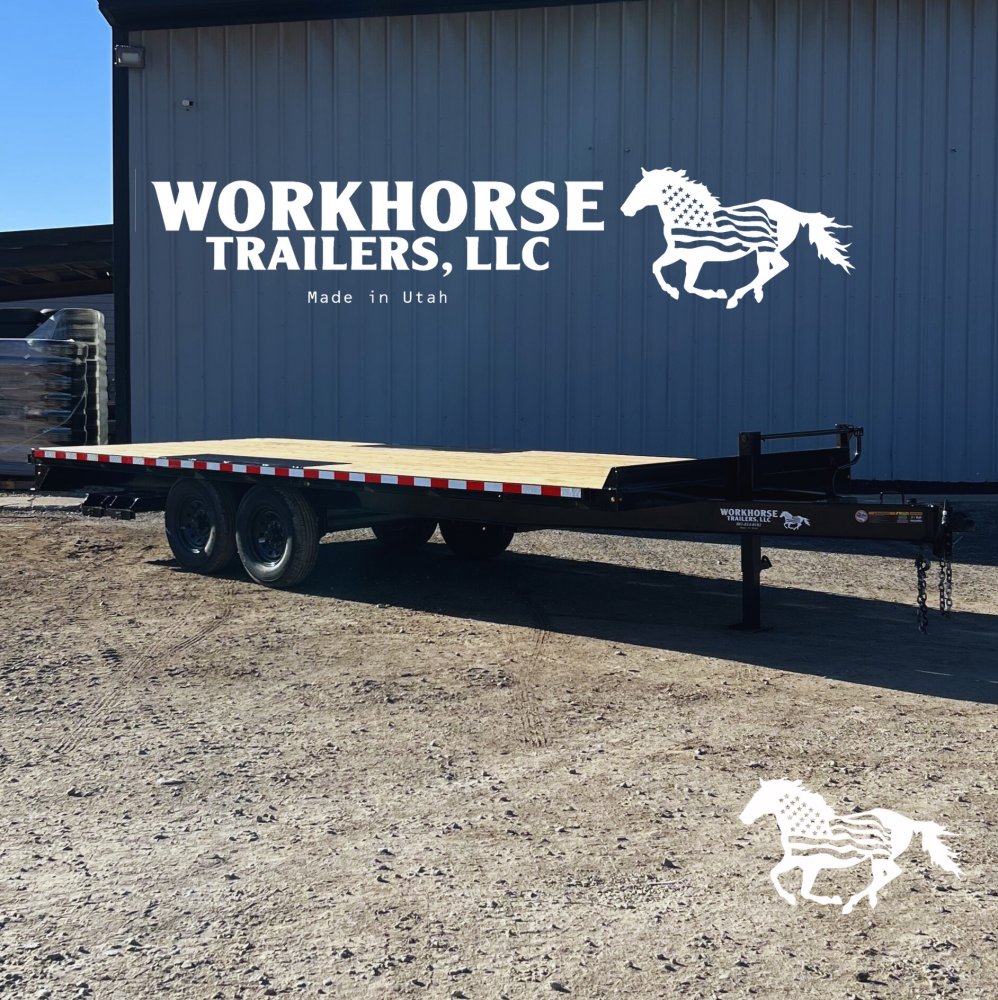
Bumper pull equipment haulers connecting to a standard receiver hitch serve American Fork operators whose machinery falls within the 7,000 to 14,000 pound GVWR range. The straightforward hitching process and compatibility with common pickup trucks make these trailers accessible to smaller contracting firms, property maintenance companies, and owner-operators who manage their own equipment logistics without dedicated commercial tow vehicles. Deck lengths from 16 to 20 feet accommodate the compact excavators, skid steers, and multi-attachment tool carriers that anchor most residential and light commercial job sites in the American Fork market.
Gooseneck Equipment Haulers
When loaded weights climb beyond bumper pull limits, gooseneck equipment haulers shift the coupling into the truck bed to achieve higher capacity ratings and superior directional stability. American Fork contractors who operate full-size excavators, large track loaders, or multiple compact machines loaded simultaneously find the gooseneck connection indispensable for maintaining safe towing dynamics at the loaded weights their operations demand. The gooseneck neck section provides additional mounting space for toolboxes, chain storage, and auxiliary equipment that bumper pull configurations cannot accommodate without consuming deck area.
Fixed Deck Equipment Haulers
Fixed deck models maintain a permanent flat platform at a consistent height, relying on rear-mounted ramps or a loading dock for equipment access. The absence of moving deck components eliminates the pivot hardware, hydraulic cylinders, and latch mechanisms that tilt deck models require, reducing both the initial purchase price and the ongoing maintenance burden. American Fork operators who load from established yards with dedicated ramp infrastructure or who always have access to level ground for deploying portable ramps appreciate the mechanical simplicity that fixed deck trailers provide.
Split Deck Equipment Haulers
Split deck trailers divide the platform into a stationary front section and a tilting rear section, combining the cargo stability of a fixed deck with the ramp-free loading convenience of a tilt mechanism on the rear portion. The stationary front section carries toolboxes, fuel containers, and supplementary equipment that remains on the trailer permanently, while the tilting rear section accepts and discharges machinery at each job site. American Fork contractors who transport both a primary machine and a collection of support equipment on a single trailer find the split deck layout maximizes the utility of every square foot of deck space.
Stand-Up Ramp Equipment Haulers
Equipment haulers with ramps that store vertically against the trailer's rear face when not in use create a clean rear profile that eliminates the extended ramp overhang of fold-flat designs. The vertical storage position keeps ramp surfaces off the ground during transit, preventing the dragging and scraping that wears down ramp edges on trailers with inadequate ground clearance. American Fork operators who travel on roads with speed bumps, steep driveway aprons, and the uneven surfaces common in older commercial parking areas benefit from the additional rear clearance that stand-up ramp storage provides.
Purchasing Considerations Specific to American Fork Operations
Workhorse Trailers LLC discusses several locally relevant factors with every American Fork equipment hauler buyer to ensure the selected trailer performs well within the specific conditions this city presents.
Maneuverability in Established Neighborhoods
American Fork's older residential streets are narrower than those in newer developments, and the mature trees lining many blocks create canopy clearance issues for tall loads. Equipment hauler trailers operating in these neighborhoods benefit from shorter overall lengths that reduce the turning radius needed to navigate corners and from load heights that clear overhanging branches without requiring the operator to scout alternate routes. Buyers who serve primarily residential clients in central American Fork should factor maneuverability into their trailer length selection alongside payload and deck area considerations.
Grade Performance on East Bench Routes
The routes connecting American Fork to Highland, Alpine, and the east bench neighborhoods climb grades that impose sustained stress on trailer brakes, tow vehicle cooling systems, and drivetrain components. Equipment hauler trailers traveling these routes while loaded should carry brake systems rated for the combined weight of the trailer and cargo at the steepest grade the route includes. Electric over hydraulic brake systems that deliver stronger, more consistent stopping force than standard electric drum brakes provide an added safety layer for American Fork operators whose service area includes the foothills.
Compliance with City Right-of-Way Requirements
American Fork municipal code governs trailer parking on public streets and within certain zoning districts, and the city's permitting process for construction activities may include conditions on equipment staging locations and trailer positioning within the public right-of-way. Buyers who intend to stage loaded equipment hauler trailers on city streets during active projects should familiarize themselves with the applicable ordinances and select trailer lengths and configurations that comply with any dimensional restrictions the permits impose.
American Fork contractors evaluating their options forAmerican Fork Equipment Hauler Trailers at Workhorse Trailers LLC benefit from a sales team that understands how municipal operating conditions influence the practical value of different trailer configurations.
Extending Equipment Hauler Service Life in American Fork
The mixed-surface operating environment that American Fork equipment haulers encounter, combining paved highways with gravel construction yards, broken residential streets, and muddy excavation sites, demands maintenance attention calibrated to the intensity of actual use rather than generic calendar-based schedules.
Ramp surface inspection after every 50 loading cycles identifies wear patterns, surface cracking, and hinge bracket fatigue before they progress to the point of creating a loading hazard. The concentrated tire and track pressure that equipment imposes on ramp surfaces during ascent gradually compresses the steel, and ramps that felt solid when new may develop a perceptible flex after several hundred cycles that indicates material fatigue approaching the replacement threshold.
Frame rail inspection along the bottom flange catches corrosion activity that begins where road spray and mud accumulate against horizontal surfaces. American Fork equipment haulers that operate on wet construction sites during spring and autumn collect moisture-laden debris in frame recesses that dries slowly and traps corrosive agents against bare steel for weeks at a time. Scraping accumulated debris from frame flanges and applying rust-inhibiting primer to any areas where the factory coating has worn through prevents the section loss that eventually compromises frame strength.
Axle seal integrity determines whether wheel bearing grease stays where it belongs or migrates outward onto the brake components where it degrades stopping performance. A dark stain on the inner face of a wheel rim or a visible sheen on the brake drum surface indicates a leaking axle seal that requires immediate replacement before contaminated brake components escalate a simple seal job into a complete brake overhaul.
Electrical ground connections deserve attention that many owners neglect. The trailer's lighting and brake circuits depend on clean, tight ground connections between the wiring harness and the trailer frame. Corrosion at these ground points introduces resistance that dims lights, weakens brake magnet force, and causes intermittent failures that frustrate diagnosis. Cleaning each ground connection to bright metal and applying dielectric grease at six-month intervals maintains the low-resistance path that reliable electrical function requires.
Workhorse Trailers LLC and the American Fork Market
Workhorse Trailers LLC has built reliable equipment hauler demand among American Fork's utility contractors, tree service operators, pool builders, concrete specialists, and grading professionals by maintaining an inventory that addresses the genuine weight classes and operating conditions these buyers face. The team recognizes that American Fork's blend of established neighborhood work and active new development creates equipment hauler requirements that differ from those of newer communities where every job site sits on freshly graded open land with unlimited staging space.
Customers from Pleasant Grove, Lindon, Highland, Alpine, Cedar Hills, and Lehi visit because the equipment hauler selection and advisory approach reflect real-world construction conditions rather than idealized scenarios. Workhorse Trailers LLC invites American Fork operators to bring their heaviest machine specifications, their tow vehicle documentation, and a candid description of the terrain and street conditions where their trailer will operate. That information drives every recommendation and ensures the equipment hauler that enters service performs exactly as the buyer's operation demands from the first loaded mile forward.