
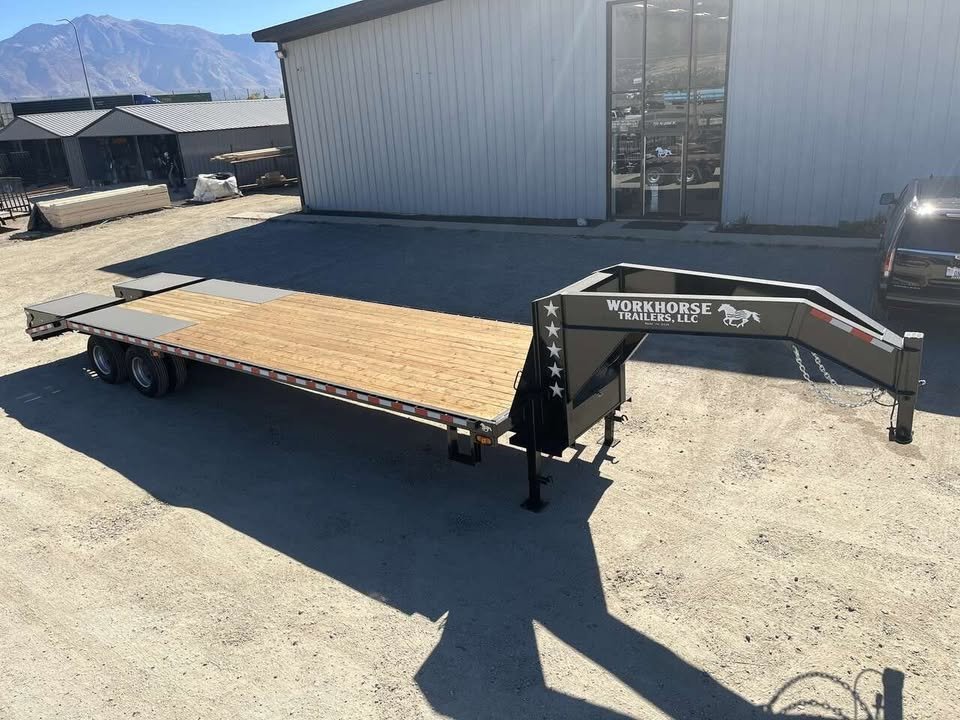
Utah County Equipment Hauler Trailers
All locationsConstruction crews breaking ground on new subdivisions in Saratoga Springs, utility teams trenching fiber lines through Eagle Mountain, and excavation contractors reshaping hillsides in Draper all share a common operational requirement. They need a trailer capable of moving machines that weigh thousands of pounds between job sites scattered across one of the fastest-growing counties in the western United States. Workhorse Trailers LLC meets that need head-on with equipment hauler trailers sized, rated, and reinforced for the machinery that powers Utah County's booming economy.
An equipment hauler trailer is not a luxury item for these operators. It is the link between owning productive machinery and actually getting that machinery where it earns revenue. A mini excavator sitting idle at a yard in Lindon because there is no safe way to deliver it to a foundation dig in Highland is a machine burning money instead of making it. Workhorse Trailers LLC ensures that Utah County businesses never face that bottleneck by providing equipment haulers that are available, appropriately rated, and ready to roll when the next job calls.
Defining an Equipment Hauler Trailer
Equipment hauler trailers occupy the heavy end of the trailer market. They are built specifically to carry motorized machinery, industrial tools, and commercial implements that exceed the weight and dimensional limits of standard utility or flatbed trailers. The defining characteristics include reinforced mainframes engineered to resist bending under concentrated loads, heavy-duty axles rated for sustained service at or near maximum capacity, and loading systems designed to accommodate the treads, tires, and approach angles of industrial equipment.
While a general-purpose trailer might flex or deform under a 9,000-pound tracked machine, a properly specified equipment hauler absorbs that weight through a network of structural crossmembers, gusseted joints, and high-tensile steel members that transfer the load smoothly from deck to axle to ground. This structural philosophy separates equipment haulers from every other trailer category and is the reason Workhorse Trailers LLC insists on carrying only models that meet strict engineering thresholds for the Utah County commercial market.
Assessing Equipment Transport Needs Across Utah County
Utah County covers roughly 2,000 square miles of terrain that includes dense urban development, suburban expansion zones, agricultural flatlands, and rugged mountain foothills. The equipment transport demands generated across this geography are as varied as the landscape itself, and choosing the right hauler starts with understanding the specific machines, distances, and conditions involved.
Cataloging Your Equipment Fleet
The first step toward selecting an equipment hauler is building a complete list of every machine you will need to transport. Include not just the primary units like excavators and loaders but also the attachments, implements, and support equipment that travel with them. A skid steer might weigh 7,500 pounds on its own, but adding a concrete mixer attachment, a set of pallet forks, and two buckets to the trailer load pushes the total significantly higher.
Workhorse Trailers LLC recommends that Utah County buyers document the operating weight, transport width, transport height, and track or tire footprint of each machine in their fleet. This inventory becomes the specification sheet against which every potential equipment hauler is measured, eliminating guesswork and preventing the costly mistake of purchasing a trailer that cannot safely accommodate the heaviest or widest piece of equipment in the rotation.
Mapping Your Typical Routes
The roads connecting Utah County job sites influence trailer selection more than many buyers realize. An operator whose routes stay on flat valley highways between American Fork and Spanish Fork faces different demands than one who regularly delivers equipment to hillside home sites above Alpine or to remote agricultural parcels south of Goshen.
Steep grades require trailers with braking systems capable of controlling descent under full load. Narrow canyon access roads penalize trailers with excessive overall width. Unpaved construction approaches test suspension durability and ground clearance. Workhorse Trailers LLC factors these route characteristics into every recommendation, ensuring that the equipment hauler a Utah County buyer takes home performs reliably on every road their business touches.
Evaluating Transport Frequency
A contractor who moves equipment between sites three times a week accumulates far more loading cycles, road miles, and mechanical wear than one who relocates machinery once a month. High-frequency transport operations should prioritize trailers with loading systems that minimize cycle time, axle and brake components rated for sustained heavy use, and frame construction that tolerates the repetitive stress of constant service without developing fatigue cracks.
Workhorse Trailers LLC stocks equipment haulers across multiple durability tiers so that Utah County buyers can match their investment level to their actual utilization rate. Spending top dollar on an ultra-heavy-duty hauler makes sense for a daily transport operation but represents unnecessary capital expenditure for an occasional user whose equipment moves infrequently.
Equipment Hauler Configurations Available to Utah County Buyers
Workhorse Trailers LLC maintains a diverse equipment hauler inventory organized around the loading styles and hitch configurations that Utah County operators request most often.
Standard Dovetail Equipment Haulers
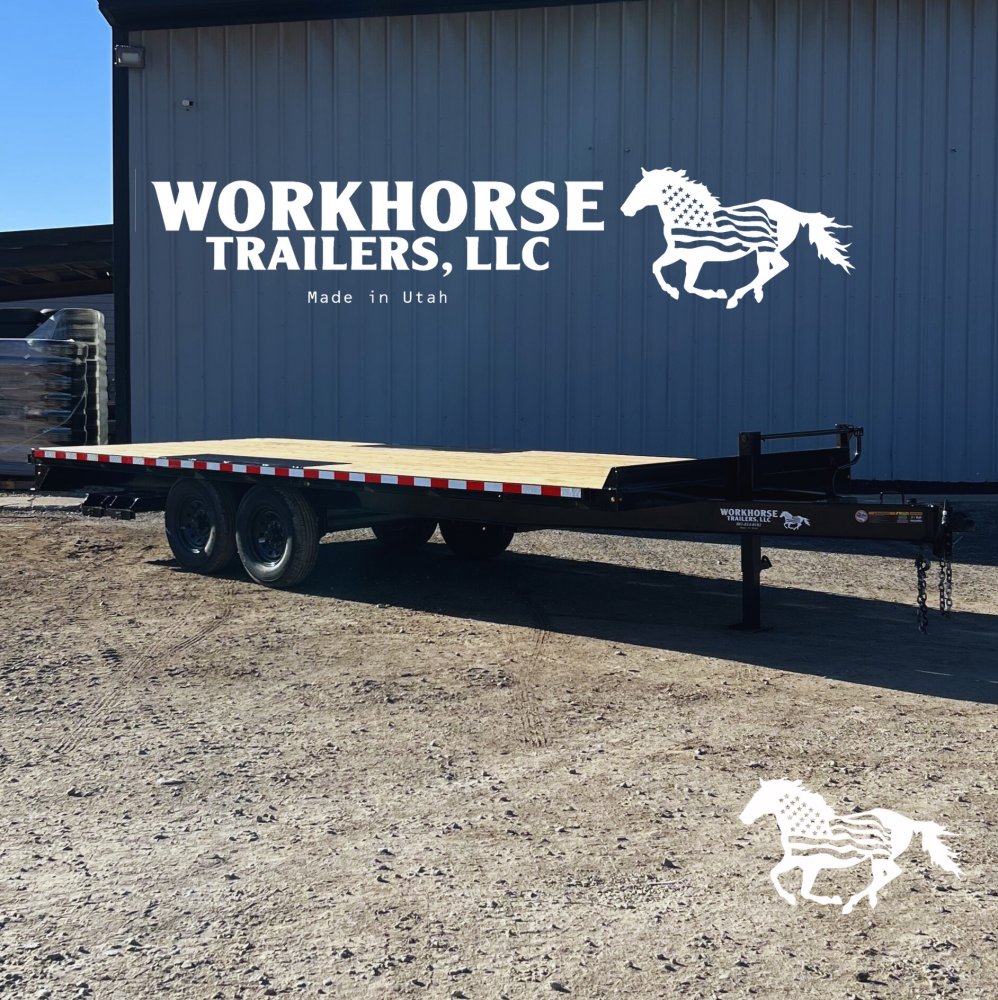
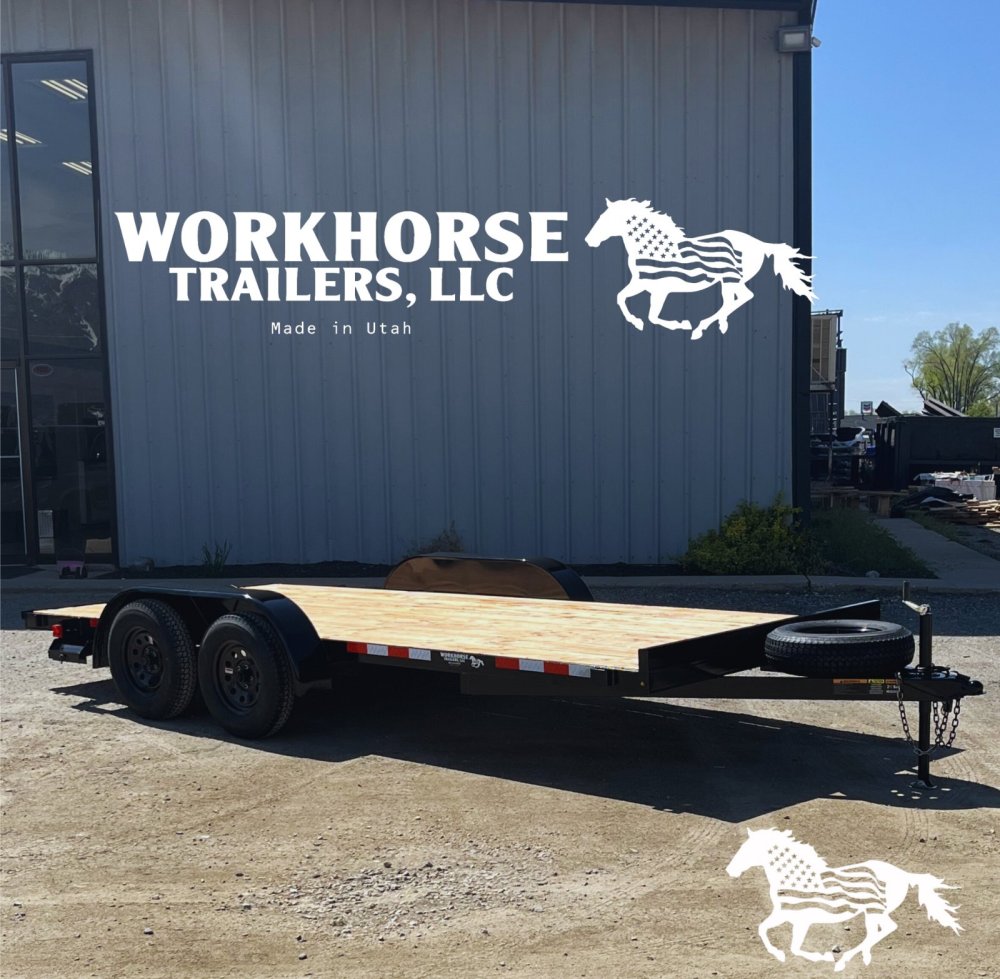
Dovetail equipment haulers feature a gradually sloped rear section that drops the loading edge closer to ground level while keeping the main deck at normal transport height. Fold-flat or spring-loaded ramps extend from the dovetail to the ground, completing the loading path. This configuration strikes a balance between loading convenience and structural simplicity that appeals to a large segment of Utah County's contractor base.
The dovetail angle reduces the effective ramp steepness, making it easier for wheeled loaders, compact tractors, and rubber-tracked machines to climb onto the deck without losing traction or scraping belly-mounted components. Workhorse Trailers LLC carries dovetail equipment haulers with ramp options ranging from basic fold-down steel panels to heavier monster ramps rated for tracked excavators above 12,000 pounds.
Full Tilt Equipment Haulers
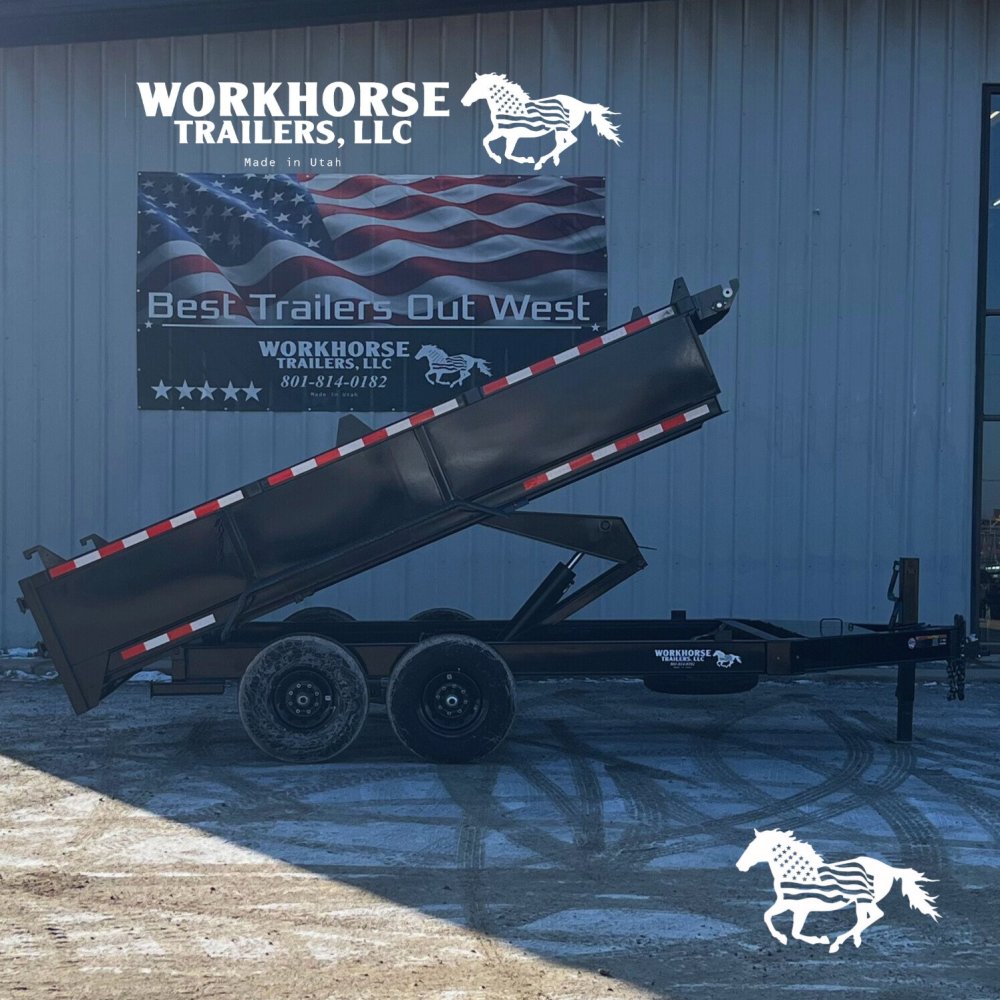
Full tilt equipment haulers pivot the entire deck rearward until the trailing edge contacts the ground, creating a continuous drive-on surface without any ramp transition. This design delivers the lowest possible approach angle and eliminates the gap where ramp meets deck that occasionally catches bucket edges, track shoes, or low-hanging hydraulic lines.
Utah County operators who transport scissor lifts, aerial platforms, and paving rollers gravitate toward full tilt models because these machines have limited ground clearance and rigid frames that do not tolerate abrupt angle changes. The hydraulic tilt mechanism adds upfront cost but repays it through faster loading cycles and reduced risk of equipment damage at the loading point. Workhorse Trailers LLC offers full tilt equipment haulers with cylinder configurations rated for the heaviest machines operating in Utah County.
Pintle Hitch Equipment Haulers
Pintle hitch equipment haulers use a hook-and-lunette coupling system instead of the ball-and-coupler arrangement found on standard bumper pull trailers. The pintle connection tolerates greater articulation between the truck and trailer, which benefits off-road maneuvering on rough construction sites and uneven agricultural access roads common in Utah County's outlying areas.
Municipal fleet operators, utility companies, and heavy civil contractors across Utah County frequently specify pintle hitch trailers because they align with the hitch standards already installed on their truck fleets. Workhorse Trailers LLC stocks pintle hitch equipment haulers in weight classes that serve everything from compact utility tractors to full-size road graders, ensuring compatibility with the tow vehicles Utah County agencies and companies already operate.
Multi-Axle High-Capacity Equipment Haulers
The largest equipment haulers in the Workhorse Trailers LLC inventory feature three or more axles and GVWR ratings that accommodate the heaviest machines working in Utah County. Rubber-tired wheel loaders, large hydraulic excavators, motor graders, and loaded material handlers all require trailers in the 20,000-pound-plus range to transport legally and safely.
Multi-axle configurations spread the combined load across six or more tires, reducing per-tire stress and distributing the weight more evenly across road surfaces. This matters on Utah County's residential streets and secondary roads where excessive point loading can damage thin asphalt and draw complaints from local transportation authorities. Workhorse Trailers LLC helps commercial buyers select axle spacing and tire sizes that keep ground pressure within acceptable limits for the roads their routes traverse.
Legal and Regulatory Considerations for Utah County Equipment Transport
Operating an equipment hauler on Utah County's public roads involves compliance with state and federal regulations that govern weight limits, vehicle dimensions, lighting, and load securement. Workhorse Trailers LLC keeps current on these requirements and ensures every trailer sold meets or exceeds applicable standards.
Weight Limits and Permit Requirements
Utah's standard gross combination weight limit for most highways is 80,000 pounds, but individual axle limits and bridge formula calculations often impose lower effective caps that equipment hauler operators must respect. Loads that exceed standard dimensions or weights require oversize or overweight permits from the Utah Department of Transportation before they can legally travel on state roads.
Utah County buyers who occasionally transport machinery above standard limits should familiarize themselves with the UDOT permit application process and plan their routes along approved corridors. Workhorse Trailers LLC can advise on which equipment hauler configurations keep total weights below permit thresholds for the most commonly transported machines in the region.
Securement Regulations
Federal Motor Carrier Safety Administration rules require that all equipment on a trailer be restrained against movement in every direction using chains, binders, straps, or a combination of securement devices whose aggregate working load limit meets or exceeds the cargo weight. Utah County operators should carry a securement kit that includes grade 70 transport chains, lever or ratchet binders, and sufficient hardware to create a minimum of four independent tie-down points per machine.
Workhorse Trailers LLC integrates heavy-duty chain hooks, stake pockets, and recessed anchor points into every equipment hauler at positions that accommodate the widest practical range of machinery footprints. This built-in flexibility allows Utah County operators to secure different equipment types without improvising attachment points that could fail under load.
Lighting and Marking Standards
Equipment hauler trailers must display operational tail lights, brake lights, turn signals, side marker lights, and retroreflective tape or conspicuity markings along the sides and rear. Trailers exceeding 80 inches in width require additional clearance lights at the widest points. The equipment itself, if it extends beyond the trailer deck, may require flags, lights, or escort vehicles depending on the degree of overhang.
Workhorse Trailers LLC delivers every equipment hauler with a complete DOT-compliant lighting package installed and tested. Utah County operators should verify all lights before each trip and carry replacement bulbs and a wiring repair kit for field corrections.
Industries Driving Equipment Hauler Demand in Utah County
The equipment hauler trailer market in Utah County draws its strength from several distinct but overlapping industry sectors that collectively generate year-round transport activity.
Residential and Commercial Construction
Utah County's population growth fuels a construction pipeline that includes single-family homes, apartment complexes, retail centers, office buildings, and mixed-use developments stretching from Lehi to Payson. Each of these projects requires earthmoving, grading, trenching, and material handling equipment delivered to the site before work can begin and removed when the phase is complete.
Infrastructure and Public Works
Roads, bridges, water systems, sewer expansions, and fiber optic installations throughout Utah County rely on heavy equipment positioned by hauler trailers. Municipal and county agencies maintain fleets of machines that move between maintenance yards and project sites on a daily basis, and private contractors performing public works under bid contracts operate the same way.
Agriculture and Land Management
Farming, ranching, and land stewardship across Utah County's southern and western reaches involve tractors, implements, irrigation equipment, and livestock handling machinery that must travel between properties and seasonal work areas. Equipment haulers sized for these agricultural machines allow operators to consolidate their fleet at a central location and deploy individual pieces as the season demands.
Landscaping and Site Development
Large-scale landscape installation, erosion control, and site preparation projects generate consistent demand for compact equipment transport. Skid steers, compact track loaders, stump grinders, and hydraulic hammers are the daily cargo of landscaping companies serving Utah County's residential and commercial property owners.
Extending the Service Life of Your Equipment Hauler
The financial investment in a quality equipment hauler deserves protection through consistent preventive maintenance that addresses the unique stresses this trailer category endures.
Inspect frame welds after every season of heavy use, paying close attention to gusset plates, crossmember junctions, and axle mounting locations where stress concentrations are highest. Small cracks detected early can be ground out and re-welded before they propagate into structural failures that sideline the trailer and delay equipment deliveries.
Monitor brake pad thickness and drum condition on a schedule tied to loaded miles rather than calendar intervals. An equipment hauler that travels 500 loaded miles per month consumes brake material far faster than one that covers the same distance empty. Replace brake components proactively when wear indicators approach their minimum service limits rather than waiting for braking performance to degrade noticeably.
Keep ramp hinges, tilt cylinders, latch pins, and coupler mechanisms cleaned and lubricated to prevent binding and premature wear. Utah County's dusty construction sites deposit fine particulate into every exposed joint, and that grit acts as an abrasive that accelerates metal-on-metal degradation unless flushed and recoated regularly.
Partner with Workhorse Trailers LLC for Your Next Equipment Hauler
An equipment hauler trailer is the critical connection between your machinery and the job sites where that machinery generates income. Choosing the wrong hauler creates delays, safety risks, and unexpected costs that erode the profitability of every project it touches. Choosing the right one creates a seamless transport workflow that keeps machines moving and revenue flowing.
Review the complete selection of equipment hauler trailers available to buyers throughout the region by visitingUtah County Equipment Hauler Trailers for detailed specifications and current pricing from Workhorse Trailers LLC. The team brings deep familiarity with Utah County's terrain, regulations, and commercial demands to every conversation, ensuring that the equipment hauler you purchase is precisely matched to the work you need it to perform.