Orem Tilt Deck Trailers
All locationsThe bottleneck in most trailer operations is not the miles driven between locations. It is the minutes burned at each end of the trip wrestling cargo onto and off of the deck. Ramps jam. Alignment takes multiple attempts. Low-slung machines catch on transition edges. Heavy items require extra hands that are not always available. Tilt deck trailers attack this bottleneck at its root by converting the deck itself into a smooth, full-width loading surface that descends to meet the ground at an angle gentle enough for virtually any cargo to board without drama. For Orem’s fast-moving commercial environment, where operators juggle multiple stops per day across a congested urban grid, the minutes recovered at each loading event compound into hours of reclaimed productivity every week. Workhorse Trailers LLC equips Orem buyers with tilt deck trailers selected for the cargo types, frequency demands, and road conditions that characterize daily hauling in Utah County’s most densely active city.
Orem packs an extraordinary concentration of businesses, institutions, and residential density into its boundaries. The loading and unloading that happens at each of these locations generates friction that every trailer owner absorbs as part of the job. Tilt deck trailers reduce that friction to its minimum, replacing a multi-step ramp process with a single fluid motion that one person can execute in under a minute. The time savings matter most to operators who repeat the loading cycle many times per day, but even occasional users benefit from the reduced physical effort and the cargo protection that a ground-level loading angle provides. This page covers the practical reasons Orem buyers choose tilt deck trailers, the models Workhorse Trailers LLC maintains for the local market, and the ownership knowledge that keeps a tilt deck performing at its best through years of active service.
Orem Operating Conditions That Favor the Tilt Deck Design
The tilt deck trailer’s advantages amplify under specific conditions that Orem operators encounter with notable frequency.
Compressed Service Schedules
Orem’s commercial density means that client locations, delivery addresses, and job sites cluster within short driving distances of each other. A mobile equipment service company might visit eight accounts between 7 AM and 4 PM, each requiring a load-in and load-out of diagnostic tools, welding carts, or hydraulic test benches. At that stop frequency, saving even three minutes per loading event recovers nearly 50 minutes across the full route. Tilt deck trailers deliver exactly this kind of incremental time recovery because the deck tilts, the cargo rolls on, the deck levels, and the operator drives away without touching a ramp, deploying a support, or repositioning any removable component.
Curbside Loading in Residential Zones
Orem’s residential neighborhoods feature driveways, curb cuts, and street grades that rarely provide the flat, open loading area that ramp-equipped trailers perform best on. A tilt deck trailer adapts to these imperfect surfaces more gracefully because the deck’s rear edge contacts the ground across its full width, distributing load across a broad footprint rather than concentrating it on two narrow ramp tracks. This wider contact area resists the sinking and sliding that ramps experience on soft shoulders, gravel aprons, and the rain-softened turf strips that line many Orem residential streets.
Non-Running Vehicle Recovery
Auto shops, insurance adjusters, and fleet managers based in Orem periodically need to collect vehicles that cannot drive under their own power. A flat tire, a dead battery, a seized engine, or accident damage may render the vehicle immobile. Loading a non-running vehicle onto a tilt deck requires only a winch cable and a clear path up the angled platform. The ground-level entry point eliminates the alignment precision that narrow ramps demand when the vehicle cannot steer, and the full-width deck surface provides ample room for a vehicle that may be tracking crooked due to suspension or steering damage.
Shared Equipment Among Multiple Crews
Construction and service companies in Orem that share specialized equipment among several field crews reposition machines frequently throughout the week. A concrete saw used by one crew on Monday may need to reach a different crew’s job site by Tuesday morning. The tilt deck trailer assigned to equipment rotation needs to load and unload as quickly as possible to minimize the gap between when one crew finishes and the next begins work. Every minute the machine sits on the trailer in transit is a minute neither crew is productive, and the tilt deck’s rapid loading cycle keeps that transit window as narrow as physically possible.
Tilt Deck Trailer Models at Workhorse Trailers LLC
Workhorse Trailers LLC segments their tilt deck inventory by the payload tier and operational rhythm each model is designed to sustain, aligning their stock with the specific demands Orem buyers articulate most frequently.
Urban Service Tilt Decks
Urban service tilt deck trailers occupy the 14 to 18 foot deck length range with GVWR ratings from 7,000 to 9,900 pounds. These models are purpose-matched to Orem’s tight commercial lots, narrow residential streets, and frequent-stop service routes where maneuverability matters as much as payload capacity. Their compact dimensions allow parking in standard commercial spaces and navigating the drive aisles at Orem shopping centers and office complexes without blocking adjacent lanes.
Despite their urban-optimized footprint, these trailers carry the structural credentials needed for serious daily work. Welded rectangular tube steel frames, powder-coated finishes rated for salt exposure, and properly sized axle assemblies with electric brakes ensure that compact size does not translate to compromised durability. Workhorse Trailers LLC configures urban service tilt decks with gravity or spring-dampened tilt mechanisms that match the lighter cargo weights these models typically handle, keeping the purchase cost proportional to the capacity tier.
Commercial Workhorse Tilt Decks
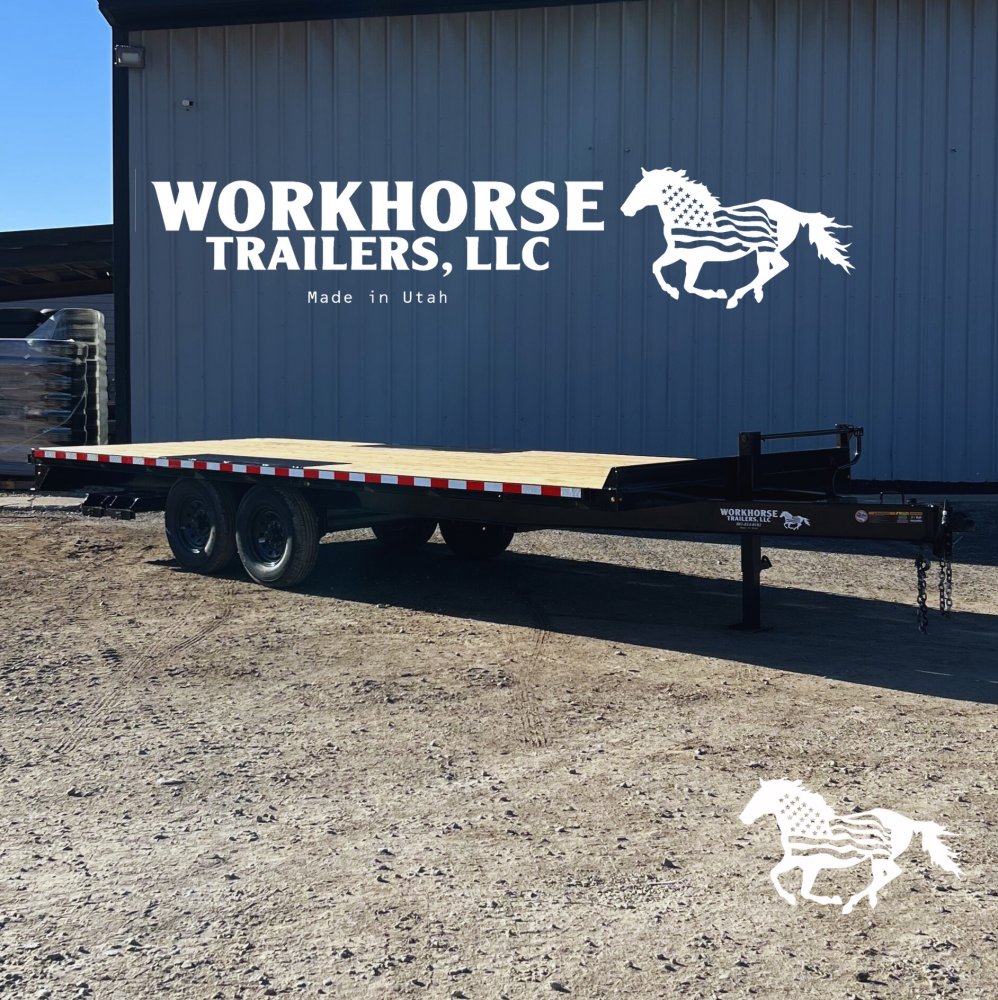
Commercial tilt deck trailers spanning 18 to 22 feet with GVWR ratings between 10,000 and 14,000 pounds form the volume leader in the Workhorse tilt deck lineup for Orem. These models balance substantial payload headroom against a towing profile that remains manageable for the one-ton pickup trucks and commercial chassis vehicles prevalent in Orem’s contractor fleet.
Frame construction at this tier employs heavier gauge channel iron or light I-beam main rails, and the pivot assembly steps up to hardened pins and bronze bushings engineered for the higher cycle counts and heavier loads commercial use imposes. Those shopping forOrem Tilt Deck Trailers at Workhorse Trailers LLC will find that commercial workhorse models include standard features like integrated tool storage on the fixed front section, chain binder pockets recessed into the deck frame, and multiple D-ring anchor points positioned to accommodate the securement geometry of skid steers, compact excavators, and ride-on equipment that Orem contractors transport most frequently.
Industrial Capacity Tilt Decks
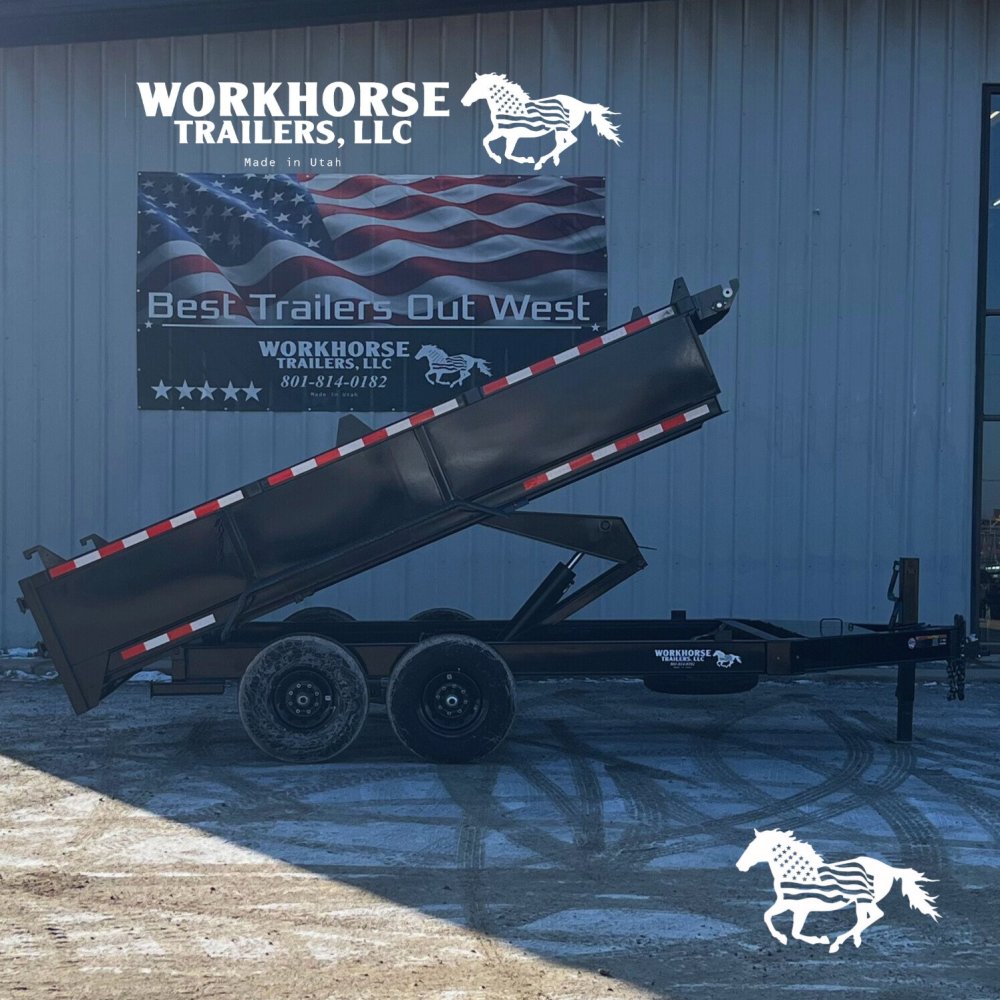
Industrial tilt deck trailers rated from 14,000 to 22,000 pounds serve the heaviest segment of Orem’s tilt deck market. Full-size excavators, loaded concrete buggies, and rubber-tired backhoe loaders all fall within the payload range these models address. Hydraulic tilt actuation is standard at this capacity level because the cargo weights involved make gravity-only tilting impractical and potentially hazardous. Powered cylinders raise and lower the deck at a regulated speed that remains consistent whether the load weighs 5,000 pounds or 15,000 pounds.
Workhorse Trailers LLC equips industrial tilt decks with tandem or triple axle assemblies, commercial-grade electric brake packages, and reinforced pivot structures designed to absorb the concentrated stress that heavy machinery generates during the tilting cycle. Gooseneck hitch configurations are available at this tier for operations requiring the additional towing stability and weight capacity that over-axle hitching provides.
How the Tilt Mechanism Influences Buying Decisions
The tilting system represents the single most important differentiator between tilt deck models. Each actuation method produces a distinct ownership experience, and matching the mechanism to your cargo profile determines long-term satisfaction.
Gravity Systems and Their Ideal Users
Gravity tilt mechanisms rely on the loaded weight behind the pivot to initiate deck descent when the restraining latch opens. They contain no hydraulic components, no electrical connections beyond the standard trailer wiring, and no powered pump assemblies. This mechanical simplicity appeals to Orem buyers who value low maintenance overhead and who transport cargo that reliably provides enough weight aft of the pivot to initiate smooth tilting. Operators who haul consistent loads in the 2,000 to 6,000 pound range find gravity systems perfectly adequate for daily use.
Hydraulic Systems and Their Ideal Users
Hydraulic tilt mechanisms suit operators whose loads vary significantly in weight from one trip to the next. A 3,000-pound mower loads differently than a 10,000-pound excavator, and a gravity system calibrated for one weight may perform unpredictably with the other. Hydraulic actuation eliminates weight-dependent behavior by powering the deck through its full range of motion regardless of what sits on the platform. Orem rental equipment companies, multi-trade contractors, and fleet service operations whose cargo roster changes daily find hydraulic systems worth the additional investment because performance remains uniform across every load.
Dampened Systems as the Practical Middle Ground
Spring-dampened and gas-charged cushion systems add controlled resistance to gravity-driven tilting without the cost and complexity of full hydraulic actuation. The dampener regulates descent speed to prevent the abrupt drops that undampened gravity systems produce under heavy loads, while still allowing the natural weight of the cargo to drive the tilting motion. For Orem buyers whose loads fall into a moderate and relatively consistent weight band, a dampened system provides smooth, predictable operation at a price point between the two extremes.
Loading Techniques Specific to Tilt Deck Operation
The tilt deck’s unique mechanics invite a loading approach distinct from what ramp-equipped trailers require. Adopting techniques matched to the tilting platform’s behavior maximizes efficiency and minimizes risk.
Positioning Before Tilting
Park the trailer on the firmest, most level surface available at the Orem loading location before releasing the deck latch. The rear edge of the tilted deck will contact the ground, and soft or sloped surfaces affect how the deck seats and how much resistance the cargo encounters during the roll onto the platform. If level ground is unavailable, orient the trailer so any slope works in your favor by positioning the low side at the rear where the deck descends.
Managing the Transition Zone
The point where the tilted deck section meets the fixed front section creates a shallow ridge at the pivot line. Most cargo rolls over this ridge without issue, but very low-clearance items can catch briefly at the apex. Drive tracked or wheeled equipment across the pivot at a slow, steady speed rather than attempting to carry momentum over the bump. For items being winched aboard, maintain consistent cable tension as the load crosses the pivot to prevent it from jerking forward and colliding with the front headboard.
Leveling Under Load
Once cargo reaches its intended position on the deck, the platform must return to its level travel orientation. On gravity systems, the cargo’s weight forward of the pivot naturally pulls the deck back to level. On hydraulic systems, the operator activates the return function. In both cases, verify that the deck latch has engaged fully before proceeding. A visual confirmation is not sufficient for critical safety hardware. Push firmly against the rear of the deck to confirm the latch has locked, preventing any possibility of the deck tilting unexpectedly during transit through Orem’s streets.
Orem-Specific Tilt Deck Applications
The tilt deck design adapts to applications across multiple sectors of Orem’s economy, each leveraging the loading advantage in slightly different ways.
Property Management Equipment Rotation
Commercial property management firms overseeing Orem’s retail centers, apartment complexes, and office parks rotate seasonal equipment between managed properties on weekly or biweekly schedules. Snow blower attachments replace mowing equipment in November. Sweepers replace snow equipment in April. A tilt deck trailer simplifies each rotation because the operator drives the outgoing machine off, drives the incoming machine on, and moves to the next property without handling ramps, adjusting loading angles, or recruiting a second crew member for assistance.
Auction and Estate Liquidation Transport
Estate sale companies and auction houses operating in the Orem area retrieve purchased items that range from riding mowers and utility vehicles to shop equipment and industrial machinery. The variety of items encountered at a single pickup location can be extreme, and a tilt deck trailer accommodates this variety through a loading method that works equally well for a 500-pound tool chest on casters and a 5,000-pound forklift driving aboard under its own power.
Municipal Fleet Repositioning
Orem City and other local government entities reposition maintenance vehicles, message boards, portable generators, and traffic control equipment between facilities and deployment locations throughout the year. Tilt deck trailers assigned to municipal fleet yards handle these moves efficiently because the ground-level loading angle accepts a wide range of wheeled and skid-mounted equipment without requiring operators to match ramp widths to specific vehicle track dimensions.
Maintaining Tilt Deck Performance Over Time
The tilt mechanism introduces maintenance requirements that standard fixed-deck trailers do not share. Addressing these requirements on schedule preserves the smooth, reliable operation that motivated the tilt deck purchase in the first place.
Pivot Assembly Care
The pivot pins and bushings carry the full mechanical load of every tilt cycle. Apply marine-grade grease to the pivot assembly monthly during active use and before any period of storage exceeding 30 days. Listen for metallic scraping or binding sounds during tilting that indicate dry or worn bushings requiring replacement. Pivot bushing life varies with load weight and cycle frequency, but Orem operators who grease consistently and replace bushings at the first sign of play typically achieve three to five years of service from each set.
Latch and Safety System Verification
The deck latch secures the platform in its horizontal transport position and must function flawlessly to prevent unintended tilting during highway travel. Test the latch engagement after every loading event by applying downward force to the rear of the deck. Inspect the latch spring, pawl, and striker for wear, corrosion, and deformation monthly. Replace any component that shows visible degradation rather than waiting for it to fail during a loaded trip across Orem.
Hydraulic Component Longevity
Operators running hydraulic tilt systems should monitor fluid level and clarity at each oil change interval specified by the system manufacturer. Contaminated fluid accelerates seal erosion and valve wear. Cylinder rod surfaces should remain smooth and free of pitting that damages seals during each extension and retraction cycle. Wipe the cylinder rods clean after operating in dusty Orem construction zones to prevent abrasive particles from being drawn past the seals and into the hydraulic circuit.
Seasonal Corrosion Prevention
Road salt and brine applied to Orem streets during winter months collect on the pivot assembly, latch mechanism, and tilt cylinder hardware where they accelerate corrosion that compromises both appearance and function. After every winter trip, rinse the tilt mechanism components with clean water and reapply protective grease. Before the first snowfall, coat exposed steel surfaces on the tilt assembly with a moisture-displacing corrosion inhibitor that creates a temporary barrier between the metal and the chemical-laden road spray.
Why Workhorse Trailers LLC Is Orem’s Tilt Deck Destination
Orem’s operating tempo rewards equipment that eliminates unnecessary steps, and no trailer design removes more steps from the loading process than a properly matched tilt deck. Workhorse Trailers LLC ensures that every Orem buyer lands on the tilt deck model that aligns with their cargo weights, their loading frequency, and the actuation style that feels right for their daily rhythm. Their inventory spans the full capacity range from urban service models to industrial heavyweights, their pricing reflects the construction quality each tier delivers, and their product knowledge helps first-time tilt deck buyers and experienced operators alike make decisions grounded in practical understanding rather than sales pressure. For Orem haulers ready to eliminate the ramp routine and invest in a loading system that works as fast as they do, Workhorse Trailers LLC provides the tilt deck trailers and the trusted guidance to make the upgrade worthwhile from the very first load.