
Draper Deck Over Trailers
All locationsNot every load fits neatly between a pair of wheel wells. Wide machinery, oversized pallets, bulky building materials, and irregularly shaped cargo all present challenges that conventional trailers with recessed decks struggle to accommodate. Deck over trailers eliminate that limitation entirely by raising the hauling surface above the wheels, delivering a flat, uninterrupted platform that stretches from rail to rail without any intrusion from fender housings or tire clearance cutouts. For the contractors, farmers, event coordinators, and business operators of Draper, Utah who regularly move loads that demand maximum deck width, Workhorse Trailers LLC offers a focused selection of deck over trailers built to perform under the demanding conditions of the Wasatch Front.
Understanding Deck Over Trailer Design
The fundamental engineering decision that separates a deck over trailer from a standard between-the-wheels trailer is the vertical placement of the deck relative to the axle assembly. On a conventional trailer, the deck sits inside the frame rails at roughly axle height, with wheel wells protruding upward through the deck surface on each side. This narrows the usable flat area of the deck to the space between those wells, typically around 50 to 60 inches on a trailer with an overall width of 83 inches or more.
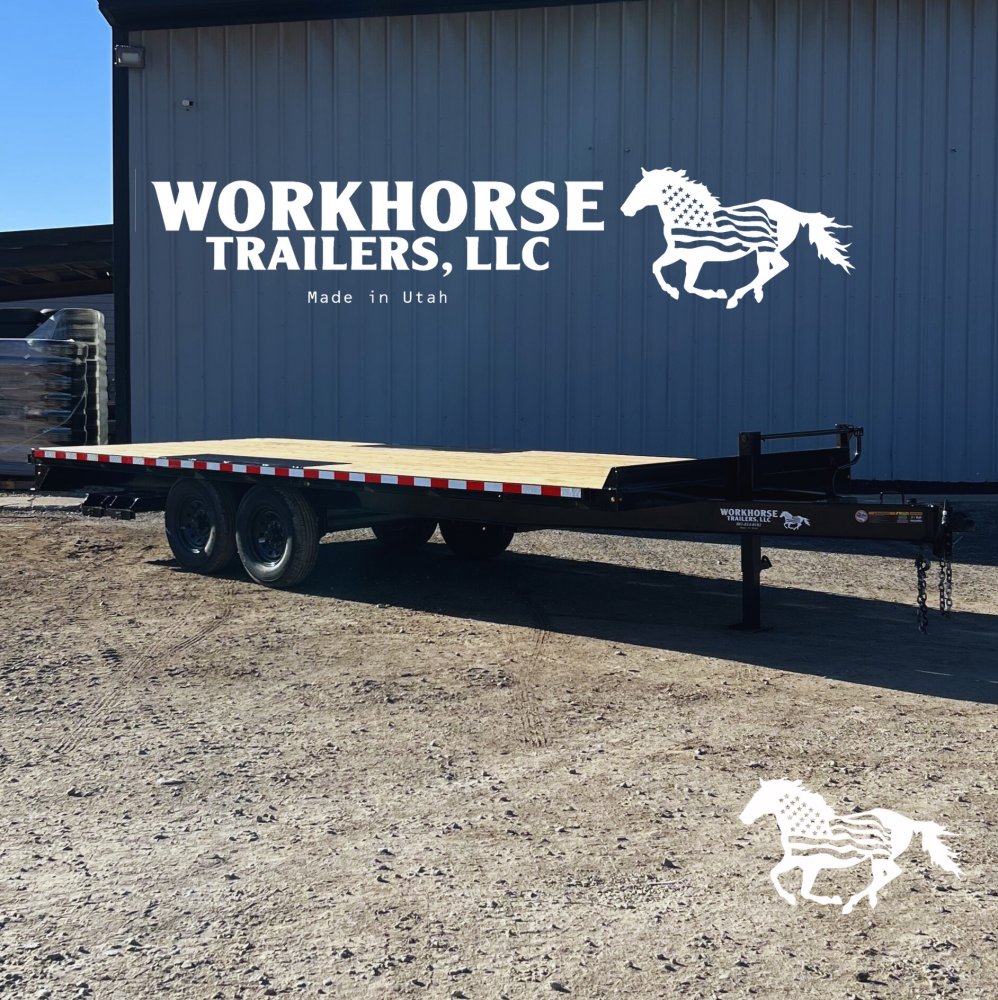
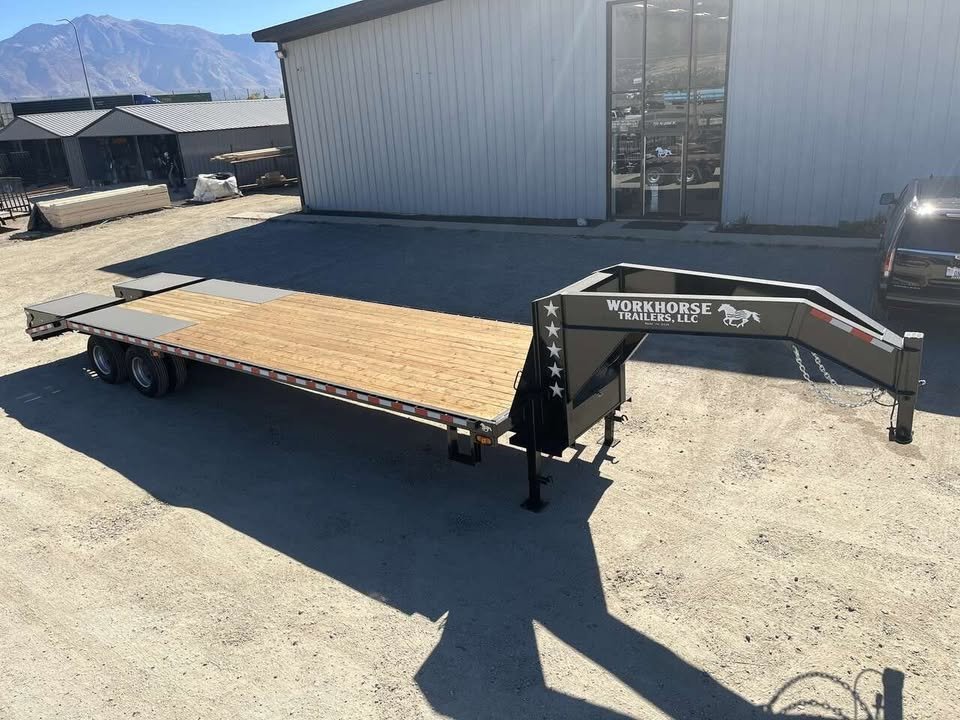
A deck over trailer repositions the entire platform above the tires and fenders, reclaiming every inch of width for cargo. The result is a continuous flat surface that typically measures the full 102 inches allowed under federal highway regulations for commercial trailers, or 83 to 84 inches on lighter-duty models designed for pickup truck towing. That additional width transforms loading logistics for operators who haul items that cannot be squeezed between conventional wheel wells or stacked high enough to clear them.
The tradeoff for this expanded deck area is a higher load height. Because the platform sits above the wheels rather than alongside them, deck over trailers position cargo several inches higher than their between-the-fender counterparts. This raises the overall center of gravity of the loaded trailer, which operators should account for when cornering, navigating crosswinds, and driving at highway speed. Skilled drivers in Draper who understand this characteristic and adjust their driving accordingly find that deck over trailers handle predictably and safely across the full range of local road conditions.
Practical Applications Across the Draper Economy
The extra width provided by a deck over design is not a luxury for operators whose cargo demands it. It is the difference between completing a job in one trip and wasting hours on multiple runs or renting specialized oversize equipment. Draper’s diverse economic base generates numerous practical applications for these trailers.
Heavy Construction Material Delivery
Lumber yards, roofing supply houses, and masonry distributors serving the Draper building market frequently load trailers with materials that span the full width of a standard pallet or beyond. Bundles of roof trusses, sheets of plywood and oriented strand board, stacks of drywall, and palletized brick or block all benefit from the unbroken deck surface of a deck over trailer. Forklift operators at supply yards particularly appreciate the absence of wheel wells because it allows them to place pallets side by side across the full width of the deck without worrying about balancing loads on an uneven surface or damaging packaging against protruding fender structures.
Farming and Hay Transport
The agricultural operations active in the corridor between Draper and the rural communities stretching south toward Spanish Fork rely on deck over trailers for seasonal hay transport. Standard rectangular hay bales measure roughly 48 inches wide, and round bales can exceed 60 inches in diameter. Loading these bales efficiently requires a flat surface that accepts them in rows without wasted space along the edges. A deck over trailer carrying three rows of large square bales side by side delivers significantly more hay per trip than a conventional trailer that can only fit two rows between its wheel wells. Over the course of a cutting season, those extra bales per load add up to meaningful savings in fuel, driver time, and equipment wear.
Event and Festival Logistics
Draper’s active community calendar includes farmers markets, outdoor concerts at regional parks, holiday festivals, and corporate gatherings that require stages, vendor booths, portable fencing, and large-format signage transported to venues throughout the city. Event production companies favor deck over trailers because the wide, flat deck functions as both a transport platform and, in some cases, an elevated stage or display surface at the venue itself. The ability to position tables, canopy frames, sound equipment, and generator units across the full deck width simplifies both packing at the warehouse and setup at the event location.
Tree Service and Land Clearing
The mature residential neighborhoods along Draper’s eastern foothills and the wooded lots in the Hidden Canyon and Cranberry Hill areas generate steady work for tree service companies. Removing large limbs, trunk sections, and root balls from tight residential lots requires hauling capacity that accommodates irregularly shaped, heavy organic material. Deck over trailers give tree crews the width to stack brush and log sections without material hanging over the sides, which keeps loads compliant with Utah’s transportation codes and prevents debris from falling onto the roadway during transit to disposal sites.
Sod and Landscape Supply Delivery
Sod farms and landscape supply businesses delivering to Draper’s newly constructed homes and commercial properties load palletized sod rolls, bulk bags of decorative rock, and banded bundles of retaining wall block onto trailers daily throughout the growing season. The flat, full-width deck of a deck over trailer maximizes payload per delivery, reducing the number of trips required to complete large orders and keeping delivery schedules on track during the peak spring and summer months when demand surges across the entire valley.
Deck Over Trailer Options at Workhorse Trailers LLC
Workhorse Trailers LLC stocks deck over trailers in several weight classes and feature packages that address the specific hauling profiles of different Draper industries. Examining the available options helps buyers zero in on the configuration that serves their operation most effectively.
Standard Duty Deck Over Trailers
Standard duty models carry gross vehicle weight ratings between 7,000 and 10,000 pounds, making them suitable for light commercial hauling, agricultural tasks, and general-purpose use by homeowners with heavier-than-average transport needs. These trailers typically ride on tandem axles with leaf spring suspension and feature treated wood or steel plank decking. Their manageable empty weight allows towing with three-quarter-ton and one-ton pickup trucks that are already common in Draper driveways and fleet yards.
Heavy Duty Deck Over Trailers
Heavy duty deck over trailers step up to gross vehicle weight ratings of 14,000 to 24,000 pounds and beyond, accommodating the concentrated loads associated with construction materials, industrial equipment, and large agricultural implements. Heavier gauge steel frames, wider flange I-beam construction, and triple axle configurations give these trailers the structural backbone to carry serious weight without deflection or fatigue. Electric brake systems on all axles provide stopping power proportional to the increased payload, and upgraded wiring harnesses withstand the vibration and environmental exposure inherent in daily commercial operation.
Flatbed Versus Railed Configurations
Deck over trailers are available with completely flat, rail-free surfaces or with bolt-on side rails and removable stake pockets that accept vertical uprights. A bare flatbed maximizes loading flexibility by allowing cranes and forklifts to approach from any direction. Railed configurations contain loose cargo, provide anchor points for securing straps and chains, and prevent items from sliding off the deck edges during acceleration, braking, and cornering. Many Draper buyers opt for the stake pocket design because it offers both options. With the stakes installed, the trailer contains loads securely. With the stakes removed, the deck becomes a clear, open surface ready for overhead loading.
Fixed Versus Removable Deck Sections
Some deck over trailers incorporate modular deck panels that can be removed individually for maintenance or replaced if a specific section becomes damaged. This feature proves valuable for operators who subject their trailer decks to heavy impact from tracked equipment, dropped loads, or corrosive materials like salt and wet concrete. Replacing a single damaged panel costs a fraction of rebuilding an entire welded deck, and the modularity means the trailer stays in service with minimal downtime.
Key Buying Considerations for Draper Customers
Selecting the right deck over trailer requires balancing capacity needs against practical constraints like tow vehicle capability, storage space, and budget. Workhorse Trailers LLC guides Draper buyers through several critical decision points during the selection process.
Tow Vehicle Compatibility
The elevated deck height of a deck over trailer raises the trailer’s center of gravity compared to a between-the-fender design of similar capacity. This means the tow vehicle’s suspension, wheelbase, and hitch configuration must be capable of managing the higher pivot point without introducing sway or instability. Workhorse Trailers LLC reviews each customer’s tow vehicle specifications to confirm that the truck, hitch, and trailer form a balanced combination that performs safely at highway speed and on the winding roads that connect Draper to mountain job sites and recreation areas.
Deck Length Relative to Cargo Profile
While width is the headline advantage of a deck over trailer, length remains equally important when planning loads. Measure your longest typical cargo item and ensure the deck provides at least 18 to 24 inches of additional length for tie-down access and maneuvering clearance during loading. Overhanging cargo beyond the rear of the deck is permitted within limits under Utah law, but flagging requirements and reduced rearward visibility make it preferable to keep all material within the deck footprint whenever possible.
Deck Surface and Finish
Wood decking, typically pressure-treated pine or oak planks, provides natural grip for rubber tires and boot soles, absorbs impact energy from dropped loads, and is straightforward to replace plank by plank as individual boards wear out. Steel decking, either diamond plate or expanded mesh, offers superior longevity against abrasion and does not rot, warp, or splinter over time. The choice depends largely on what you haul most often. Wood suits general cargo and agricultural use where impact absorption matters, while steel excels in applications involving tracked equipment, welding sparks, or heavy chains that would gouge wooden surfaces.
Draper professionals evaluating their options forDraper Deck Over Trailers at Workhorse Trailers LLC benefit from a sales team that frames every recommendation around the buyer’s actual working conditions rather than abstract feature comparisons.
Coating and Corrosion Protection
Powder coat finishes provide the most durable barrier against the corrosive forces that Draper trailers face year-round. Road salt and liquid deicing agents applied generously on I-15, Pioneer Road, and Bangerter Highway during winter months attack bare steel aggressively, and a quality powder coat delays that corrosion significantly. Some manufacturers offer galvanized frames and components as an alternative or supplement to powder coating, providing a zinc-based protective layer that sacrificially corrodes before the underlying steel is affected.
Maintaining Deck Over Trailers Through Utah Seasons
The climate cycle in Draper places distinct seasonal stresses on trailer components, and a consistent maintenance schedule prevents minor wear from escalating into failures that sideline the trailer during critical work periods.
Spring is the ideal time for a comprehensive inspection after winter’s toll. Examine every weld seam for cracks, paying special attention to the joints where crossmembers meet the main frame rails and where the gooseneck or tongue assembly connects to the deck structure. Check all fasteners for looseness caused by thermal expansion and contraction cycling throughout the cold months. Inspect the deck surface for warped or rotted wood planks or for steel panels that have developed rust pitting beneath their protective coating.
Summer heat accelerates tire aging, and deck over trailers loaded to capacity generate significant heat in the wheel bearings during extended highway runs. Monitor tire sidewalls for cracking, confirm pressure matches the load being carried, and repack wheel bearings at intervals recommended by the axle manufacturer. Parking a loaded trailer on hot asphalt for extended periods can soften and deform rubber tires under the concentrated weight, so use blocks or concrete pads beneath the tires when the trailer will sit stationary for more than a few days.
Autumn presents an opportunity to prepare the trailer for the harsh months ahead. Touch up any paint chips or scratches that accumulated during the busy construction season before moisture and freezing temperatures turn them into active corrosion sites. Lubricate all moving components including ramp hinges, coupler latches, and jack mechanisms with a cold-weather appropriate grease that will not stiffen when temperatures drop below freezing.
Winter operation demands extra vigilance around the braking system. Snow, ice, and salt accumulation on brake drums and rotors can reduce braking effectiveness and accelerate pad wear. After driving through heavy road treatment, rinsing the wheel and brake assemblies with clean water removes the corrosive residue before it bonds permanently to the components.
Workhorse Trailers LLC and the Greater Draper Community
Workhorse Trailers LLC draws deck over trailer customers from across the south end of the Salt Lake Valley and into northern Utah County. Buyers from Bluffdale, Saratoga Springs, Vineyard, Orem, and the foothill communities east of I-15 visit because the inventory, pricing, and expertise consistently meet the expectations of working professionals who cannot afford to gamble on an unknown dealer.
The company’s straightforward sales philosophy resonates particularly well with Draper’s pragmatic business community. There are no inflated list prices designed to make a negotiated discount feel like a victory. There are no hidden fees revealed at the point of signing. The price on the trailer reflects its actual market value, and the conversation focuses on whether the trailer fits the customer’s needs rather than whether the dealership can close a transaction.
Workhorse Trailers LLC invites anyone in the Draper area considering a deck over trailer to stop by, walk the lot, and spend time comparing models across different weight classes and configurations. Bringing measurements of your most common cargo items, your tow vehicle’s specifications, and a list of questions about features and maintenance will make the visit productive and help the team deliver recommendations tailored specifically to your operation.