
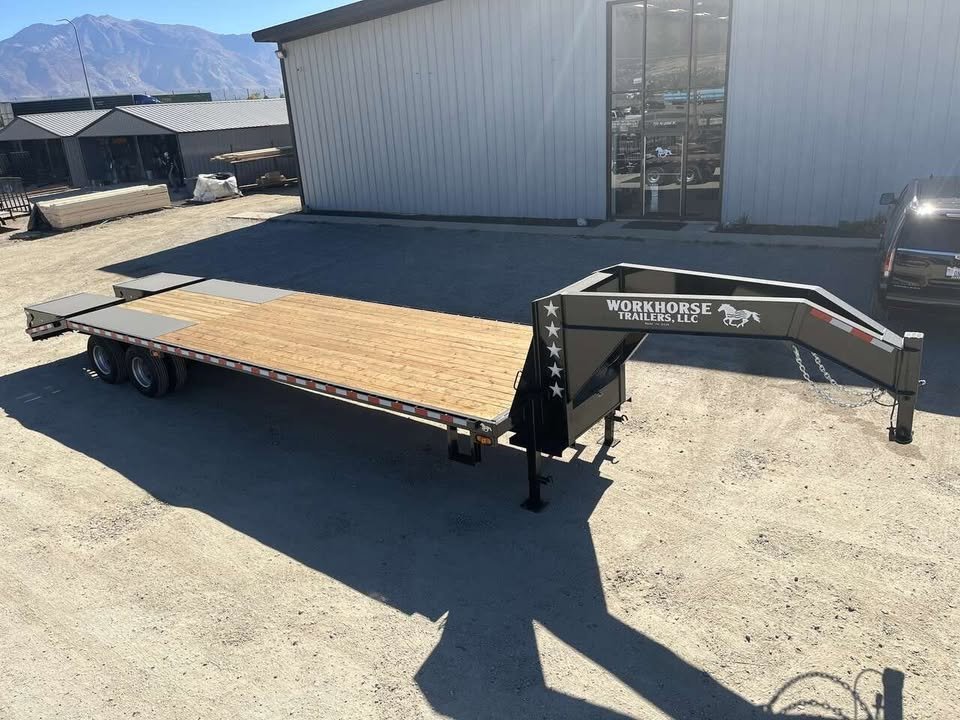
Nevada Equipment Hauler Trailers
All locationsNevada has been building at a pace that strains every link in the construction supply chain, and the trailer carrying the equipment is one of the links that fails when buyers cut corners. The Las Vegas metro alone has absorbed billions in new development over the past decade, from casino resort expansions on the Strip to master-planned residential communities radiating outward through Henderson, North Las Vegas, and the southwest valley. Northern Nevada’s trajectory mirrors the south, with data center campuses, distribution warehouses, and residential subdivisions transforming the landscape east of Reno and into the Tahoe Reno Industrial Center. Every one of those projects requires machinery that travels by trailer, and the conditions those trailers operate under in Nevada punish equipment that wasn’t built for sustained desert service. Workhorse Trailers LLC supplies equipment hauler trailers to Nevada buyers whose operations depend on moving heavy machinery reliably across a state where breakdowns happen in places that offer no quick fixes.
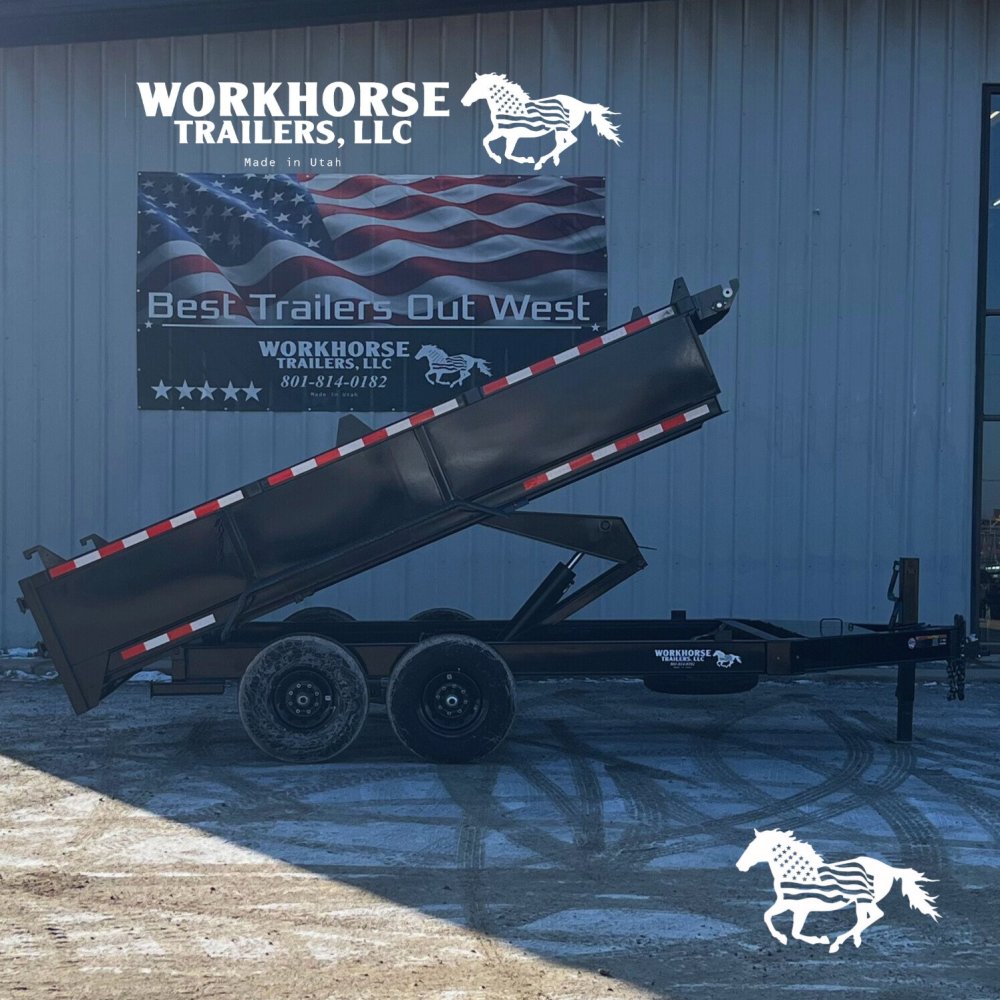
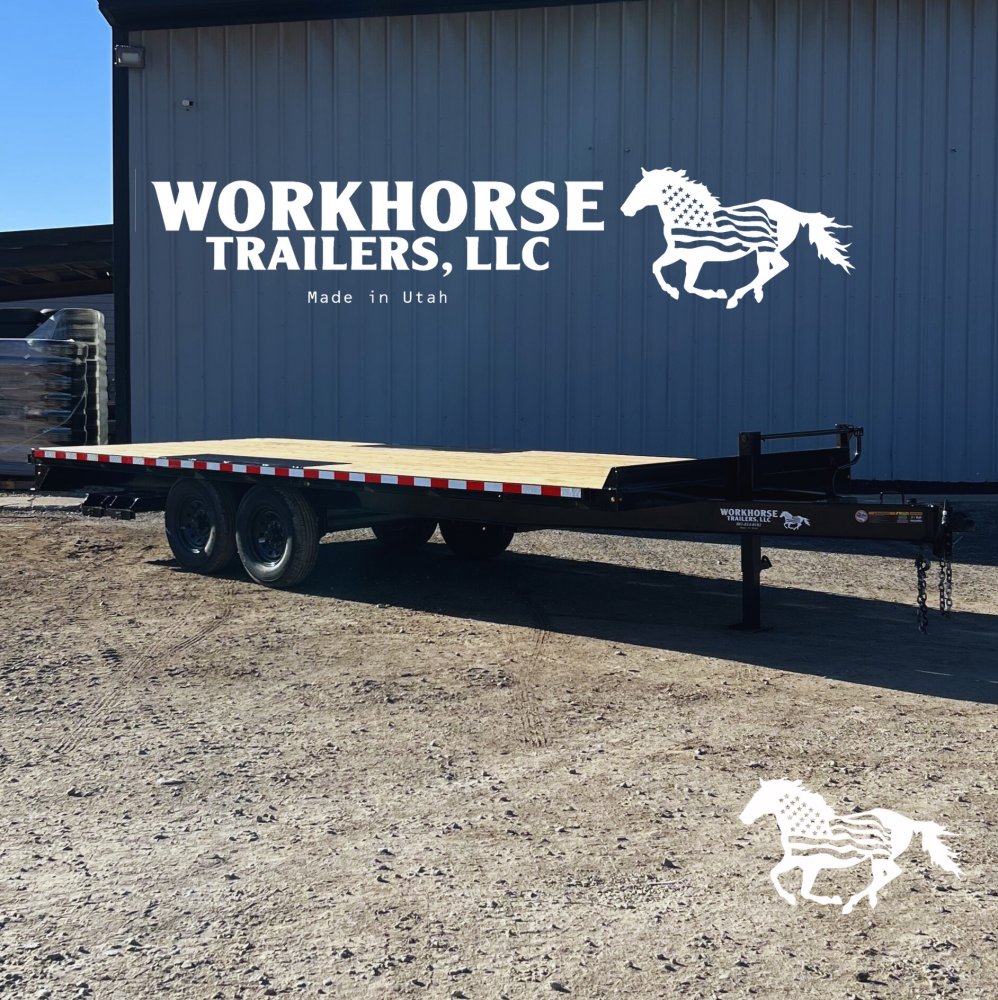
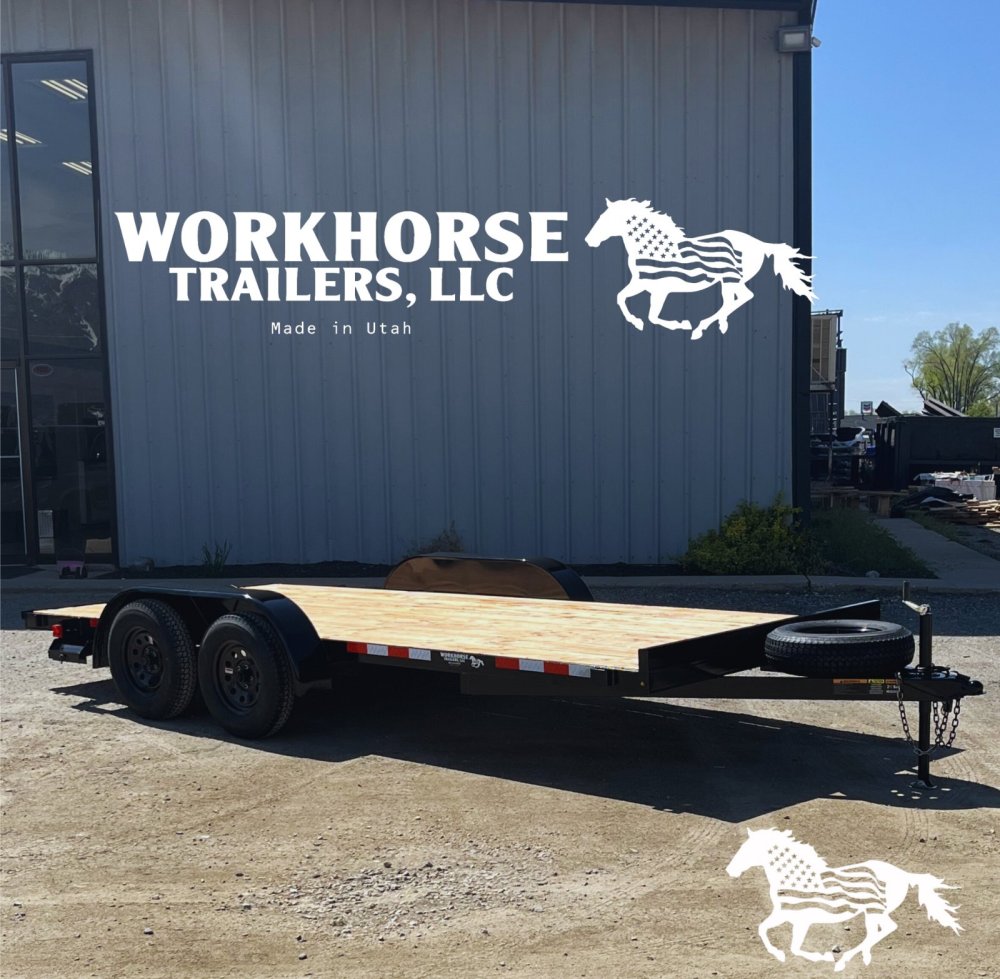
An equipment hauler trailer exists for a specific purpose: transporting machines too heavy, too wide, or too mechanically complex to travel under their own power on public roads. Excavators, loaders, compactors, generators, aerial platforms, and trenching systems all ride on equipment haulers between job sites, rental yards, and maintenance facilities. The trailer must handle concentrated loads that stress the deck and frame differently than distributed cargo, support machines that drive themselves on and off using tracks or tires that punish ramp surfaces, and maintain road legality under weights that push into the upper limits of what pickup trucks and medium-duty rigs can tow.
In Nevada, the trailer also has to do all of this in ambient temperatures that routinely exceed 110 degrees, across highways that stretch for hours between service points.
Nevada’s Equipment Transport Demands by Sector
The industries driving equipment hauler purchases in Nevada reflect the state’s economic composition, which differs substantially from neighboring states.
Large-Scale Solar and Renewable Energy
Nevada’s solar energy buildout has created a massive and ongoing need for equipment transport across remote desert sites. Utility-scale solar installations in Nye County, Clark County, and along the US-95 corridor south of Tonopah require site preparation machinery including motor graders, compaction rollers, and trenchers that must be hauled from staging areas to project sites often located miles from paved roads. These projects run on compressed timelines with contractual penalties for delays, which means equipment repositioning between installation phases cannot tolerate trailer failures or loading inefficiencies.
The scale of some Nevada solar projects demands multiple equipment moves per day across access roads that are unpaved, poorly graded, and subject to washboarding that transmits constant vibration through the trailer frame. Equipment haulers serving solar construction need frame and suspension systems capable of absorbing this punishment without developing fatigue cracks or loosening fastener connections over weeks of continuous use.
Mining Operations
Nevada produces more gold than any other state and supports active mining operations for silver, lithium, copper, and barite across its central and northern regions. Mining companies operating near Elko, Winnemucca, Battle Mountain, and Carlin move support equipment between surface operations, processing facilities, and maintenance shops on equipment hauler trailers that log serious mileage across remote terrain.
The equipment profiles in mining differ from urban construction. Haul trucks, rock drills, and material handling machines often exceed the weight capacity of standard equipment haulers, pushing demand toward commercial-grade trailers rated at 25,000 pounds GVWR and above. Even the lighter support equipment, including skid steers, welders, and light plants, accumulates enough transport cycles across mine site roads to wear through economy-grade trailers within a few seasons.
Urban Construction and Development
The residential and commercial construction sectors in Las Vegas and Reno generate the highest volume of equipment hauler trips in the state. Excavation contractors, utility installation crews, grading companies, and demolition operators move machines between job sites daily. A typical Reno-area excavation company might reposition a mini excavator and skid steer combination three or four times per week across sites scattered from Spanish Springs to Damonte Ranch.
Urban Nevada construction happens year-round without the seasonal shutdowns that northern states impose. This means equipment haulers in the Las Vegas and Reno markets accumulate wear continuously rather than getting a winter rest period. Annual mileage and loading cycles on a Nevada urban contractor’s equipment hauler can double what an equivalent operation logs in a state with a five-month construction season.
Event and Entertainment Infrastructure
A category unique to southern Nevada involves the heavy equipment required for event staging at the Las Vegas Convention Center, the venues along the Strip, and temporary installations for productions, festivals, and sporting events. Forklifts, boom lifts, scissor platforms, and telehandlers move between warehouse staging areas and venue sites on equipment haulers that navigate urban traffic, tight loading docks, and time-sensitive delivery windows. The Formula One race infrastructure buildout and teardown alone generates hundreds of equipment hauler movements concentrated into narrow scheduling windows.
Desert Heat and Equipment Hauler Component Performance
Nevada’s thermal environment affects equipment hauler components differently than the vehicle components most owners are accustomed to monitoring.
Hydraulic Systems Under Heat Stress
Equipment haulers with hydraulic ramps, hydraulic tilt mechanisms, or hydraulic dovetail systems rely on fluid that performs within a specific temperature range. Hydraulic fluid that overheats loses viscosity, reduces system pressure, and can damage seals and O-rings that depend on consistent fluid properties for their sealing function. A hydraulic ramp system that works flawlessly during a morning load may respond sluggishly or leak after the trailer has sat in direct sun through a Las Vegas afternoon.
Buyers who operate equipment haulers with hydraulic systems in Nevada should specify high-temperature hydraulic fluid rated for sustained operation above 180 degrees Fahrenheit. Shielding hydraulic reservoirs and exposed hose runs from direct sun with reflective covers or heat wrap reduces peak fluid temperatures during stationary periods.
Brake Performance at Elevated Temperatures
Electric trailer brakes generate friction heat during every stop. In Nevada, the brakes begin their work cycle at a higher ambient temperature than they would in cooler states, which reduces the thermal headroom between normal operating temperature and the point where brake fade begins. A loaded equipment hauler descending from the Spring Mountains toward Pahrump, or braking repeatedly through construction zones on I-15 between Las Vegas and Primm, accumulates brake heat faster than the same stops would produce in a 70-degree environment.
Brake drum condition matters more in Nevada than in mild climates. Drums that have worn thin from service lose heat dissipation capacity, compounding the elevated starting temperature into a fade condition that extends stopping distances dangerously. Inspecting brake drums for minimum thickness at the beginning of each summer season catches drums that operated adequately during cooler months but lack the margin for safe hot-weather performance.
Deck and Frame Thermal Movement
Steel equipment hauler frames expand and contract with temperature swings. Nevada’s daily temperature range can exceed 40 degrees between predawn and peak afternoon, and seasonal swings are even more dramatic. This thermal cycling stresses welded joints, loosens bolted connections, and accelerates the development of fatigue cracking at high-stress junction points. Frame inspection should happen more frequently for equipment haulers operating continuously in Nevada conditions than for identical trailers in thermally stable environments.
Deck boards on wood-surfaced equipment haulers shrink more aggressively in Nevada’s low humidity than in wetter states. Gaps that open between boards create catch points for equipment tracks and can trap debris that accelerates board deterioration. Tightening deck board fasteners and replacing boards that have shrunk beyond the point of effective coverage should be part of regular seasonal maintenance.
Towing Across Nevada’s Long Highway Corridors
Equipment hauler trips in Nevada frequently cover distances that would span entire states elsewhere. A contractor based in Reno hauling equipment to a project in Ely covers over 300 miles of highway, much of it through sparsely populated terrain with limited fuel stations and no repair facilities. A Las Vegas operation transporting a machine to a solar site near Tonopah traverses nearly 200 miles of desert highway where the nearest tow service might be two hours away.
These distances impose requirements that short-haul urban towing doesn’t reveal. Tow vehicle cooling systems must maintain safe operating temperatures during sustained pulls at highway speed in extreme heat. Automatic transmission fluid, engine coolant, and power steering fluid all degrade faster when operating temperatures remain elevated for hours at a time. Nevada equipment hauler owners who run long corridors regularly should shorten fluid service intervals on their tow vehicles accordingly.
Fuel planning deserves deliberate attention. A one-ton dually towing a loaded equipment hauler at 14,000 pounds across hilly desert highway may return fuel economy figures in the 6 to 8 miles per gallon range. The distance between fuel stops on US-93, US-50, and US-95 can exceed 100 miles. Running the fuel math before departure and knowing where the stations fall along the route prevents the genuinely dangerous situation of running dry with a loaded trailer on a Nevada highway where the next fuel is 40 miles ahead and cell service ended 20 miles back.
Tire condition and spare tire availability carry higher stakes on these routes as well. A blowout on a loaded equipment hauler between Austin and Fallon on US-50 is not a situation resolved by a quick phone call. Carrying a properly inflated spare for the trailer and the tools to change it is a baseline precaution for any Nevada equipment hauler trip that leaves the urban corridors.
Nevada-Specific Registration and Weight Compliance
Equipment hauler trailers registered in Nevada follow the state DMV process for titling, registration, and fee payment. Sales tax applies at rates that vary by county, with Clark County at 8.375 percent representing the highest rate in the state.
Nevada’s weight enforcement infrastructure includes fixed and portable weigh stations on major corridors. Equipment haulers operating at or near their rated capacity should be aware that Nevada weigh stations on I-80, I-15, US-93, and US-95 may direct truck-trailer combinations through for weight verification. Operating above the trailer’s GVWR or the tow vehicle’s GCWR results in fines, potential load reduction orders, and in some cases impoundment of the rig until weight compliance is achieved.
CDL requirements in Nevada follow federal standards. Combinations exceeding 26,001 pounds gross combined weight require the driver to hold a Class A commercial driver’s license. Many equipment hauler configurations used in Nevada’s mining, solar, and heavy construction sectors push into CDL territory when loaded with mid-size or heavy equipment. Operators should verify their licensing status against the specific combination weights they intend to run before purchasing a trailer that requires credentials they don’t yet hold.
Oversize and overweight permits are available through the Nevada Department of Transportation for equipment hauler loads that exceed standard dimensions or weight limits. Wide-load permits apply when the loaded trailer exceeds 8 feet 6 inches in width, which occurs when transporting certain wheeled loaders, wide-track excavators, or equipment with attachments that extend beyond the trailer’s rail width. Permit applications require advance filing and route specification.
Choosing an Equipment Hauler Rated for Nevada Demands
Nevada equipment hauler buyers should resist the temptation to size their trailer to average conditions. The state’s operating environment rewards conservative specification. A trailer rated comfortably above your typical load weight runs cooler brakes, experiences less frame stress, and tolerates the cumulative punishment of desert service better than one operating continuously near its rated maximum.
Frame construction in the I-beam or structural channel category with closely spaced cross members handles the concentrated loads from tracked equipment while providing the structural redundancy that absorbs vibration damage from unpaved access roads. Axle ratings should exceed the expected per-axle load by at least 15 percent to provide thermal and fatigue margin during Nevada’s hot season.
Ramp capacity deserves particular scrutiny for Nevada buyers. A ramp rated at the trailer’s full payload capacity handles the heaviest anticipated machine. A ramp rated at a fraction of that capacity creates a bottleneck where the trailer can carry the load but the ramps can’t survive the loading cycle. Matching ramp capacity to trailer payload prevents the premature ramp failures that strand equipment at job sites and generate expensive field repairs.
Working With Workhorse Trailers LLC in Nevada
Workhorse Trailers LLC serves Nevada equipment hauler buyers with an understanding that this state’s conditions compress the useful life of underbuilt trailers and reward the investment in properly specified ones. The company’s approach begins with the buyer’s equipment roster, hauling frequency, typical distances, and the terrain those trips cover, then recommends a trailer configuration that accounts for Nevada’s heat, distances, and enforcement landscape.
Nevada buyers ready to evaluate equipment hauler trailers across the weight classes and feature sets that local contractors, mining operations, solar builders, and rental companies require can visitNevada Equipment Hauler Trailers to review available inventory and connect with the Workhorse team for specific guidance.
The equipment hauler you choose determines whether your machines arrive at the job site on schedule or sit waiting for a trailer repair on the shoulder of a desert highway. In Nevada, that distinction carries consequences that make the purchase decision worth getting right. Workhorse Trailers LLC makes sure you do.