
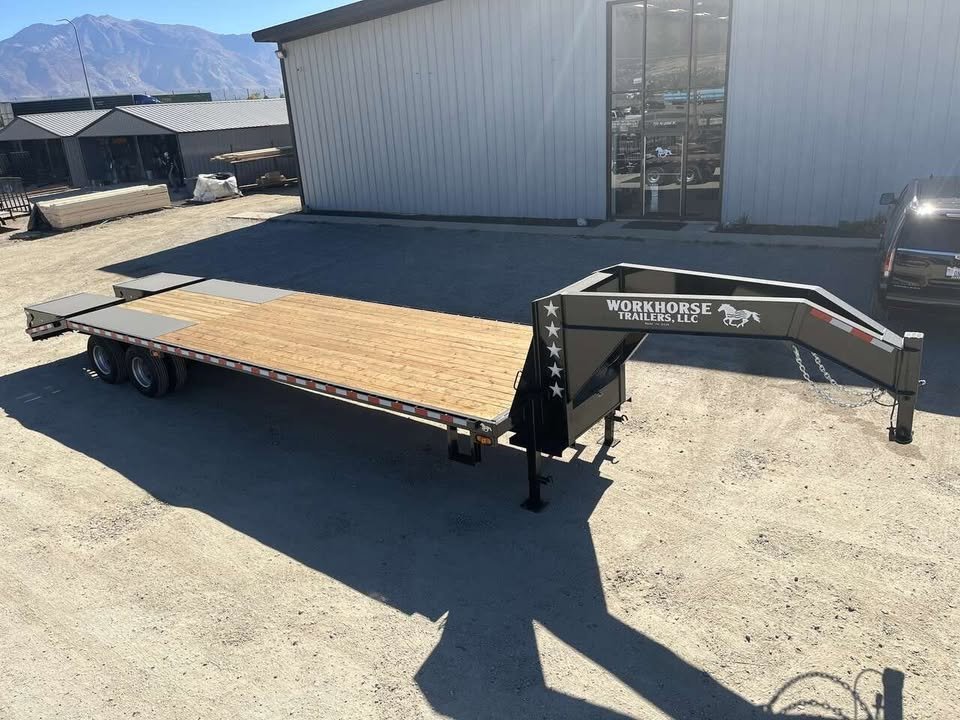
Wyoming Tilt Deck Trailers
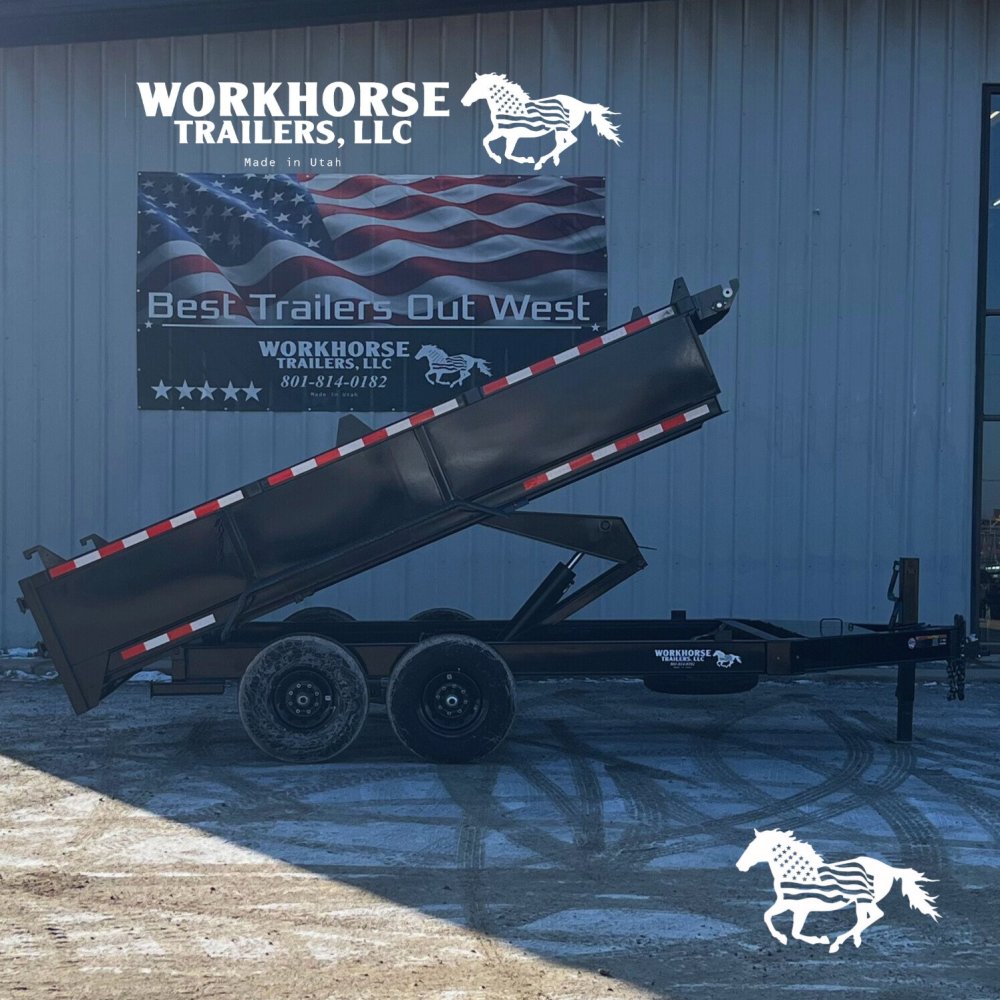
All locationsLoading heavy equipment onto a trailer is a manageable task when two workers, a paved yard, and a set of properly stored ramps are all available at the same time. In Wyoming, those conditions rarely align. The operator is usually alone. The loading surface is usually dirt, gravel, or frozen ground. The ramps are either back at the shop 90 miles away or buried under six inches of snow where they were last used. And the machine needs to be on the trailer now because there is a job waiting and daylight is not going to last. Tilt deck trailers were designed for exactly this kind of reality. The entire deck pivots downward until its rear edge meets the ground, creating a built-in loading ramp that requires no setup, no second set of hands, and no perfectly level staging area. For Wyoming operators who work alone in places where self-sufficiency is not a preference but a survival skill, the tilt deck format eliminates the single most frustrating and time-consuming step in the equipment transport process. Workhorse Trailers LLC supplies Wyoming buyers with tilt deck trailers engineered to perform reliably across the extreme conditions and remote locations that define daily operations in this state.
The practical advantages of a tilt deck multiply in proportion to how far the operator works from help and how often they load and unload in a given day. A Wyoming fence contractor who delivers a skid steer to a ranch job 60 miles from Riverton, unloads it, builds fence all morning, reloads, drives 45 miles to a second property near Shoshoni, unloads again, works until dark, and then reloads for the drive home has cycled through six loading events in a single day across terrain that offers nothing resembling a paved staging area. Workhorse Trailers LLC providesWyoming Tilt Deck Trailers that compress each of those loading events into a quick, solo-operated sequence requiring no auxiliary equipment and no cooperation from the ground surface beneath the trailer.
The Solo Operator Advantage in Remote Wyoming Work
More than any other trailer feature, the tilt deck’s ability to function without a second person present resonates deeply with Wyoming’s workforce. The state’s low population density means that many operators travel alone to job sites located hours from the nearest town. Bringing a helper solely to manage ramps during loading and unloading doubles the labor cost of every equipment move and pulls a productive worker away from revenue-generating tasks.
Eliminating Dependence on Carried Accessories
Detachable ramps are accessories that must be transported, stored, deployed, and secured every time the trailer loads or unloads. They occupy space on or beneath the trailer during transit, add weight to the empty rig, and create a logistics burden that compounds with every trip. In Wyoming, where a set of aluminum ramps left at a job site on a remote ranch may not be recoverable until the next scheduled visit days later, the risk of losing or damaging these accessories carries real financial consequences.
A tilt deck trailer carries its loading mechanism as an integral part of its structure. There is nothing to forget, nothing to lose, and nothing to store separately. The deck itself is the ramp. This self-contained design appeals to Wyoming operators who have learned through hard experience that every detachable component represents something that can go missing, break, or be unavailable at the moment it is needed most.
Loading on Unimproved and Sloped Ground
Wyoming job sites rarely provide the flat, firm, level surface that detachable ramps require to function safely. Well pad locations carved into hillsides, ranch corrals built on natural slopes, timber sale landings perched on mountain benches, and roadside breakdown recovery positions along highway shoulders all present ground conditions where setting ramps level is difficult or impossible.
A tilt deck conforms to the available ground by dropping its rear edge directly onto whatever surface exists beneath it. Sloped ground, soft soil, frozen ruts, and loose gravel all become workable loading surfaces because the deck creates a continuous incline from ground to platform without the gap, wobble, or instability that ramps introduce when placed on uneven terrain. Wyoming operators loading equipment at a wellsite access road near Pavillion or a ranch gate outside Ten Sleep appreciate this adaptability every time the deck drops and the machine rolls on without drama.
Speed Under Pressure During Short Daylight Windows
Wyoming’s northern latitude delivers as few as nine hours of daylight during December and January. Operators working outdoor jobs during winter months face compressed schedules where every minute of light counts. The time spent deploying, aligning, and securing detachable ramps at each loading event subtracts directly from the billable work window that the short day provides.
A tilt deck loading cycle measured in seconds rather than minutes returns meaningful productivity to winter workdays. A Wyoming contractor who saves four minutes per loading event across six events in a day recovers nearly half an hour of working daylight that would otherwise be consumed by ramp handling. Over a five-day winter work week, that recovery adds up to more than two hours of additional billable time that the tilt deck creates simply by eliminating the ramp step from the loading process.
Wyoming Applications Where Tilt Decks Excel
The tilt deck format serves a particularly valuable role in several Wyoming work categories where the combination of remote locations, solo operation, and frequent loading cycles creates conditions that maximize the advantages of built-in ramp functionality.
Range Management and Fencing Operations
Fence construction and repair crews working across Wyoming’s vast ranch and public land holdings transport compact track loaders, mini excavators, and post-driving machines between fence lines that may stretch for miles across terrain inaccessible to anything larger than a pickup and trailer. The crew drives to the starting point of the day’s fence section, unloads the machine, works along the fence line until the day’s goal is met, reloads, and moves to the next section or heads for home.
Each transition between driving and working involves a full loading cycle on ground that has never been graded, compacted, or prepared for equipment loading. The tilt deck handles these transitions on native prairie grass, sagebrush clearings, and wind-blown ridgetops without requiring the operator to step out of the machine’s cab except to release the tilt latch and secure the tie-downs once loaded.
Small-Town Municipal Equipment Shuttling
Wyoming’s small municipalities maintain road graders, mowers, snow blowers, and utility tractors that serve the town’s infrastructure needs. Towns like Meeteetse, Dubois, Thermopolis, and Basin often share equipment between departments or borrow machines from neighboring communities during emergencies. A tilt deck trailer assigned to the public works department enables a single employee to pick up a borrowed mower from a neighboring town, deliver it to the work site, and return the trailer to the yard without requiring additional staff for ramp handling at any point in the process.
Budget constraints in these small communities mean that every piece of equipment must maximize the productivity of every employee. A tilt deck trailer that allows solo equipment transport frees the second worker to continue mowing, plowing, or repairing infrastructure while the first handles the delivery independently.
Oilfield Support Equipment Cycling
Production operations across Wyoming’s oil and gas basins cycle support equipment between wellsites on schedules driven by maintenance needs, production optimization, and regulatory compliance. Portable pump jacks, chemical injection skids, wellhead heaters, and light towers move from location to location as field conditions change throughout the season.
The well pads where this equipment loads and unloads are built on compacted fill that ranges from reasonably firm to uncomfortably soft depending on recent weather and the composition of the fill material. Tilt deck trailers handle the variable firmness of these surfaces far better than ramp-based alternatives because the deck’s full surface contact with the ground distributes the loading weight across a much larger area than two narrow ramp channels provide. Pumpers and lease operators covering routes through the Salt Creek, Oregon Trail, or Muddy Ridge fields use tilt deck trailers to keep support equipment rotating efficiently without ramp-related delays at each stop.
Cold Weather Performance of Tilt Mechanisms
Wyoming’s prolonged cold seasons subject tilt deck trailer mechanisms to conditions that challenge both mechanical and hydraulic components. Buying a tilt deck trailer without considering how it will perform at minus 15 degrees leads to frustration during the months when reliable loading capability matters most.
Mechanical Latch Behavior in Extreme Cold
The latch mechanism that locks the deck in its flat traveling position relies on spring tension, pin engagement, and sometimes a secondary safety catch. Metal components contract as temperatures drop, which can tighten tolerances between mating surfaces and make the latch stiff to operate or reluctant to release. Applying a dry lubricant formulated for extreme cold to latch components before winter arrives maintains smooth operation through the coldest months.
Operators should avoid striking frozen latch mechanisms with hammers or pry bars to force release. The impact can crack hardened steel components that have become brittle in the cold. If a latch refuses to release, applying gentle heat from a portable propane torch to the latch housing typically frees the mechanism without damaging it.
Hydraulic Response in Sub-Zero Temperatures
Hydraulic tilt systems rely on fluid that must flow freely through lines, valves, and cylinder chambers to produce controlled deck movement. Standard hydraulic fluid thickens substantially below zero degrees Fahrenheit, which slows cylinder response, increases pump effort, and can prevent the system from generating enough pressure to raise a loaded deck back to its traveling position.
Wyoming operators running hydraulic tilt deck trailers through the winter should switch to a low-temperature hydraulic fluid before the first sustained cold arrives. Fluids rated for operation down to minus 40 degrees maintain acceptable viscosity across the full temperature range encountered during Wyoming winters. Checking the fluid level when temperatures are at their lowest confirms that thermal contraction has not dropped the reservoir below the pump intake, which would introduce air into the system and compromise tilt performance.
Pivot Bearing Protection Against Freeze-Thaw Moisture
The pivot assembly where the tilting deck section hinges against the stationary frame sits in the direct path of road spray, snowmelt, and precipitation that accumulates during winter travel and work. Water that enters the bearing surfaces and freezes overnight can lock the pivot in place until temperatures rise enough to thaw the ice. Repeated freeze-thaw cycling within the bearing housing accelerates wear by introducing ice crystal abrasion against metal surfaces that should be protected by a continuous grease film.
Packing the pivot bearing with a waterproof marine-grade grease before winter creates a moisture barrier that prevents water from reaching the bearing surfaces even when the trailer sits in standing slush or freezing rain. Reapplying this grease at midwinter maintains the protective barrier through the season’s harshest months and keeps the pivot moving freely on the coldest mornings.
Sizing Tilt Deck Trailers for Wyoming Workloads
The right tilt deck trailer for a Wyoming operation balances deck length against the weight and dimensions of the primary equipment being hauled. Selecting a trailer with enough deck to accommodate the longest machine in the fleet prevents the compromises that arise when operators try to load equipment that overhangs the tilting section.
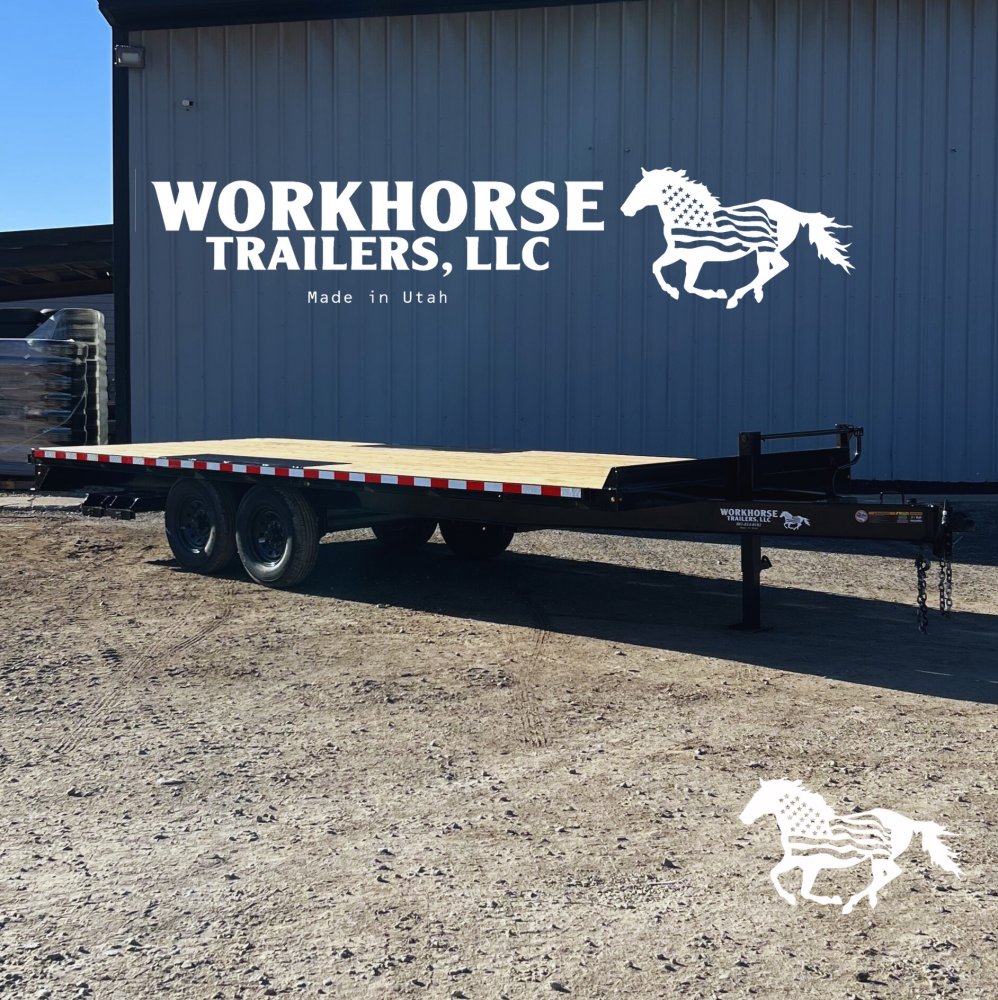
Trailers with 18-foot to 22-foot overall decks and 14-foot to 16-foot tilting sections handle the compact equipment classes that dominate ranch, municipal, and light construction work throughout the state. Compact track loaders, mini excavators under 10,000 pounds, and utility tractors fit within these dimensions comfortably, with room remaining on the stationary front section for securing toolboxes, fuel cans, or small attachments.
Longer tilt deck trailers with 24-foot to 28-foot overall lengths serve operators hauling mid-size equipment that requires more deck space. Full-size skid steers paired with their attachments, small dozers, and loaded trenching machines all benefit from the additional tilting section length that these larger models provide. Wyoming contractors who operate multiple machine sizes should measure their largest regular load and add at least two feet of margin to determine the minimum tilting section length that will serve their operation without limitation.
Workhorse Trailers LLC Equips Wyoming with Reliable Tilt Deck Solutions
A tilt deck trailer earns its place on a Wyoming operation by making every loading event faster, safer, and achievable by a single person on any ground surface the job presents. Workhorse Trailers LLC matches Wyoming buyers with tilt deck trailers sized and configured for the equipment they haul, the terrain they cross, and the temperatures they work through. Customers travel from Casper, Gillette, Sheridan, Cody, Rock Springs, Evanston, Laramie, Cheyenne, Torrington, and the ranch communities scattered between them because the Workhorse team understands that a Wyoming operator buying a tilt deck trailer is investing in independence. The ability to load alone, load anywhere, and load quickly regardless of conditions is not a luxury in this state. It is the foundation of getting the job done when everything else depends on one person, one truck, and one trailer that works every time.