Montana Utility Trailers
All locationsMontana’s vast landscape, rural character, and hardworking population create a constant need for reliable utility trailers that can keep pace with the demands of daily life across Big Sky Country. From hobby farmers hauling feed in the Bitterroot Valley to property owners clearing timber near Kalispell and small business operators delivering supplies across the Hi-Line, utility trailers are among the most commonly owned and most heavily relied upon pieces of equipment in the state. Workhorse Trailers LLC has become a trusted resource for Montana buyers seeking utility trailers that combine practical design with the structural toughness required to handle the state’s rugged terrain and extreme seasonal conditions.
Utility trailers occupy a unique space in the trailer market because they serve such a broad range of users. They are not limited to commercial operators or specialized trades. Homeowners, weekend warriors, volunteer fire departments, church groups, and small-scale entrepreneurs all find daily or weekly use for a well-built utility trailer. That universal appeal makes choosing the right one both straightforward and critically important, because a trailer that falls apart after two seasons of Montana use wastes money and creates headaches at the worst possible moments. Workhorse Trailers LLC focuses on stocking utility trailers built to a standard that Montana buyers can count on through years of real service.
What Defines a Utility Trailer
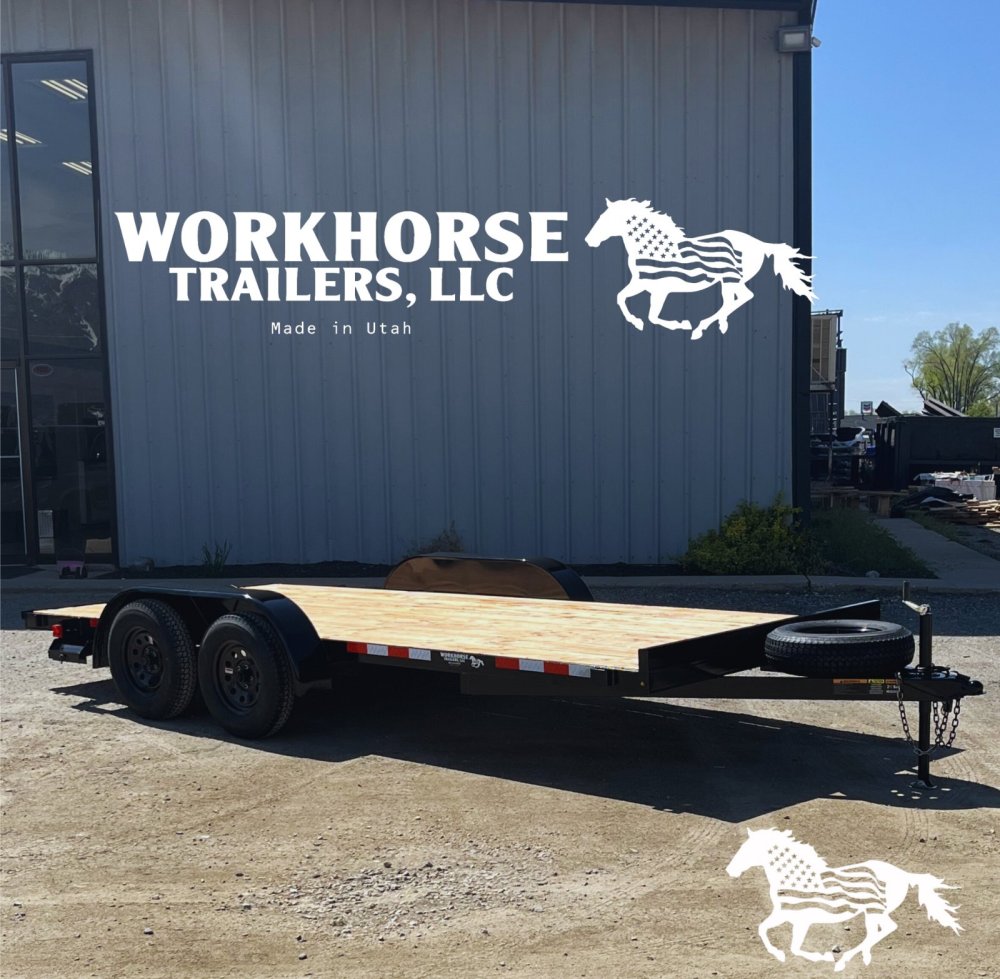
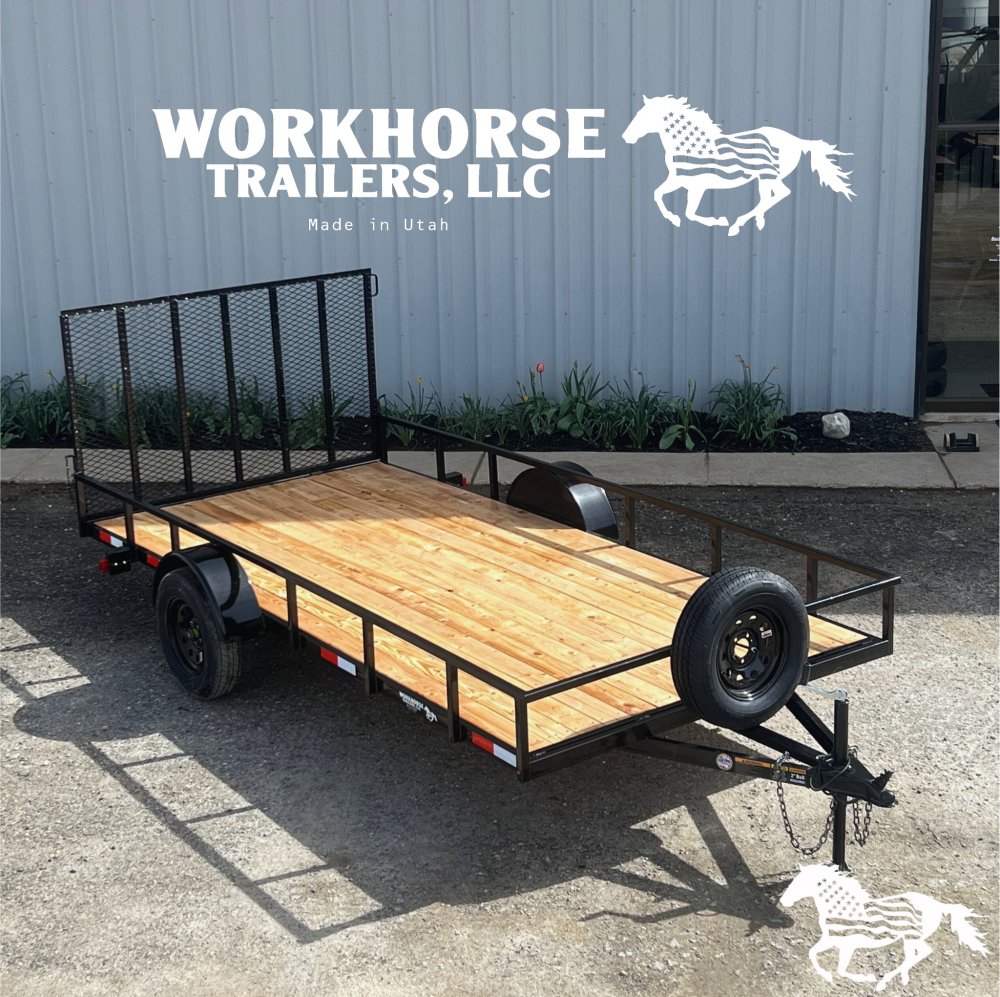
The term utility trailer covers a wide category of open, non-specialized trailers designed for general-purpose hauling. They typically feature a flat deck with low side rails or mesh panels, a rear gate that folds down for loading, and a straightforward tongue-and-ball hitch connection. Sizes range from compact 4-by-6-foot models that tuck behind a sedan to heavy-duty 7-by-16-foot tandem axle platforms capable of carrying several thousand pounds of cargo.
What separates a utility trailer from more specialized types is its adaptability. The same trailer that hauls mulch to a garden project on Saturday can carry a stack of fence posts to a pasture on Monday and transport a motorcycle to a rally the following weekend. That flexibility makes utility trailers the most commonly purchased trailer type in Montana, where residents often juggle multiple roles that each generate different hauling needs throughout the year.
Why Montana Demands More From Utility Trailers
Buying a utility trailer in Montana is not the same as buying one in a temperate, flat, densely populated state. The conditions that Montana trailers face on a daily basis test every weld, fastener, and component in ways that milder climates never will.
Gravel Roads and Unpaved Access
Montana has more miles of unpaved road per capita than nearly any other state in the country. Ranch access roads, forest service routes, county gravel roads, and seasonal two-tracks make up a significant portion of the miles that utility trailers travel. Constant vibration from washboard surfaces, impacts from rocks kicked up by tow vehicle tires, and the jarring effects of potholes and ruts stress trailer frames, loosen hardware, and fatigue suspension components far faster than smooth pavement driving. A utility trailer destined for Montana service needs heavier gauge steel, reinforced connection points, and robust suspension components to survive the punishment that unpaved roads deliver.
Temperature Extremes and Corrosion
Montana winters regularly push temperatures well below zero across the northern plains and mountain valleys, while summer heat can climb above 100 degrees in the eastern lowlands. That thermal cycling expands and contracts metal components repeatedly, which weakens joints and accelerates fatigue cracking over time. Road salt and magnesium chloride treatments applied to state highways during winter months coat trailer frames, axles, and electrical connections in corrosive chemicals that promote rust if not washed away regularly.
Utility trailers with quality powder coat or hot-dip galvanized finishes resist corrosion significantly better than trailers with basic spray paint. Workhorse Trailers LLC prioritizes stocking models with protective finishes suited for Montana’s climate because they understand that a trailer’s appearance and structural soundness are directly tied to how well its surfaces resist the elements.
Mountain Grades and Towing Stress
Whether traveling through the passes west of Missoula, climbing the Continental Divide at MacDonald Pass, or descending into the Yellowstone River valley south of Livingston, Montana drivers regularly encounter steep grades that place extraordinary demands on both tow vehicles and trailers. Utility trailers must have braking systems and suspension setups that remain predictable and responsive on long downhill stretches where heat buildup can fade brakes and compromise control.
Even single axle utility trailers benefit from a functioning brake system when used regularly on Montana’s mountain roads. Workhorse Trailers LLC advises every Montana customer to consider brake-equipped models regardless of trailer size, because the cost of adding brakes is insignificant compared to the safety margin they provide on the grades this state presents.
Utility Trailer Sizes and Their Best Applications in Montana
Selecting the right size utility trailer prevents both the frustration of running out of space and the waste of towing more trailer than necessary. Workhorse Trailers LLC helps Montana buyers match trailer dimensions to their most frequent hauling tasks.
Small Single Axle Models
Utility trailers in the 4-by-6 to 5-by-8-foot range fill the needs of homeowners, gardeners, and light-duty users who haul relatively compact loads on a regular basis. Bags of feed, garden supplies, small appliances, camping gear, and household items all fit comfortably on these platforms. Their light weight makes them towable by most SUVs, crossovers, and midsize trucks without straining the vehicle’s rated capacity.
Montana residents who maintain rural properties often keep a small utility trailer on hand as an everyday tool for moving firewood, fence repair materials, and seasonal supplies between outbuildings and work sites around the property. The low purchase price and minimal storage footprint make small utility trailers a practical addition to almost any Montana household.
Mid-Size Utility Trailers
Trailers in the 6-by-10 to 6-by-12-foot range represent the most popular size segment among Montana buyers. They provide enough deck space to carry a full cord of split firewood, a riding mower with room for trimmers and blowers alongside it, or a load of building materials for a weekend cabin project. Most mid-size models ride on a single axle rated between 2,500 and 3,500 pounds, which keeps them maneuverable on tight access roads while still delivering meaningful payload capacity.
This size category strikes the ideal balance for Montana buyers who need a trailer capable of handling a wide variety of tasks without becoming cumbersome to store, back into tight spaces, or tow behind a standard pickup truck. Workhorse Trailers LLC finds that the majority of their Montana utility trailer customers ultimately settle on a mid-size model after evaluating their actual hauling patterns.
Large Tandem Axle Utility Trailers
For buyers whose hauling demands regularly exceed what a single axle can handle, tandem axle utility trailers in the 7-by-14 to 7-by-16-foot range deliver the capacity and stability needed for heavier commercial and agricultural loads. Two axles distribute weight more evenly across four tires, improve braking performance, and provide a safety margin if one tire fails during transit. These larger platforms handle side-by-side ATVs, small tractors, palletized building materials, and bulk landscaping supplies with room to spare.
Montana ranchers, property management companies, and small contractors who transport equipment and materials daily gravitate toward tandem axle utility trailers because the added capacity eliminates the need for multiple trips and the second axle provides peace of mind on long hauls across remote stretches of highway where a breakdown would be especially inconvenient.
Essential Features for Montana Utility Trailer Buyers
Beyond size selection, several specific features deserve close attention from anyone purchasing a utility trailer for use in Montana. These details influence how well the trailer holds up over time and how safely it performs under the conditions unique to this state.
Gate Style and Functionality
The rear gate on a utility trailer affects loading convenience and cargo retention. Solid drop gates fold flat to create a loading ramp and swing up to close the rear of the trailer during transport. Mesh gates provide visibility through the rear of the trailer and allow air circulation, which matters when hauling green waste or freshly cut hay that benefits from airflow. Split landscape gates open in two sections, allowing the operator to drop one side while keeping the other raised as a cargo barrier.
Workhorse Trailers LLC stocks utility trailers with each gate style and can help Montana buyers determine which configuration best serves their primary hauling activities.
Tie-Down Systems
Securing cargo on an open utility trailer is a legal requirement and a safety necessity on Montana highways where speed limits reach 80 miles per hour on interstate segments. Integrated D-ring anchors welded to the frame or deck provide fixed securement points for straps and chains. Stake pockets along the trailer rails accept removable uprights that extend the effective sidewall height for bulky loads like brush piles, hay bales, or stacked lumber.
The Montana Highway Patrol enforces cargo securement regulations actively, particularly on interstate corridors and during commercial vehicle inspection events. Ensuring your utility trailer has adequate tie-down points before loading it for the first time prevents citations, protects other motorists, and keeps your cargo intact during transit.
Lighting and Electrical Reliability
Trailer lighting failures are among the most common causes of roadside citations and a frequent contributing factor in rear-end collisions involving trailers. Montana’s short winter days mean that many utility trailer trips begin or end in darkness, making functional brake lights, turn signals, and reflectors essential for visibility. LED lighting assemblies draw less power, last significantly longer, and produce brighter output than incandescent bulbs, making them the preferred choice for Montana utility trailers that will see frequent use in low-light conditions.
Sealed wiring harnesses and waterproof connector plugs resist the moisture intrusion that corrodes electrical connections over time. Given Montana’s exposure to rain, snow, mud, and road spray, investing in a trailer with quality electrical components avoids the recurring nuisance of chasing wiring gremlins every time a light stops working.
Registering and Operating a Utility Trailer in Montana
Montana trailer registration requirements differ from neighboring states, and buyers should familiarize themselves with the basics before taking delivery. All trailers operated on Montana public roads must be titled and registered through the county treasurer’s office in the owner’s county of residence. Registration fees are based on the trailer’s age and declared value, and plates must be renewed annually.
Trailers with a gross vehicle weight rating exceeding a certain threshold require functioning brakes on at least one axle and must pass periodic safety inspections in some jurisdictions. Breakaway systems that automatically apply the trailer brakes if the trailer becomes disconnected from the tow vehicle are required on all trailers equipped with brakes. Workhorse Trailers LLC ensures that every utility trailer they sell to Montana customers meets the state’s equipment requirements so buyers can register and operate their new trailer without compliance surprises.
Serving Montana Buyers From Workhorse Trailers LLC
Although Workhorse Trailers LLC is rooted in the Intermountain West, their reputation for quality utility trailers and knowledgeable customer support has drawn a growing number of buyers from across Montana. Customers from Billings, Bozeman, Butte, Helena, Great Falls, and smaller communities throughout the southern and western portions of the state have made the trip to purchase trailers that they could not find closer to home at the same combination of quality and value.
The willingness of Montana buyers to travel reflects both the limited availability of dedicated trailer specialists in many parts of the state and the strong word-of-mouth reputation that Workhorse Trailers LLC has built among working professionals and rural property owners. When neighbors and colleagues see a well-built utility trailer performing reliably season after season, they ask where it came from, and that question consistently leads back to Workhorse Trailers LLC.
For Montana residents ready to explore available utility trailer models, compare specifications, and connect with knowledgeable staff before making the drive, the full inventory is accessible online. VisitMontana Utility Trailers to browse current stock and begin narrowing down the options that best fit your hauling requirements and budget.
Getting the Most From Your Utility Trailer in Montana
A quality utility trailer purchased from a reputable dealer and maintained with reasonable care will serve a Montana owner for a decade or more. Establishing a few simple habits from the start protects your investment and keeps the trailer safe and road-ready throughout its life.
Wash the undercarriage and frame thoroughly after winter road trips to remove accumulated salt and chemical residue before it penetrates the protective finish. Inspect tire sidewalls and tread depth at the start of each season, and verify that tire pressure matches the rating stamped on the sidewall before every loaded trip. Grease wheel bearings according to the manufacturer’s recommended interval, or more frequently if the trailer regularly encounters water crossings or heavy rain that could wash lubricant from the bearing assemblies.
Check all lighting functions with a helper before heading out, and carry spare bulbs or a backup LED light kit for long trips into remote areas where a burned-out brake light could go unnoticed until a law enforcement stop or an accident. Tighten lug nuts to the specified torque after the first 50 miles on new tires or wheels, and recheck them periodically throughout the season.
These straightforward maintenance habits take only minutes but dramatically extend the safe and productive life of a utility trailer operating under Montana’s demanding conditions. Workhorse Trailers LLC stands behind every trailer they sell and remains available to answer maintenance questions, recommend replacement parts, and support Montana customers long after the initial purchase is complete.