Montana Custom Builds Trailers
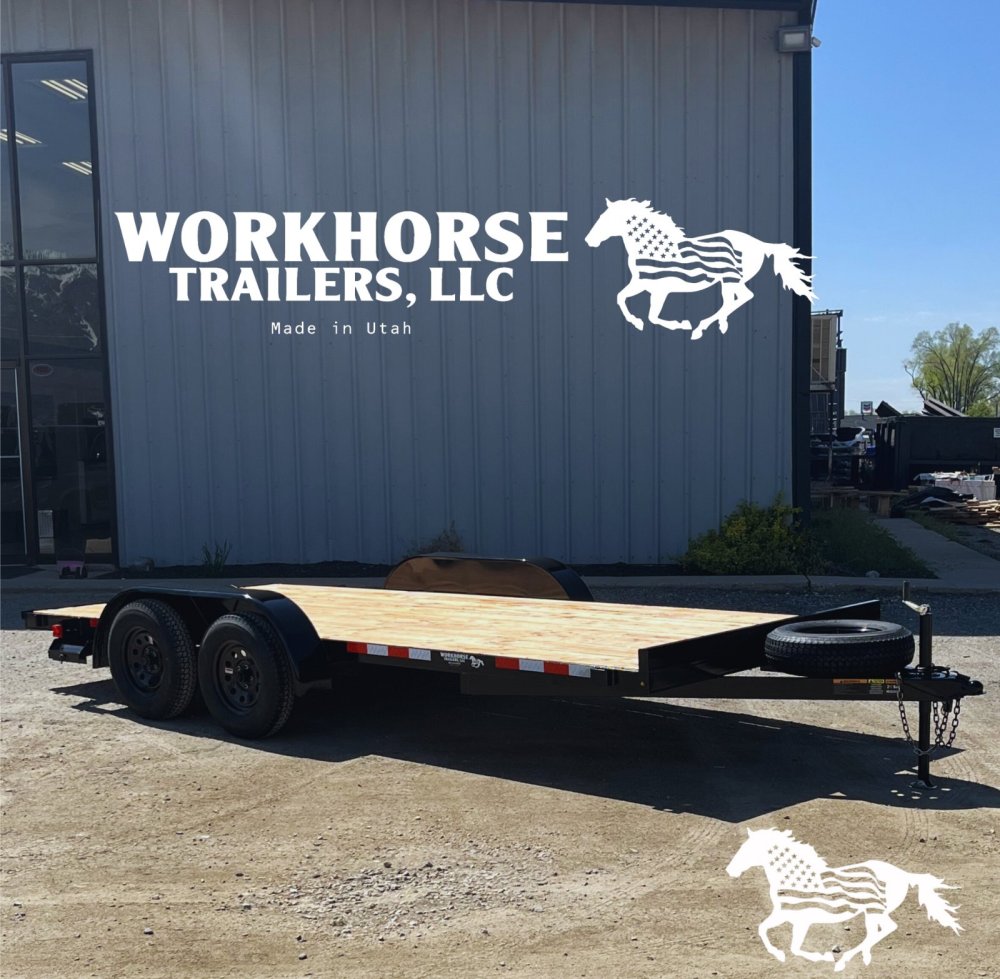
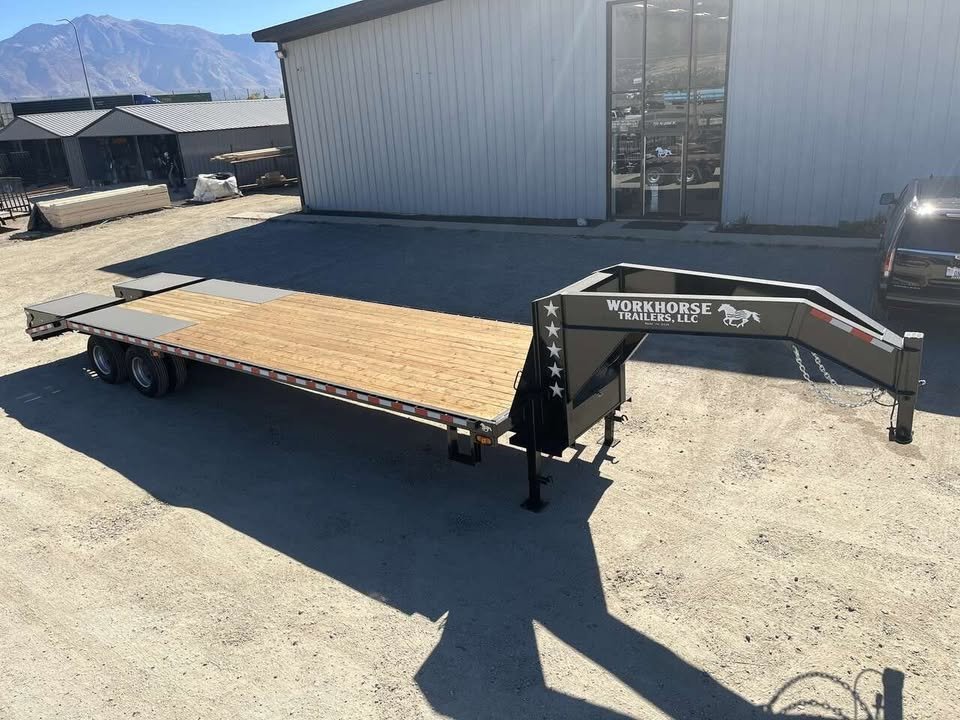
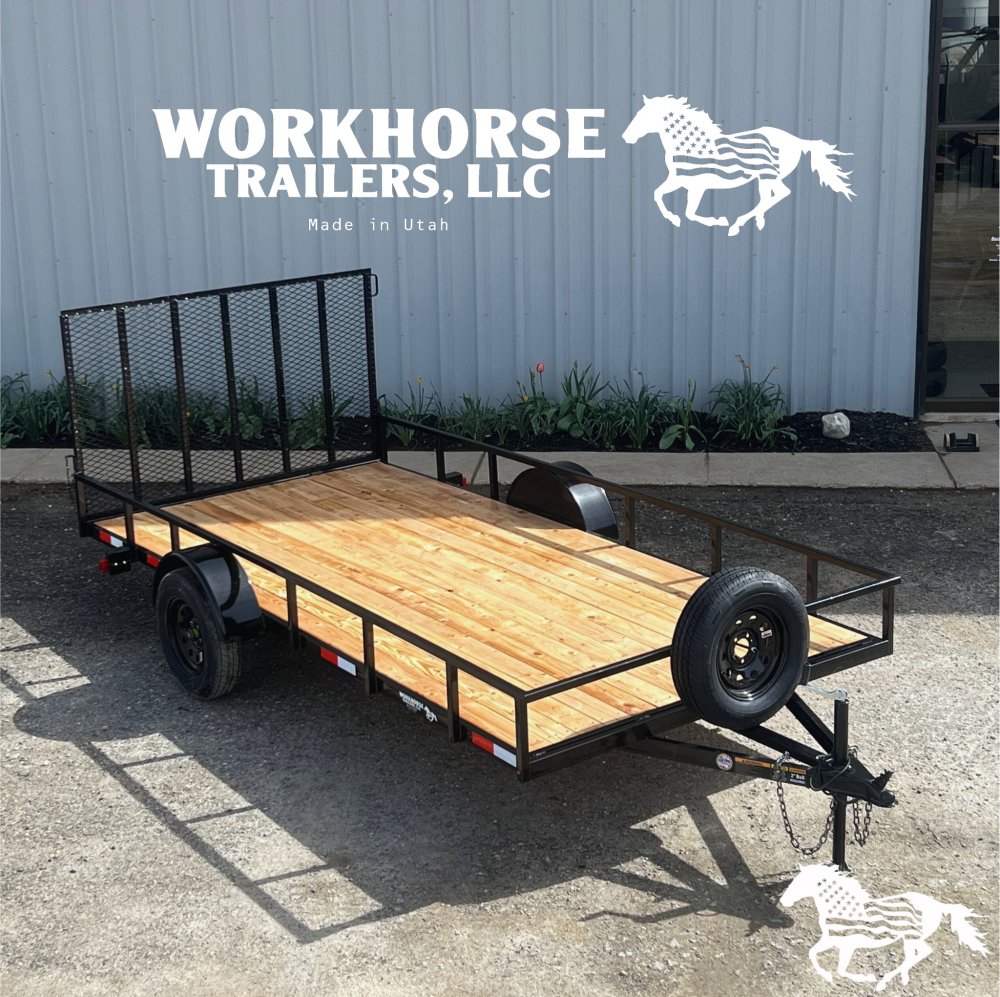
All locationsSometimes the trailer you need doesn’t exist on any dealer’s lot. Your operation has requirements that fall between standard models, or your work demands a configuration that manufacturers don’t produce in their regular lineup. Maybe you need a flatbed with a specific combination of tie-down placements, an enclosed unit with interior partitions built to your tool layout, or a hauler designed around a piece of equipment that doesn’t fit neatly into off-the-shelf dimensions. That gap between what’s available and what’s actually required is where custom trailer builds come in. Workhorse Trailers LLC works with Montana buyers who need trailers purpose-built for their operations, delivering customized solutions that stock models can’t replicate and that generic modifications can’t achieve.
Custom doesn’t have to mean extravagant. Some of the most practical custom builds involve straightforward modifications to proven trailer platforms: adding a few inches of deck width, repositioning axles for better weight distribution with a specific load, or integrating a winch mount that aligns precisely with how the buyer uses the trailer daily. Other projects are more involved, requiring ground-up design work to accommodate unusual cargo dimensions, specialized loading systems, or multi-purpose configurations that let a single trailer serve roles that would otherwise require two.
The common thread among Montana buyers who pursue custom builds is that they’ve done the math. They know what they haul, how they haul it, and exactly where a stock trailer falls short. Workhorse Trailers LLC turns that knowledge into a trailer that fits.
Why Montana Operations Drive Demand for Custom Trailers
Montana’s geography and industry mix produce hauling requirements that standardized trailer designs frequently miss. The state’s working landscape spans cattle ranches covering thousands of acres, logging operations in steep mountain timber, mining and mineral extraction across remote terrain, and construction projects scattered from urban corridors to sites accessible only by gravel roads that climb to 7,000 feet. Each of these settings creates load profiles, terrain challenges, and logistical constraints that off-the-shelf trailers address only partially.
A logging contractor in the Swan Valley needs a trailer that can haul a processor head through tight forest service switchbacks while maintaining the tongue weight balance required for safe mountain descents. A mining supply company delivering oversized pipe sections to a site near Whitehall needs a trailer wide enough and reinforced enough for the specific load, with securement points that match the cargo’s geometry. A rancher near Jordan who maintains fences across 50 miles of rangeland wants a single trailer that carries a compact tractor, rolls of wire, steel posts, and a welder, all organized for efficient one-person access at each stop.
None of those scenarios align perfectly with a catalog trailer. Each one justifies a custom build.
Types of Custom Trailer Builds
Custom builds cover a wide spectrum, from minor adjustments to complete from-scratch fabrication. Understanding the categories helps buyers communicate their needs clearly and set realistic expectations about timeline and cost.
Modified Stock Platforms
The most common category of custom work starts with a standard trailer model and adds, removes, or relocates components to match the buyer’s requirements. This approach is cost-effective because the core frame, axles, and running gear are already engineered and proven. The customization happens on top of that foundation.
Typical modifications in this category include adding toolbox mounts or storage compartments to a flatbed frame, installing D-ring tie-downs in specific patterns dictated by the cargo being hauled, welding stake pockets or headache racks to suit particular loads, upgrading from a standard coupler to a gooseneck conversion, or adjusting deck length by adding or removing sections. These modifications don’t require a full engineering redesign, but they do require a fabricator who understands trailer load dynamics well enough to know where changes affect structural integrity and where they don’t.
Custom Configurations From Manufacturer Options
Several trailer manufacturers offer build-to-order programs where buyers select from a menu of options to assemble a configuration that doesn’t appear in the standard catalog. Deck length, axle count, axle rating, brake type, coupler style, deck material, ramp type, fender style, and finish can all be specified within the manufacturer’s engineering parameters. This is a middle ground between buying stock and commissioning a fully custom fabrication. You get a trailer that’s factory built with warranty coverage, but configured to your specifications rather than pulled from a row of identical units.
Workhorse Trailers LLC navigates these manufacturer option sheets with buyers regularly, helping translate operational requirements into the correct combination of specs. The process avoids the trial-and-error approach of buying a stock trailer and then paying to modify it after the fact, which almost always costs more and produces a less integrated result.
Ground-Up Custom Fabrication
For buyers whose needs fall entirely outside existing product lines, ground-up custom fabrication produces a trailer designed and built from raw materials to a set of unique specifications. This is the most expensive and time-intensive category, but it yields a trailer that does exactly what no other trailer can.
Examples from Montana include ore sample transport trailers designed for geological survey companies, multi-bay farrier trailers built to carry anvils, forges, and tool sets in an organized mobile workspace, and specialty livestock trailers with interior configurations suited to specific animal handling protocols. These projects require detailed design conversations, structural engineering calculations, and fabrication expertise that goes beyond basic welding and assembly.
The Custom Build Process
Walking through a custom trailer build from initial concept to delivery helps demystify what’s involved and what buyers should prepare for.
Defining Requirements
Every custom build starts with a detailed conversation about what the trailer needs to do. This goes beyond simple dimensions. The discussion covers what cargo will be loaded, how it will be loaded (driven on, lifted by crane, rolled by hand, pulled with a winch), how the cargo will be secured during transit, what terrain and road conditions the trailer will encounter, what tow vehicle will pull it, and how frequently the trailer will be used.
These questions reveal constraints that buyers sometimes haven’t fully considered. A trailer designed for a 12,000-pound excavator needs different frame cross-member spacing than one built for distributed loads like lumber or pipe. A trailer that will be loaded by forklift needs reinforced deck sections where the fork tines bear weight repeatedly. A trailer destined for daily use on unpaved roads in the Bull Mountains south of Roundup needs suspension and tire specifications different from one that stays on Interstate 94.
Design and Engineering
Once the requirements are defined, the design phase translates them into a buildable plan. For modified stock trailers and manufacturer-configured builds, this step is relatively quick because the base engineering already exists. For ground-up fabrication, the design phase involves frame layout, material selection, axle and suspension specification, load path analysis, and compliance verification with federal and Montana-specific road regulations.
Weight distribution calculations are particularly important for custom builds. Adding features, extending the deck, or placing heavy components in non-standard locations can shift the tongue weight percentage outside the safe 10 to 15 percent range, which degrades towing stability. A competent custom builder runs these numbers during the design phase, not after the trailer is welded together.
Fabrication and Assembly
Build timelines vary depending on the complexity of the project and the current production schedule. A modified stock trailer might be ready in two to four weeks. A factory-configured build-to-order unit typically takes four to eight weeks from order to delivery. A ground-up custom fabrication can take eight to sixteen weeks or longer, depending on material availability, design complexity, and the fabrication shop’s workload.
During fabrication, buyers should expect periodic updates and, for complex builds, opportunities to review progress at key milestones. Catching a misunderstanding about tie-down placement or door swing direction during the build is far easier and cheaper than correcting it after the trailer is powder-coated and assembled.
Inspection and Delivery
A finished custom trailer goes through the same functional checks as any production trailer: brake testing, lighting verification, coupler engagement testing, and a thorough inspection of all welds, fasteners, and moving components. For custom builds, the buyer should also perform a hands-on walkthrough to verify that every specified feature matches the original requirements. Load the equipment or cargo the trailer was designed for, test the tie-down points, cycle any moving components like ramps or tilting decks, and confirm that clearances and access points work as intended.
Cost Considerations for Custom Trailer Builds
Custom work costs more than stock, and buyers should go in with a clear understanding of what drives the price.
Material costs form the base. Steel, aluminum, axles, couplers, braking components, electrical systems, and finish treatments all carry specific price points that scale with the size and weight rating of the trailer. Custom builds sometimes require materials in non-standard sizes or quantities, which can carry price premiums over the bulk-purchased components used in production trailers.
Labor is where custom builds diverge most significantly from stock pricing. Fitting, welding, and assembling a one-off configuration takes more shop time than repeating a proven production sequence. Complex modifications, unusual geometries, and tight tolerances all increase the hours required.
Engineering and design costs apply primarily to ground-up builds. If the project requires structural calculations, CAD drawings, or compliance analysis, those professional services add to the total.
Despite the higher upfront investment, a well-specified custom trailer often costs less over its working life than the alternative of buying a stock trailer that doesn’t quite fit and then spending money on aftermarket modifications, workarounds, and the inefficiencies of using a tool that wasn’t designed for the job. Montana buyers who run the total cost calculation across a five or ten year ownership period frequently conclude that the custom build pays for itself.
Registration and Compliance for Custom-Built Trailers in Montana
Custom-built trailers in Montana require a manufacturer’s certificate of origin or, for trailers built by individuals or small fabricators without manufacturer status, a homemade vehicle title application through the Montana Motor Vehicle Division. The process involves providing documentation of the trailer’s specifications, a bill of sale for materials and labor, and in some cases a physical inspection by a Montana Highway Patrol officer or authorized inspector.
Montana does not impose sales tax, which applies equally to custom builds and stock purchases. Registration follows the standard process through the county treasurer’s office, with fees based on the trailer’s age and declared gross vehicle weight.
Buyers should confirm that any custom-built trailer meets Federal Motor Vehicle Safety Standards for lighting, reflective markings, braking systems, and coupler strength ratings. A custom build that doesn’t comply with FMVSS requirements may face issues during registration, insurance coverage disputes, or liability exposure in the event of an accident. Reputable custom builders design to these standards as a baseline.
Common Mistakes to Avoid When Ordering a Custom Trailer
Experience with Montana buyers has revealed several recurring pitfalls that are worth flagging for anyone considering a custom build.
Underspecifying the load is one of the most frequent errors. Buyers describe their typical load but forget to account for the heaviest realistic scenario. A trailer designed around a 6,000-pound machine that occasionally needs to carry an 8,500-pound machine is underbuilt for the job. Always design to the upper end of your expected use case, with a reasonable safety margin.
Ignoring tow vehicle limitations is equally common. A custom trailer can be built to any specification, but the truck pulling it still has fixed weight ratings. The best-engineered custom trailer in Montana is useless if it exceeds the towing capacity of the vehicle hitched to it.
Overcomplicating the design creates trailers that are expensive to build, difficult to maintain, and fragile in the field. Montana’s working conditions favor rugged simplicity over clever complexity. Every moving part, hydraulic circuit, and electronic system is a potential failure point on a muddy job site 40 miles from the nearest repair shop.
Skipping the hands-on review before final delivery locks you into a finished product that may not match your expectations. Always walk through the completed trailer with your actual cargo before signing off.
How Workhorse Trailers LLC Supports Custom Builds in Montana
Workhorse Trailers LLC brings the two things that matter most in custom trailer work: product knowledge and a willingness to listen. The company works with buyers across Montana to translate operational needs into trailer specifications that make sense structurally, financially, and practically. Whether the project involves configuring a manufacturer’s build-to-order options or coordinating a more involved custom fabrication, the process starts and ends with the buyer’s requirements.
Montana buyers interested in exploring custom options can visitMontana Custom Builds Trailers to connect with the Workhorse team and begin the specification conversation. The company serves customers from the Flathead to the Powder River Basin and everywhere between, with experience across agricultural, construction, commercial, and specialty hauling applications.
A stock trailer serves most buyers well. But when your work demands something the catalog doesn’t cover, a custom build from a source that understands Montana’s hauling realities closes the gap between what’s available and what you actually need. Workhorse Trailers LLC is ready to help you define that gap and fill it with a trailer built for your specific operation.